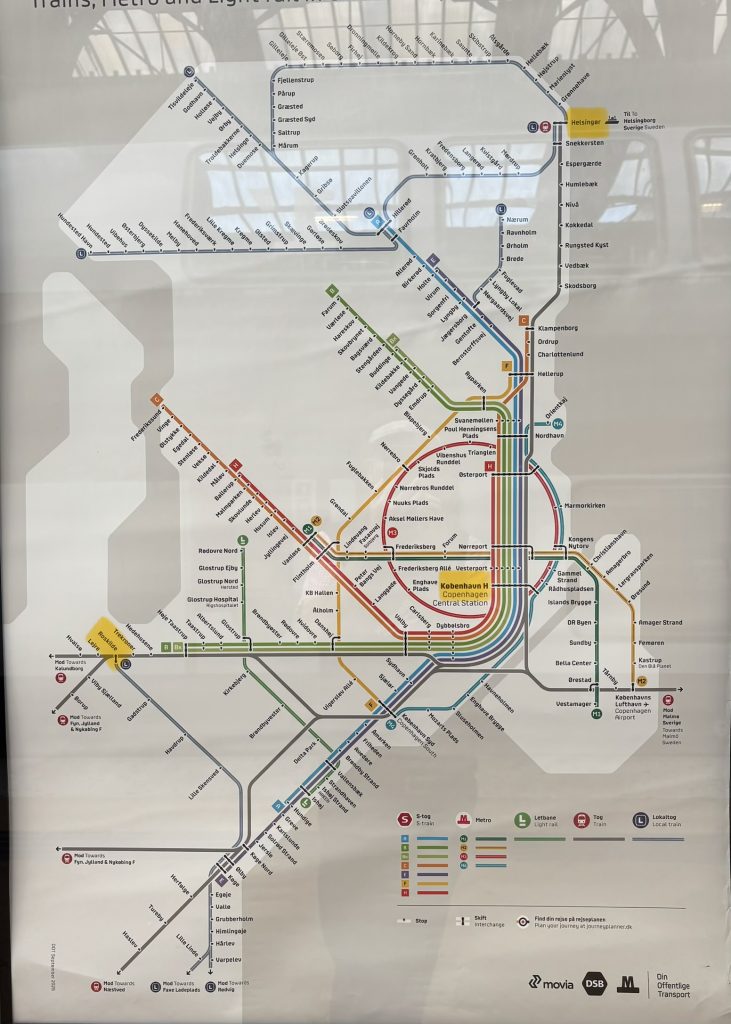
The train journey from Helsingør to Roskilde traversed the Zealand countryside. It led to one of Denmark’s most historically significant cities. Helsingør tells of kings and castles. Roskilde adds two other chapters of Danish history—the Viking Age and the Danish monarchy.
The Viking Ship Museum
My first stop was the magnificent Viking Ship Museum on the shores of Roskilde Fjord. I had high expectations, but the museum exceeded them.
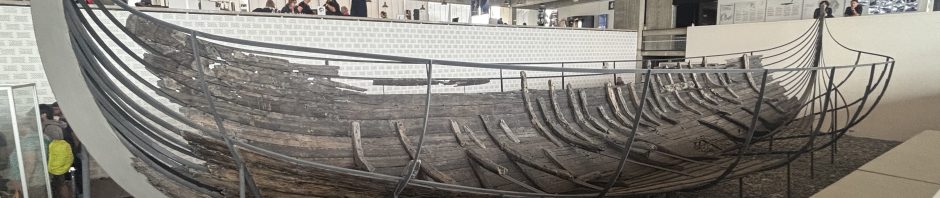
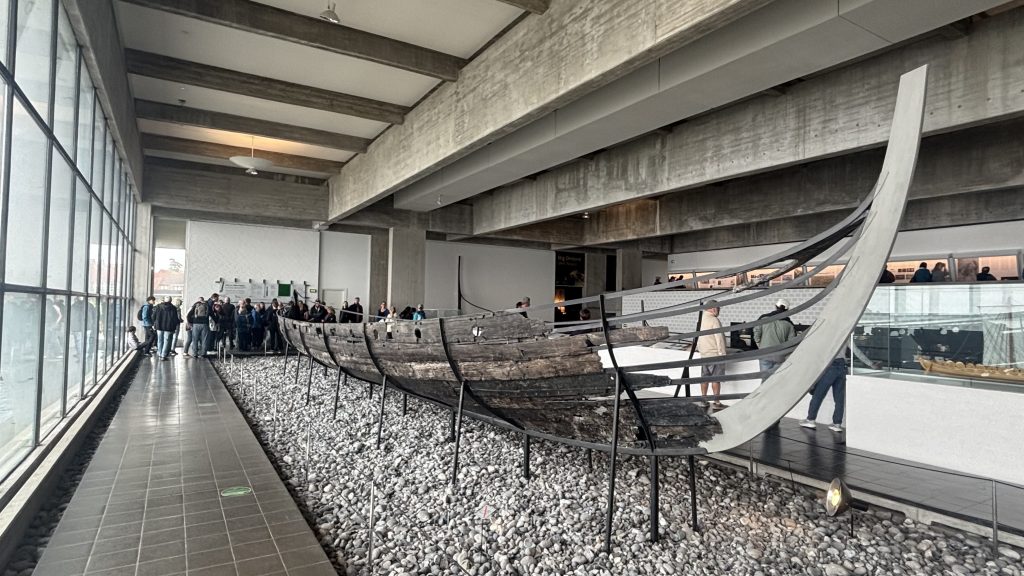
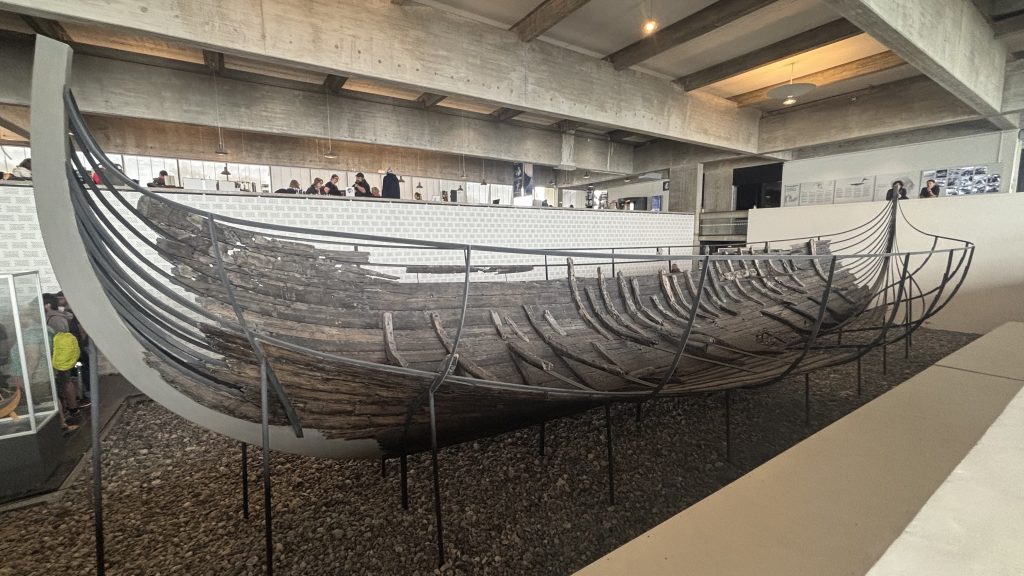
The centrepiece is five original Viking ships, recovered from the nearby Skuldelev channel after lying beneath the waters of the fjord for almost a thousand years. Around AD 1070, these vessels were deliberately sunk to block the narrow shipping route into Roskilde, protecting what was then one of Denmark’s most important cities. The excavation of the ships in 1962 transformed our understanding of Viking shipbuilding and seafaring. (Vikingeskibsmuseet)
The museum cleverly combines archaeology with storytelling. Rather than simply displaying ancient timbers behind glass, it explains how each vessel served a different purpose—from fast, sleek warships to sturdy merchant ships and coastal fishing boats. Standing in front of the fragile remains, it is remarkable to think these vessels once carried Viking warriors and traders across the North Atlantic.
One of the highlights is stepping outside to see the beautifully reconstructed Viking ships moored beside the museum. Built using traditional techniques, they demonstrate the extraordinary craftsmanship of Viking shipbuilders. During the summer months, visitors can even sail aboard some of these replicas on Roskilde Fjord, bringing Viking history vividly to life. (Vikingeskibsmuseet)
Lunch in Roskilde
After several hours immersed in Viking history, I wandered back into the centre of Roskilde for lunch. The town has a relaxed atmosphere, with attractive squares, cafés and pedestrian streets, making it an enjoyable place simply to stroll before continuing the day’s sightseeing.
Roskilde Cathedral
The afternoon was devoted to Roskilde Cathedral, another of Denmark’s national treasures.
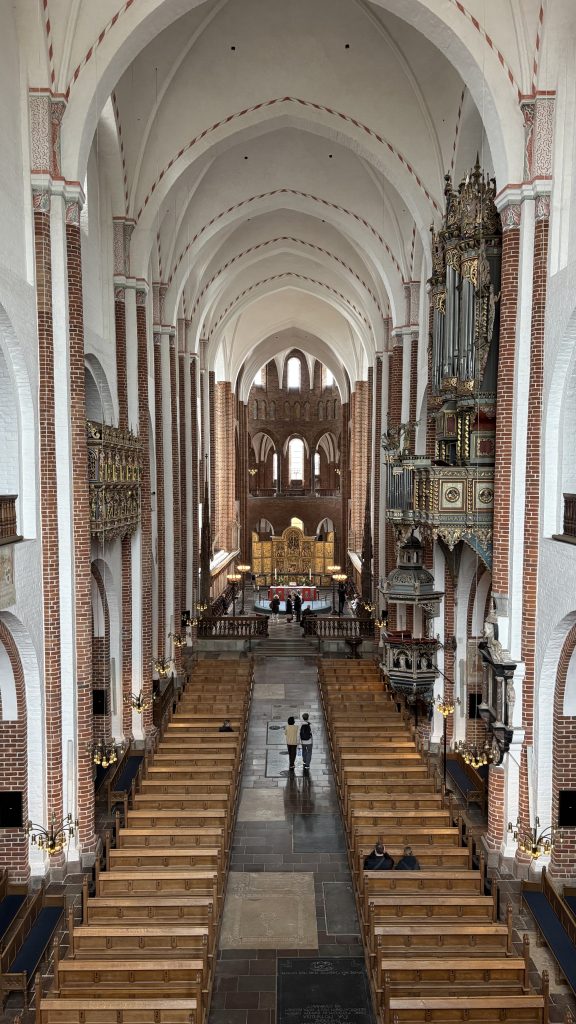
Its twin brick towers dominate the skyline long before you reach the entrance. Built during the 12th and 13th centuries, the cathedral is regarded as one of the earliest and finest examples of Brick Gothic architecture in northern Europe. Its historical importance earned it recognition as a UNESCO World Heritage Site. (roskildedomkirke.dk)
Inside, the cathedral is both grand and surprisingly intimate. Every chapel tells a different story, reflecting changing architectural styles over several centuries.
What makes Roskilde Cathedral truly unique is that it serves as the burial church of the Danish royal family. Nearly forty Danish kings and queens are buried here, from the Middle Ages through to modern times. Walking through the chapels is like following a timeline of Danish history, with elaborate tombs and monuments commemorating generations of monarchs. (roskildedomkirke.dk)
Even for visitors with little knowledge of Denmark’s royal family, the cathedral is an impressive experience. The craftsmanship, soaring vaulted ceilings and peaceful atmosphere encourage you to slow down and absorb nearly 800 years of history.
Final Thoughts
Roskilde makes an excellent day trip from Copenhagen and offers two world-class attractions within easy walking distance of each other. The Viking Ship Museum brings the adventurous spirit of the Viking Age to life, while Roskilde Cathedral tells the story of Denmark’s monarchy across almost a millennium.
Together they provide a fascinating insight into the people, power and craftsmanship that helped shape Denmark into the country it is today. For anyone interested in history, Roskilde is an absolute must-visit.