Number 59 on my 60@60 list and a once in a lifetime experience.
On 12th February 2026, I finally did something that had been on my bucket list for many years — mountain gorilla trekking. Rwanda is often the headline destination, but I chose to do it in Uganda. To do a similar trek in Rwanda would have cost twice as much.
The inspiration? Watching Gorillas in the Mist, starring Sigourney Weaver – the story of Dian Fossey, the pioneering scientist who helped prevent these incredible animals from disappearing forever.
It’s one of those activities that gets talked about a lot. It’s expensive. It’s regulated. It’s limited. And because of that, expectations are high — very high.
So what was it actually like?
The Morning Briefing.
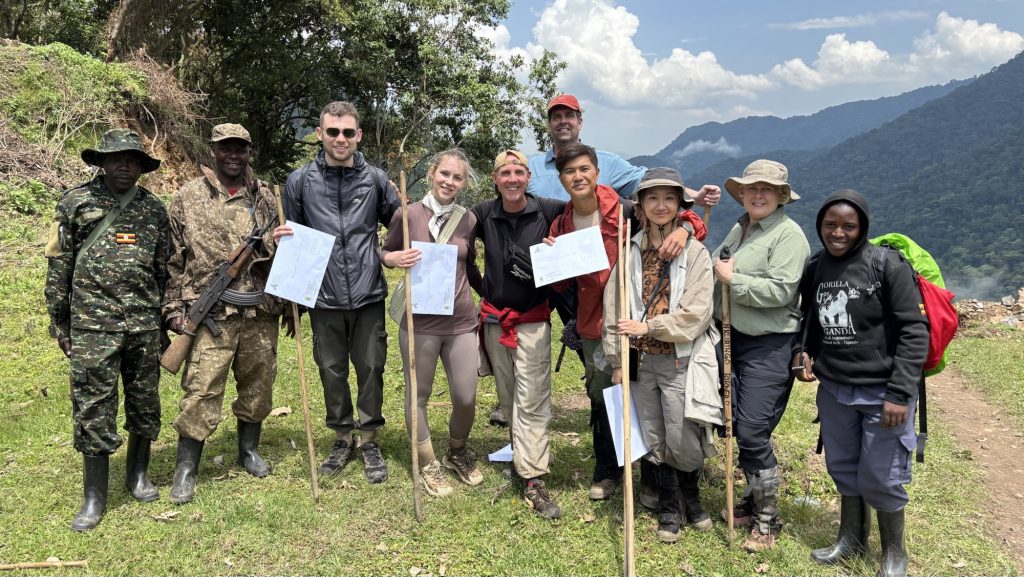
The day started early. We arrived at the park headquarters just after 7:30am for registration and the briefing. Groups are allocated based on fitness levels and the location of the habituated gorilla families. Each group has a maximum of eight people.
The guides explained the rules clearly:
• Keep a 7-metre distance
• No flash photography
• One hour maximum with the gorillas
• You must wear a face mask
It’s strict — but understandably so. These are endangered animals, and the entire system is built around protection first, tourism second.
I was part of the Posho Gorilla Grouping.
The Posho Gorilla Family (sometimes called Posho Group) is a mountain gorilla family in the Nkuringo sector of Bwindi Impenetrable National Park.
It’s named after its dominant silverback and has been part of the habituation process so it can be visited by tourists.
The group is newly habituated compared with some of the more established families in Bwindi, meaning people are still getting used to human presence, and it has been opening up for controlled gorilla trekking experiences over the recent couple of years.
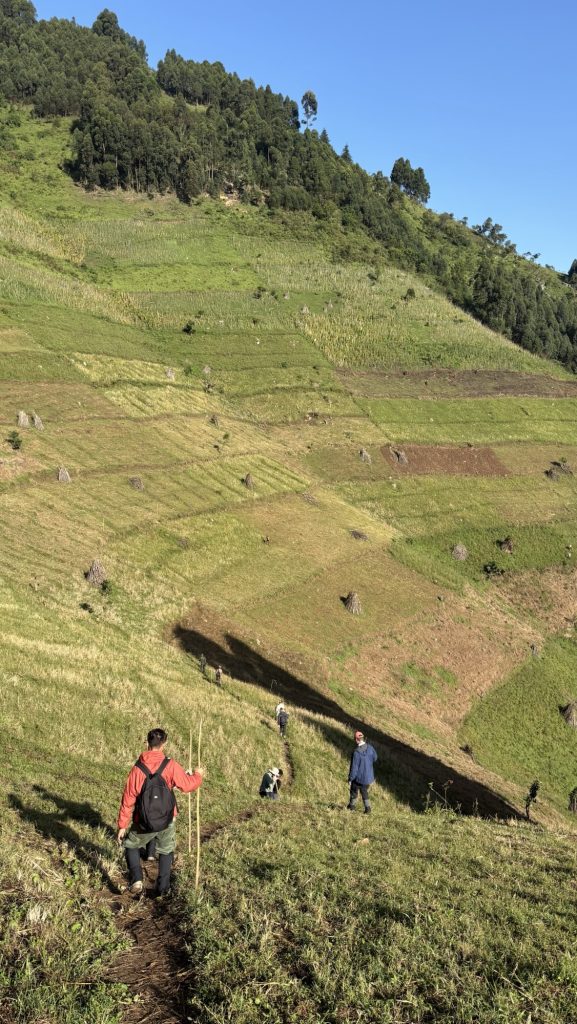
It is typically tracked from the Nkuringo trailhead, which is a southern part of Bwindi that’s known for scenic but often challenging trekking terrain.
Entering Bwindi.
“Impenetrable” is not an exaggeration.
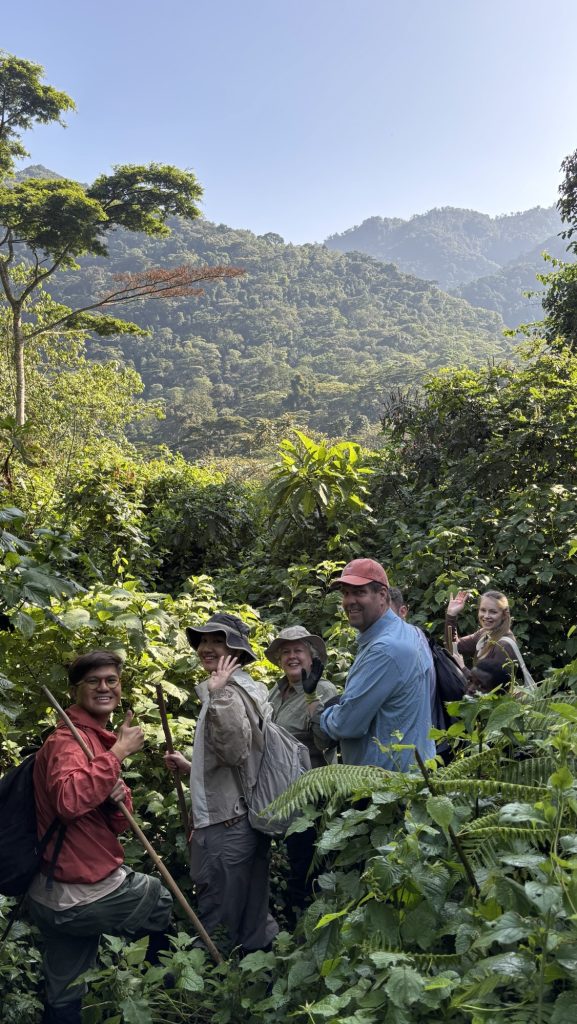
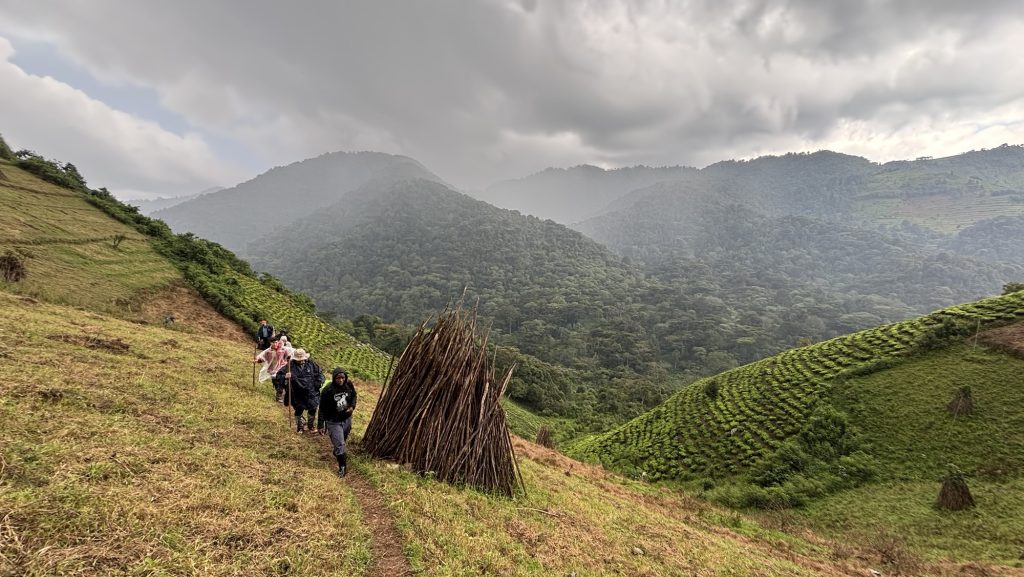
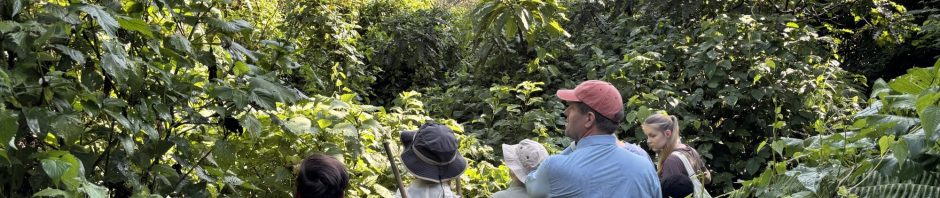
The forest is dense, humid and steep. There aren’t defined paths in the traditional sense — more narrow tracks cut through thick vegetation. Rangers use machetes in places. The terrain is uneven and slippery, especially after rain.
Our trek lasted just under two hours before we located the gorilla family. It wasn’t easy, but it also wasn’t extreme. A moderate level of fitness is enough, though you will be descending and then climbing hills.
First Sight.
There’s no dramatic build-up. One moment you’re climbing through thick undergrowth, and the next the guide quietly says, “They’re here.”
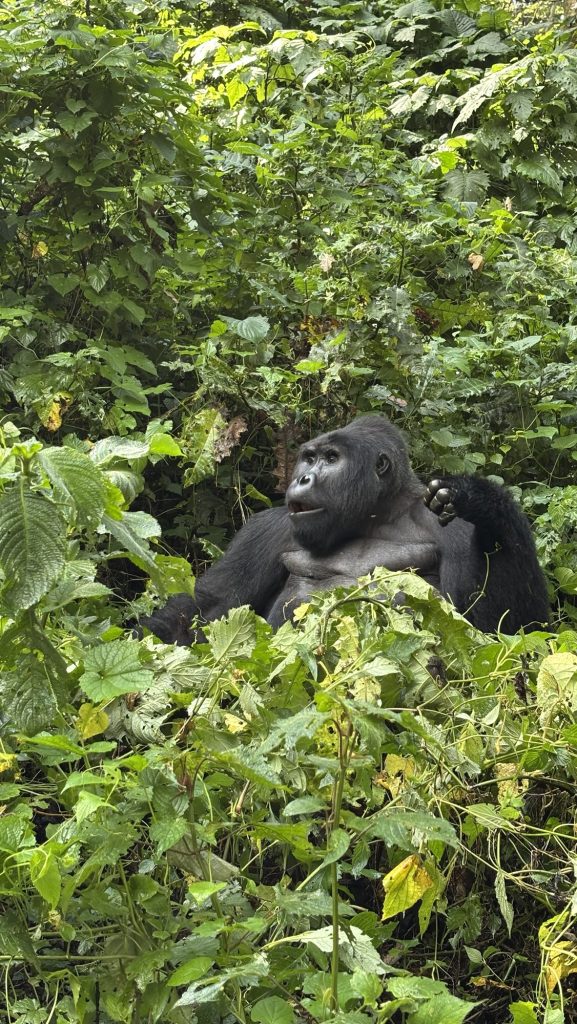
We found the group resting in a clearing. What stood out immediately was how normal it felt. No music. No theatre. Just a family going about its day. We all stood around them in total silence.
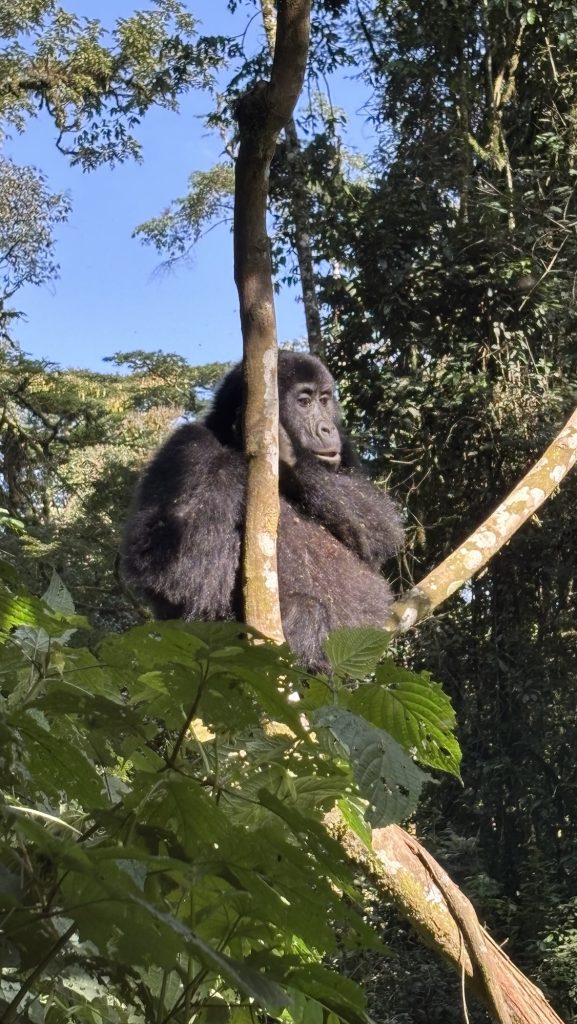
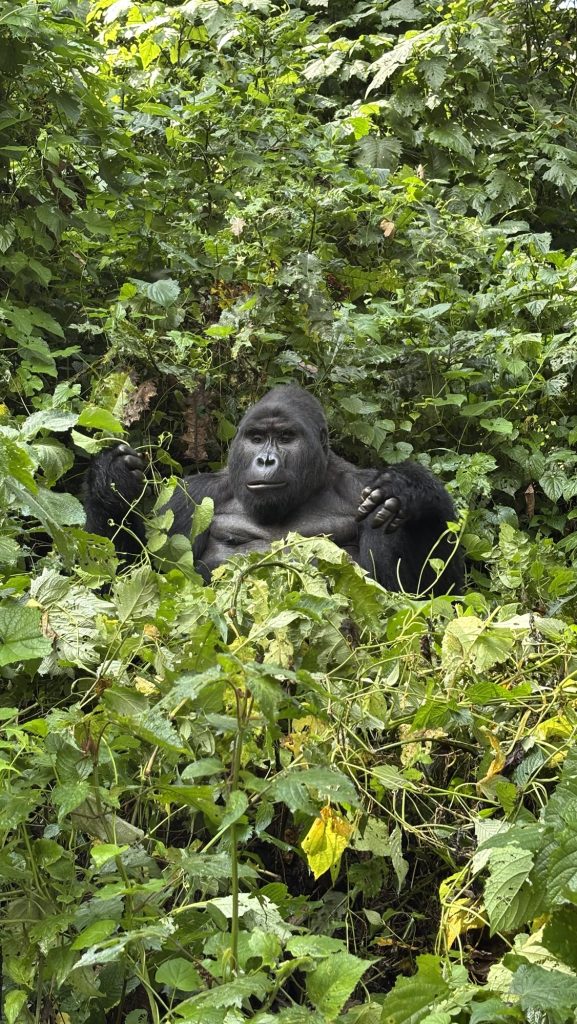
Then we were made aware of the male silverback who was looking down at us from a nearby tree. It wasn’t long before he climbed down to investigate what we were doing in his territory. He was large, calm, completely aware of us but not aggressive.
The One Hour.
You’re allowed exactly one hour once you reach them. It goes quickly.
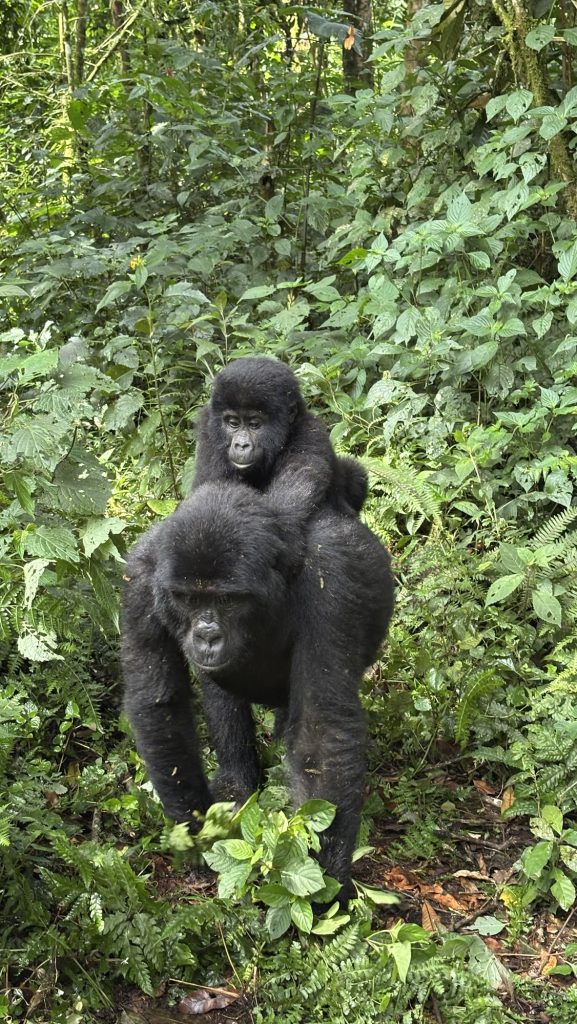
The juveniles were the most active — climbing, playing, occasionally tumbling down short slopes. One passed surprisingly close (within a few metres), and you’re reminded that you’re very much in their space.
The silverback barely moved, but when he did, you felt it. Not aggressive — just presence.
Photography is allowed, but I found myself taking fewer photos than expected. It’s one of those moments where observing feels more important than documenting.
Was It Worth It?
The permit costs $800 USD (as of 2026). Plus you need a vehicle — or in my case, a guide with a vehicle. That’s a significant amount of money.
So the obvious question — was it worth it?
For me, yes.
Not because it was emotional or overwhelming. It wasn’t dramatic. It wasn’t theatrical.
It’s simply an experience I won’t forget — and that, for me, justified the cost.
The people I was with were also fabulously friendly and I will remember them with fond memories.
There are fewer than 1,100 mountain gorillas left in the world. Seeing them in their natural habitat, without fences, without artificial staging, felt like witnessing something that still exists on its own terms.
You’re paying for conservation, regulation and preservation — and that structure is exactly why the experience feels genuine.
Practical Notes.
• Wear long sleeves and proper hiking boots
• Bring water and gloves (helpful when grabbing vegetation on steep climbs)
• Expect mud
• Hire a porter if you think you might need assistance
• Don’t expect luxury — this is a working national park, not a curated safari lodge environment
Final Thoughts.
Gorilla trekking in Bwindi isn’t a spectacle. It’s controlled, measured and surprisingly calm. But that’s what makes it powerful.
You’re stepping briefly into a world that isn’t designed for you — and then stepping back out again.
On 12th February 2026, I spent one hour with mountain gorillas in Bwindi. It wasn’t exaggerated. It wasn’t romanticised.
It was simply real.
And that was enough.
Wagatil Safaris.
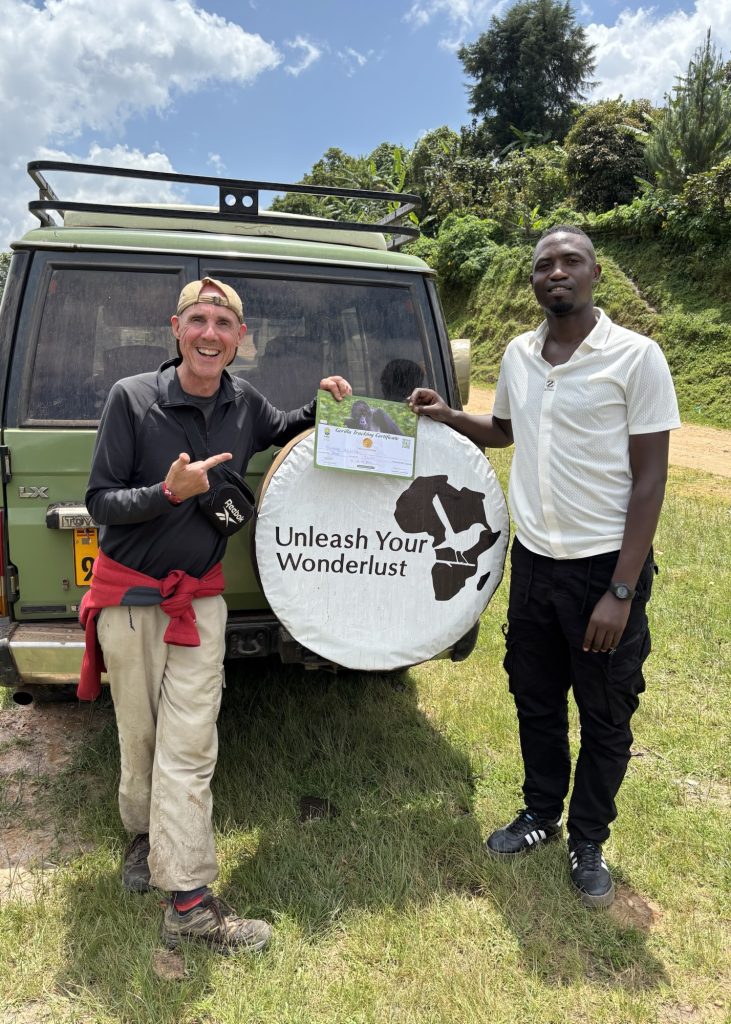
A huge thank you to Pretty from Wagatil Safaris for arranging everything. SW Uganda, and especially Bwindi Impenetrable Forest, is a tricky area to get around using only public transport, which I had done up to this point. Without their help this section of my trip would have been extremely difficult – if not impossible. Thank you also to my guide and driver – Roland.
A footnote about Dian Fossey and Gorillas In The Mist.
Like many people, my fascination with mountain gorillas began years ago watching Gorillas in the Mist. The film paints Dian Fossey as a fearless, almost lone warrior fighting to protect gorillas at any cost — and in many ways, that part is true. But standing in Bwindi decades later, it struck me how different the landscape of conservation feels today. Fossey’s world was raw, confrontational, and deeply political. Tourism was minimal, tensions with local communities were high, and her methods were controversial. Today, regulated trekking permits, community revenue sharing, and tightly controlled access mean gorilla tourism funds protection rather than undermining it. The film captures the passion — but the reality, both then and now, is far more complex.