There are border crossings… and there are border crossings. This one, from Uganda into Rwanda, was uncharacteristically smooth.
For perhaps the first time in my travelling life, I crossed a land border in relative comfort — seated in a proper car, with a professional driver, no chaos, no shouting conductors, no last-minute currency panic. Stamps were stamped. Smiles were exchanged. No drama. No “extra fees.”
Honestly, it felt unusually sophisticated.
Naturally, this positive energy couldn’t possibly last.
About five miles from Musanze (Rwanda) — just as I was mentally drafting a smug paragraph about seamless travel — the front wheel bearing decided it had done enough service for one lifetime. The car began making a noise somewhere between protest and resignation. And a look of dismay on the face of my driver said it all.
We limped forward heroically. Very slowly. Very noisily.
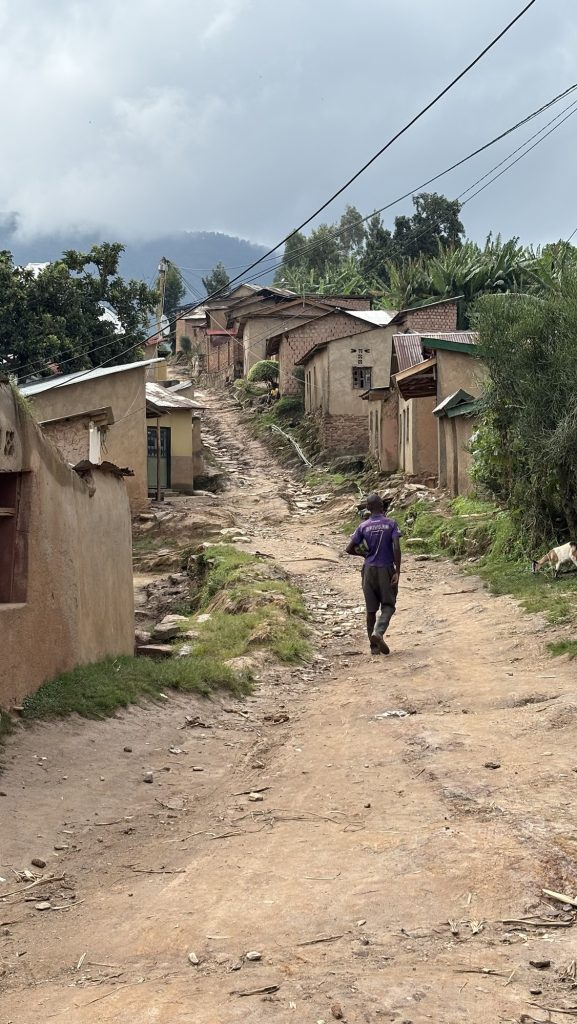
Eventually it gave in altogether, which meant I had to walk the final half mile to my guesthouse.
Note: I learned afterwards that Roland, my driver, managed to get the bearing replaced, at a nearby garage, in just under one hour. I imagine that back in the UK it would have taken at least a couple of days to get sorted?
Musanze, Rwanda – Volcanoes, Gorilla Country & Twin Lakes
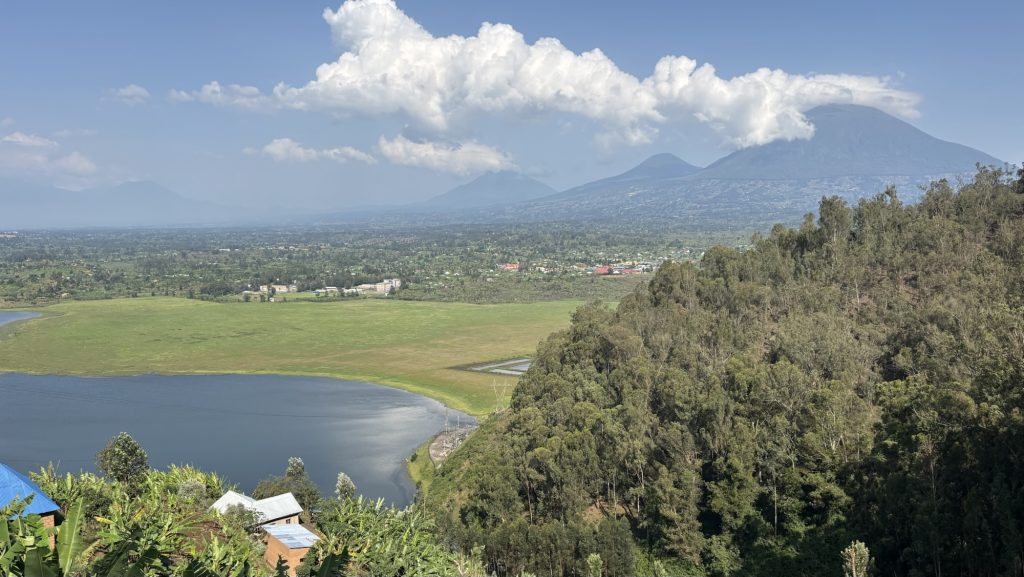
Musanze (formerly Ruhengeri) sits beneath the dramatic skyline of the Virunga volcanoes in northern Rwanda. It’s best known as gorilla trekking territory — misty peaks, red earth, and that cinematic East African light that makes everything feel like it’s about to become a documentary.
But before gorillas, there were lakes.
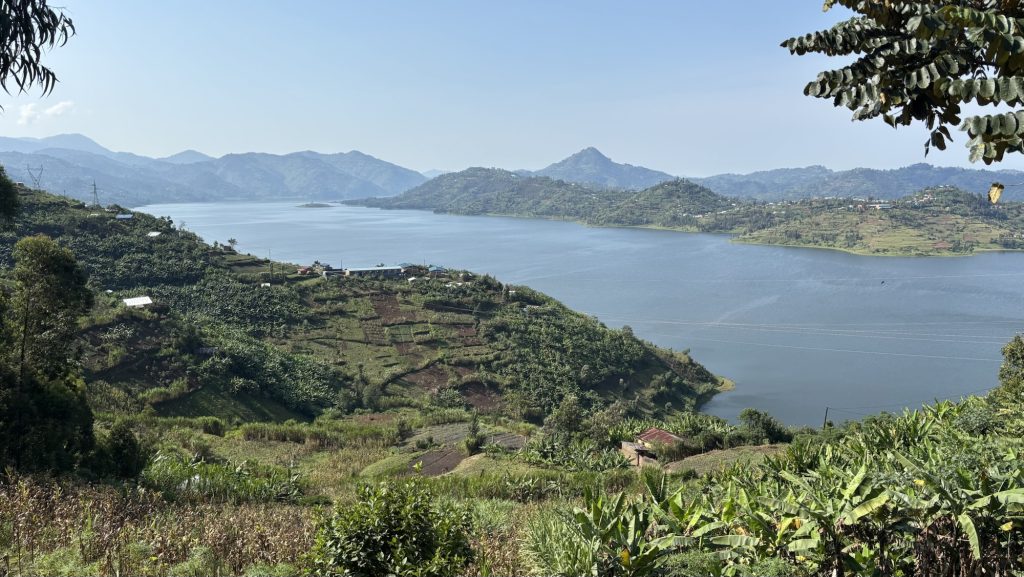
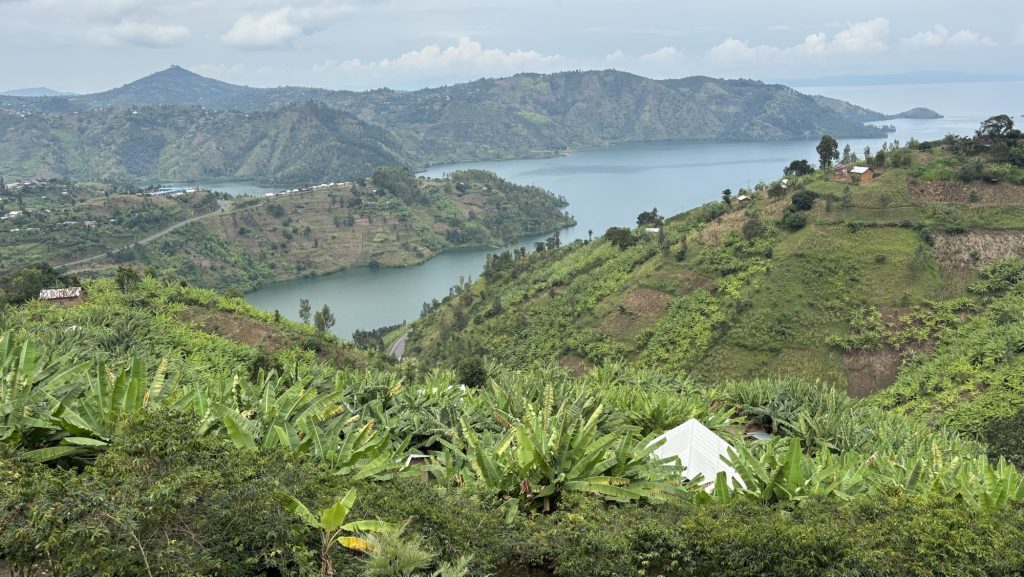
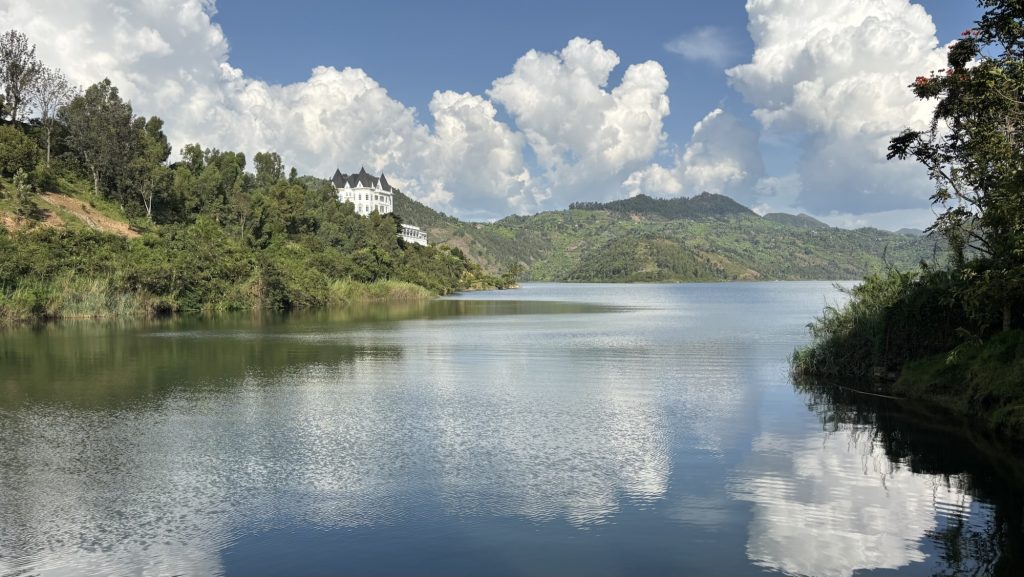
Just outside town lie the twin lakes of Burera and Ruhondo. From the small settlement of Kinoni, there’s a four-hour (out and back) ridge hike that provides breathtaking views across both.
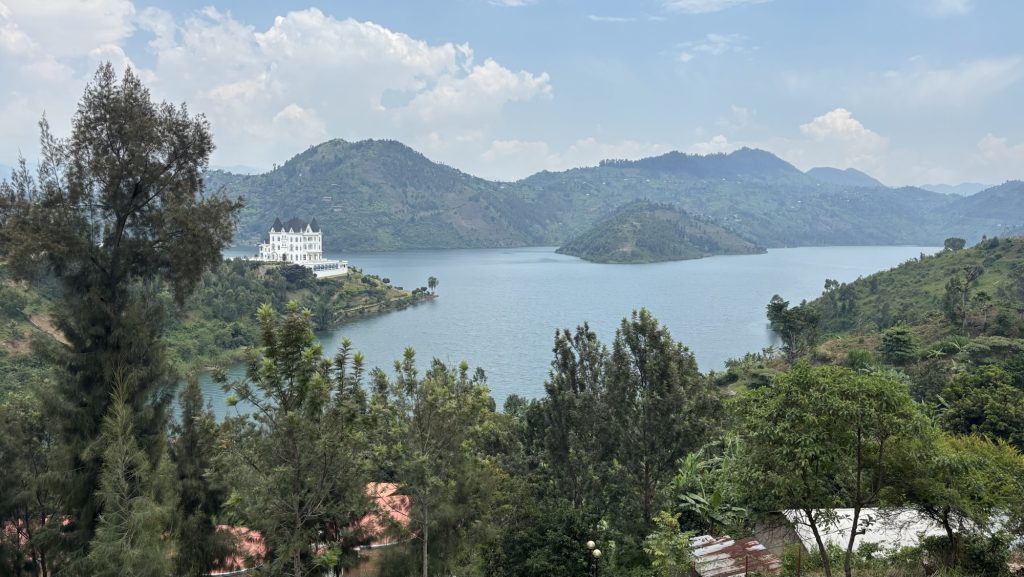
From the ridge, the lakes sit like deep blue mirrors cradled by terraced green hills. The land ripples in every direction. It’s the moment Rwanda’s nickname — The Land of a Thousand Hills — stops being a slogan and becomes a simple fact.
It’s quiet up there. Just wind in the trees and constant birdsong.
No traffic. No Wi-Fi. No screeching wheel bearings.
Exploring the Musanze Caves – Rwanda’s Lava Tunnels
Musanze also hides something underground — a vast network of lava tubes formed by ancient volcanic eruptions from the nearby Virunga range.
The Musanze Caves are officially government-run and guided, with listed tours at around $50 USD.
I hadn’t appreciated this. I simply turned up at the entrance and was greeted by two curious security guards.
What followed was an unexpectedly informal guided tour for significantly less — no hard hat, no dramatic torch beams, and no theatrical storytelling. Just cool air, rough volcanic rock, and long tunnels stretching into darkness.
The caves extend for around two kilometres. Some chambers open up cathedral-like; others narrow into damp passages where you’re suddenly very aware of the rock pressing in around you.
It’s raw. Slightly eerie. Quietly impressive.
From Musanze to Lake Kivu – A Scenic Bus Ride Through Rwanda
From Musanze I swapped volcanoes for water and took the local bus to Rubavu (still widely known as Gisenyi), on the northern shore of Lake Kivu.
The road winds through green hills so vivid they look edited.
Rubavu has sandy beaches, a faint holiday feel, and the slightly surreal experience of seeing Goma — in the Democratic Republic of Congo — just across an invisible line.
But it was further south, in Karongi (formerly Kibuye), that Lake Kivu truly revealed itself.
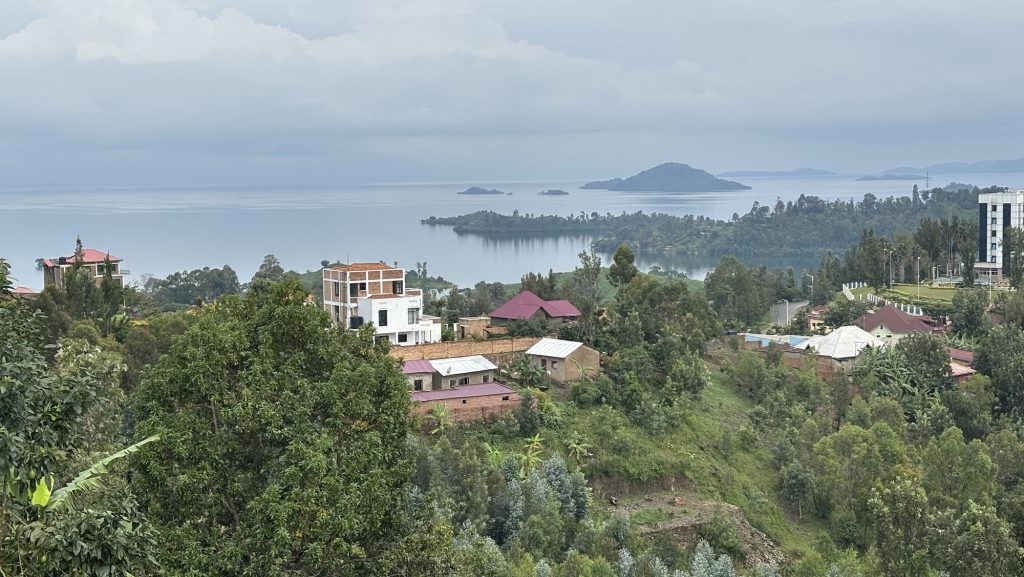
The bus ride takes about four hours, hugging the shoreline in a series of bends that never quite straighten. Every so often the lake flashes into view — deep blue, dotted with fishing boats and small islands.
Karongi doesn’t announce itself. It simply unfolds across steep hills that fall directly into the water.
And then everything slows down.
Lake Kivu, Rwanda – Hiking the Congo Nile Trail & Island Hopping
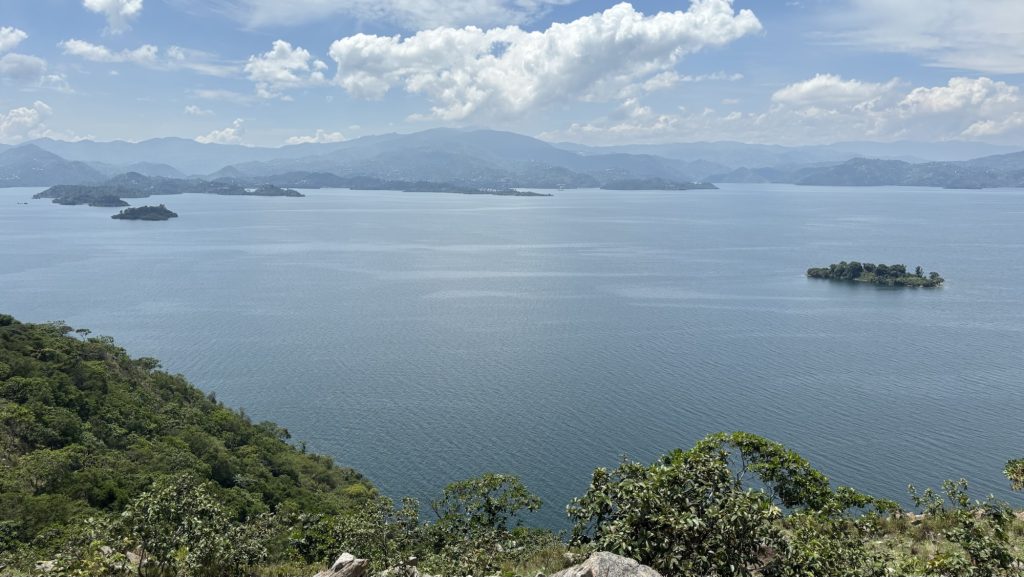
Lake Kivu stretches roughly 90 kilometres along Rwanda’s western border and plunges nearly 480 metres at its deepest point. It forms part of the Great Rift Valley system — geologically dramatic, even if it doesn’t show off about it.
Beneath the surface lies something remarkable — vast quantities of dissolved methane gas trapped by volcanic activity. Rwanda extracts this methane to generate electricity.
Which means, technically, you’re floating above a power station.
I spent my a fabulous day exploring a section of the Congo Nile Trail — a 227-kilometre route that traces the lake’s edge from north to south.
The trail rolls endlessly through fishing villages and banana plantations. Children shout greetings. Fishermen mend nets in the late afternoon light. It feels real, not curated.
I walked a nine-mile (14.5 kilometre) stretch from Karongi to Mubuga — undulating, scenic, and a solid reminder that Rwanda does not believe in flat terrain.
On my final day, in Ruhengeri, I took a three-hour island-hopping boat tour, with a guide names Jules. A 22-year old chap who knew the lake like the back of his hand.
From the water, the hills appear even steeper, rising sharply from the deep blue surface. Small wooden fishing boats drift past. The light softens. It’s quite simply breathtaking.