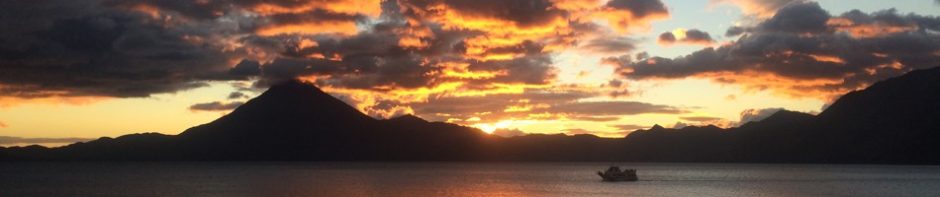
Beautiful Suchitoto (El Salvador).

After a one night stay in non descript La Palma I took a bus south to the road junction at Aguilares and boarded another bus, headed east, for Suchitoto.

The bus was standing room only when, not too long into the journey, we approached a school with about 30 kids stood outside. Nievely I thought they were waiting for another bus. How wrong I was. Somehow these 30 plus kids managed to find space on our bus!

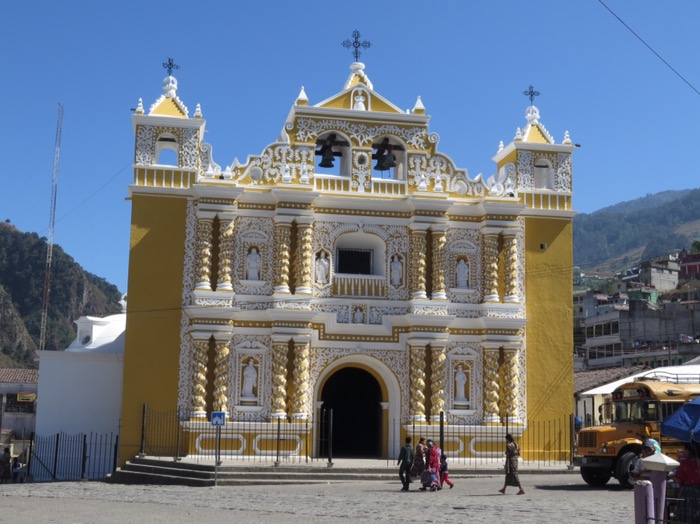
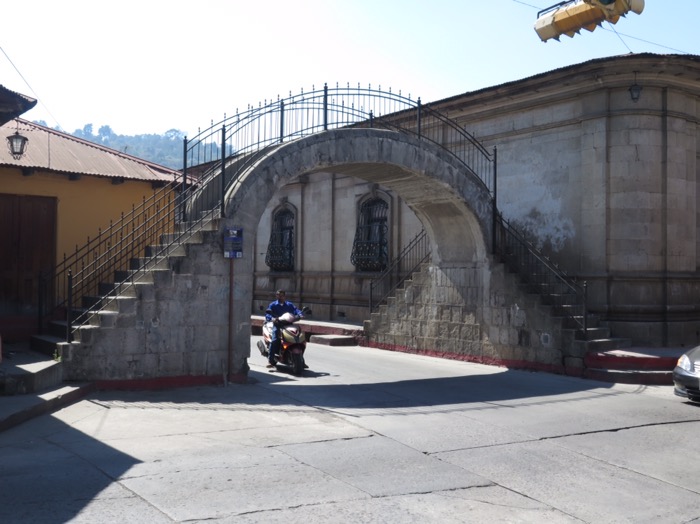
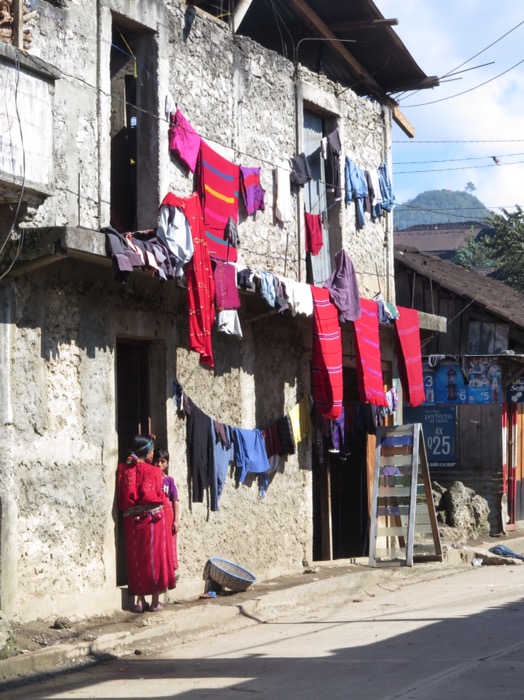
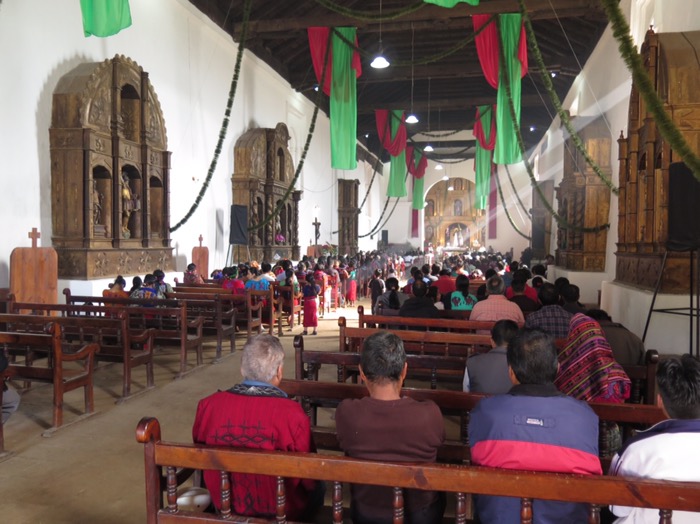
Seemingly lifted from a magical realist novel, Suchitoto has held firm and prospered against the weight of history just as its weekend arts fest turns the quintessential town square into one giant production of guanaco pride. None of this is new, however; when indigo ruled the marketplace and the beautiful Spanish church was packed daily, Suchitoto was the country’s unabashed cultural capital. It retains its title with ease. For those not fussed by the gallery and bar scene much of it not open during the week there are countless hikes to waterfalls, caves and beautiful Lago Suchitlán that begin and end just meters from town. Suchitoto is also a bird migration zone with over 200 species. Thousands of hawks and falcons fill the skies as the seasons change, and birds of all sorts nest in the relative safety of the lake islands.

The reservoir (also known as lake Suchitlán Cerrón Grande) is the largest lake in El Salvador. Formed between 1973 and 1976 with the construction of a Hydroelectric Plant. It’s estimated that about 15,000 acres of land was flooded, which obviously caused massive discontent among those who occupied it.

I stayed at a lovely little hostel in Suchitoto called Hostal Los Sánchez, owned by two carasmatic brothers who have lived in Suchitoto all their lives. In an evening they used to sit outside the hostel drinking a beer and chatting to anyone that passed. I have a feeling that they probably knew everybody in town.

3-random tourists and I pooled our resources and hired a small boat that took us on a 1 1/2-hour tour of some the lake islands.

I loved Suchitoto.

Next stage: Santa Ana and the volcano hike.


 Next stage: Santa Ana.

Posted in El Salvador | Tagged | Leave a comment

Sometimes it’s worth ignoring all the warnings!

“El Salvador is that little dynamo in Central America that past visitors just keep going on and on about it. Glimpses of tropical paradise, lush tracts of pre-industrial national park, colonial splendour astride pristine volcanic lakes, searing colours and a fierce creative vision sit quietly in the shadows of an indomitable local pride. Here you’ll find a glorious coastline with world class waves, a culture clad capital famed for its nightlife, hard core war tourism and small town charm by the plaza load”. Excerpt from Lonely Planet’s guide to Central America.
El Salvador’s reputation preceded itself! I have to admit that I was extremely concerned about entering this previously ‘off-zone’ country, which some people had warned me to avoid completely.
From Santa Rosa Copán (in Honduras) I took the ‘standing room only’ micro bus to Nueva Ocotepeque (2-hrs). From there I was whisked to the border crossing, at El Poy, by a waiting taxi. Apparently my bus fare included the 10-minute taxi ride to the border! 

The taxi driver was exstatic when he found out that I was from the UK. “Ah, Manchester United, Liverpool, Chelsea.” Sadly his enthusiasm was lost on me. After a few minutes of shouting out footballers names, and glancing in the mirror at the non plussed expression on my face, he too lost interest in this pointless conversation!

It was a swift and painless border crossing leaving Honduras. However, the El Salvador border staff sifted through my passport with alarming scrutiny.

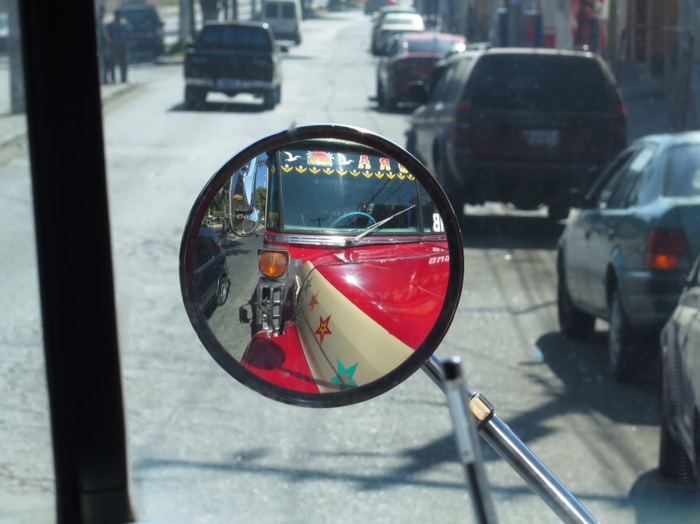
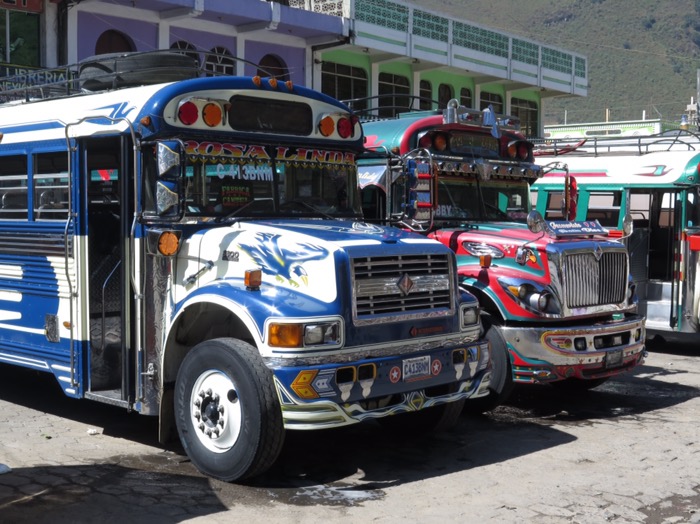
When eventually all the formalities were complete, it was a short walk to the nearby ‘terminal’ where a local ‘chicken bus’ was waiting to take me the 20-minute journey to my next port of call – La Palma (El Salvador).

Next stage: Beautiful Suchitito.


Posted in El Salvador | Leave a comment

Griff’s overview of Honduras.

Honduras unfortunately still struggles to escape its bad reputation for safety. It has one of the highest homocide rates in the world, and San Pedro Sula and Tegucigalpa (the capital) are the no 1 and no 4 most violent cities respectively (not counting cities in war zones). It should be said that the gang violence rarely affects tourists, and safety was also never an issue for me personally. You can still navigate a country like this safely as long as you take care, but it did often make me feel more limited in what I could do.

I think as a consequence, it was also harder for me to fall in love with Honduras. Also, security situation aside, there aren’t a lot of sights or places that really put Honduras on the map.

The first big reason to go to Honduras is scuba diving around the Bay Islands. It’s probably the cheapest place to learn to scuba dive or to take fun dives anywhere in the region, and from the Honduran coast you can gain access to the second largest reef in the world. However, I personaly wouldn’t recommend Utila Town for those wanting to avoid traffic, pollution, noise, hassle, drunks and drugs. Instead head to one of the Cays.

The other main attractions in Honduras are the Mayan ruins of Copán Ruinas, near the Guatemala border, and D&D Brewery, near Lago de Yojoa. 

Gracias and Santa Rosa de Copán were of some interest but not worth going out of your way for.


Posted in Honduras | Leave a comment

Two One Horse Towns.

From D&D Brewery I headed south and visited a couple of towns on route to the El Salvador border.

Gracias is a small, tranquil cobblestone town 47km southeast of Santa Rosa de Copán. For a brief time in the 16th century, it was the capital of all Spanish conquered Central America. Traces of its former grandeur remain in its centuries old buildings, colonial churches and impressive fort. The pace of life here rarely moves much faster than walking. Founded in 1526 by Spanish Captain Juan de Chávez; its original name was Gracias a Dios (Thanks to God). Eventually the town’s importance was eclipsed by Antigua in Guatemala.

The hotel I stayed in at Gracias was quite an experience. Made completely of concrete and with only tiled floors every cough and sneeze echoed around the hotel like a vast canyon. I could hear everything from chairs scraping to guests using the loo!

Santa Rosa de Copán is a cool mountain town with cobbled streets and some lovely, restored colonial buildings. Less tranquil than Gracias but with more going on, including some great cafes and restaurants.

La Flor de Copán Cigar Factory, 2km out of town, shows visitors the craft behind making hand rolled cigars. Sadly it was closed on Saturday, when I arrived. A result of poor planning on my part!

Next stage: Border crossing into El Salvador.

Posted in Honduras | Tagged , | Leave a comment

Lago de Yojoa.

Largely undeveloped, and ringed by dense tropical forest, Lago de Yojoa is incredibly picturesque. Thanks to the unwavering efforts of a local microbrewery owner to promote the region, the lake is now the most popular spot to break the journey between the Bay of Islands and El Salvador or Nicaragua.

At San Pedro Sula bus terminal I bid farewell to Ashlee and Rachel and caught the el Mochito bound chicken bus to the village of Los Naranjos (1 1/2 hours) and headed straight to D&D Brewery.

Rapidly establishing the lake as a backpacking mecca, this excellent hostel has been transformed by Virginian Bobby Durrette, who first came to Honduras with the Peace Corp. 

The accommodations are extremely comfortable and excellent value. However, D&D’s trump card is its microbrewery, with a number of tasty beers on tap. The food is excellent and the local coffee fabulous. It also has an super social area that facilitates the opportunity to meet fellow travellers.

Thanks to a lovely Australian couple, who invited me to join them and their 18-month old son, I enjoyed a couple of excellent day trips:

Pulhapanzak is a magnificent 43m waterfall on the Río Lindo, just 17km north of Lago de Yojoa. Surrounded by some lush, well preserved forest, it’s a well organised, privately run beauty spot where guides are available to lead you along a path directly behind the waterfall.

Parque Nacional Cerro Azul Meambar is a well equipped park with kilometers of trails leading to waterfalls, caves and untouched cloud forest. There is also a visitors centre, lodge and restaurant here. Along the route, of the main hike, (a round trip of 4-hours) there are some excellent ‘miradors’ (view points) with awesome views across Lago de Yojoa.


   Next stage: Gracias and Santa Rosa de Copan.

Posted in Honduras | Tagged , | Leave a comment

A strange turn of events.

Despite many years of travelling it can still take a considerable amount of effort to make that initial contact with fellow travellers. However, a simple ‘hello’ can be the start of some wonderful new friendships.

It was during breakfast that one of the two girls at the next table to me asked what I thought of the coffee. Pretty ordinary, I replied. The coffee debate continued; the girl went on to explain that she was the owner of a small restaurant in the USA and was in Honduras looking for a good coffee supplier. I mentioned my volunteer work in Colombia and very quickly we were deep in conversation. It soon transpired that all three of us were looking to get the hell out of Utila town as quickly as possible.

The coffee girl (Ashlee) said that she and her friend (Rachel) were due to catch a boat to one of the Cay’s where they were planning to do some diving. She asked if I would like to join them. Two hours later we were on board a small wooden boat heading towards a tiny island jam packed with little houses.

Jewel Cay and Pigeon Cay are located just off the southwest corner of Utila island, about 20 minutes by boat. The two islands are pleasantly small. In fact, one of their greatest draws is their tiny size and the total lack of motorised vehicles. There is only a single path, connected by a small concrete bridge, that runs from one end of Jewel Cay all the way across to the far end of Pigeon Cay. As expected, with a single path no more than 420 meters long, finding your way around doesn’t take long – you can walk the whole length of the place in about 6 minutes.

The hotel where we stayed is owned by a family who are Seventh Day Adventist’s and a such don’t do business on a Saturday – from dawn until dusk. All we could do, once we arrived on the Cay, was enjoy some snorkelling – in the crystal clear waters of the Carribean Sea – and laze about in hammocks.

On Sunday the three of us enjoyed a couple of reintroduction dives, which were both relaxed and quite simply amazing. We were the only people in the group. Had we stayed on the mainland we would have been on a boat with at least 11 other divers. The visibility was excellent and the water incredibly warm.

On Monday we visited the northern part of Utila where the diving was superb. Lots of Trumpet fish, Angel fish, Baracuda, Eagle Ray’s, Parrot fish, Moray Eel’s, Trigger fish, and a couple of turtles.

On Tuesday, following one more night on the mainland, the three of us caught the early morning ferry back to the main land. Ashlee and Rachel were heading in a different direction to me so yet again it was time to say ‘adios’ to some wonderful new friends.

Next stage: Lago de Yojoa & D&D Brewery.


Posted in Honduras | Tagged | Leave a comment

One huge disappointment.

Famous throughout the backpacking globe as ‘the’ place to learn to dive in Latin America, Utila’s reputation precedes itself. A distinctly quirky little island, Utila has a unique heritage: British and African ancestry and strong cultural influences from Jamaica and the Central American mainland.

Travelling by bus in Central America is truly an unknown quantity. For my next journey it was imperative to leave plenty of time in order to catch the last ferry from the north Honduran mainland to the island of Utila.

The rickety bus coughed and splutteted it’s way out of Copán Ruinas just after 06:30 and took around 3-hours to get to San Pedro Sulas (SPS) – allegedly one of the the most dangerous cities in the world (The Guardian). From SPS’s huge, and surprisingly plush, bus terminal it was a 4-hour bus journey to the port of La Ceiba.

Fellow travellers had waxed lyrical about how amazing the island of Utila was and so my spirits were extremely high as I boarded the smart new ferry – ‘Utila Princess’. The older ferry is still running and whilst it costs a third of the price of the new one, it is a slow, delapidated, rust bucket in comparison.

Utila is small – in fact 13km long and 5km wide. Virtually the entire population lives in one settlement, Utila Town, set on a curving bay. There are only two small beaches here, and a cluster of tiny cays off the island’s southwest shore. Today Utila earns its keep from its reef and the resultant diving.

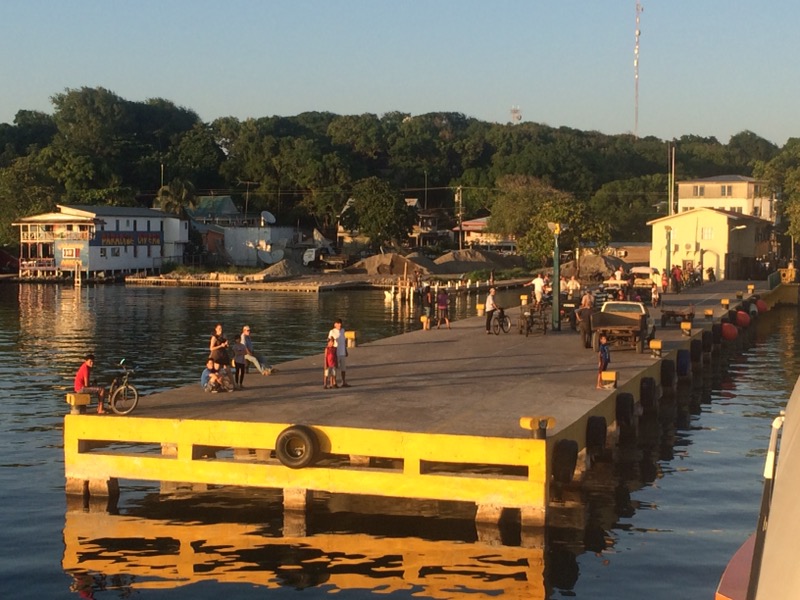
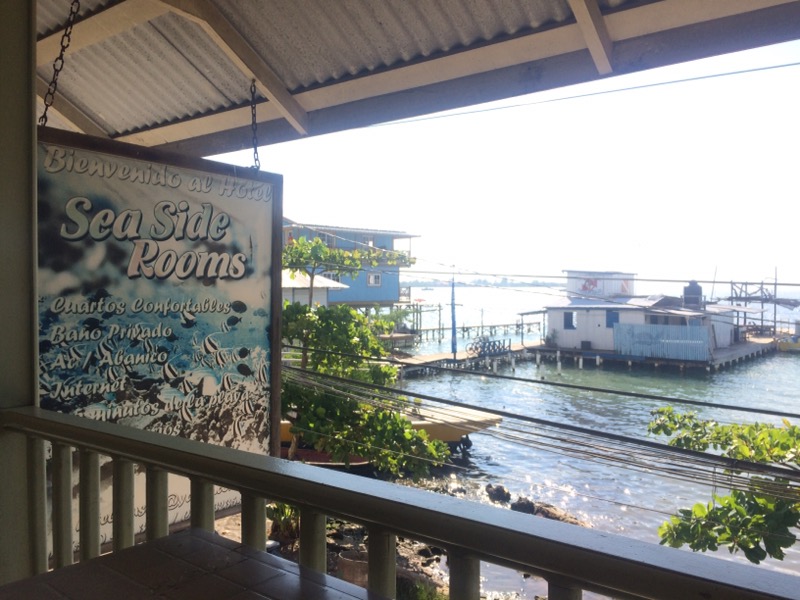
The new ferry took about 45 minutes to complete its journey from La Ceiba to Utila town. During the short walk from the ferry terminal to the main street I was greeted by a crowd of brochure waving touts who were doing their best hard sell. Thankfully I had rung ahead and booked a little hostel (Sea Side Views) just out of the centre. 

The walk to my hostel, along the main street, left me shaking my head in dissbelief. Utila is a far cry from the manicured Caribbean hideaway that I had in my mind. For such a tiny island Utila has an incredibly annoying traffic problem: a constant tide of motorcycles, quadbikes, tuk-tuks and pickups that curses the island’s two streets. The sheer mass of tourists was an instant turn off for me, as was the huge amount of trash strewn everywhere.

Within an hour of being on the Island I was planning my return to the mainland. But with no ferry until the following day I had to make the most of my current situation. I managed to find a small restaurant that mixed an awesome G&T and served a delisious fish supper.

Next stage: A strange turn of events.


Posted in Honduras | Tagged | Leave a comment

Copán Ruinas con nuevos amigos.

The beautiful little town of Copán Ruinas, simply called Copán, is a pleasent, traveller oriented town in western Honduras. Sloping cobblestone streets, white adobe buildings with red-tile roofs and an attractive colonial church give it a highly atmospheric, tranquil air. It seems that most travelers stop here just for the ruins, but that’s a mistake: Copán’s collection of excellent restaurants and bars, beautiful attractions in the surrounding countryside and friendly population are all reasons to linger just that little bit longer.

The alarm clock (iPhone) was set for 4am but with a long journey ahead of me, including a border crossing, I was apprehensive and did not sleep well at all. By 3am I was wide awake – despite that cheeky glass of Merlot, which I had enjoyed the previous evening.

As a ‘traveller’ you rarely know from one day to the next who you are going to meet. Sometimes you can go for days on your own then all of a sudden you bump into some amazing people. So it was to be the case over the next 10-days.

The shuttle bus arrived at my hotel (La Ermita) at precisely 04:30. Already on board were a young couple who looked to be ‘westerners’. I bid them ‘Buenos Dias’, and took the seat behind them. It wasn’t long before we were engaged in deep conversation. The micro bus slowly filled up with other passengers as it bumped and weaved it’s way through the deserted cobble stoned streets of early morning Antigua.

Ola (originally from Poland) and Mike (from the UK) now live in New Zealand. They both come from humble backgrounds but have excelled in their respective fields. For example, Mike was born into a working class family with little prospect of going to university. However with grit and determination he worked his way through education and is now a professor at one of the leading universities in Christchurch. Ola’s story is equally humbling.

The journey from Antigua to Copán took 6-hours including the border crossing. However with such great company it flew by. We all checked into Hotel Mary, a cheap but clean little number where we met Deeana – a delightful and friendly lady from Australia. The four of us spent the next three days together enjoying the hospitality and places of interest in, and around, Copán.

Macaw Mountain is a beautifully landscaped bird sanctuary and breeding center about 3km northeast of Copán. The setting is lovely, with a well defined trail leading through a thickly forested valley and over a gurgling river. The resident flock of rescued, abandoned and endangered birds here includes five kinds of macaw, parrots, toucans, grey hawks and great-horned owls. Some birds are allowed out of their cages at feeding time, squawking and interacting with visitors – check out the photo below!

Copán Archaelogical Site: One of the most important of all Maya civilizations lived, prospered then mysteriously crumbled around the Copán archaeological site. During the Classic period (AD 250–900), the city at Copán Ruinas culturally dominated the region. The architecture is not as grand as Tikal’s but the city produced remarkable sculptures and hieroglyphics. The ruins are a pleasant 1km stroll outside of Copán. We booked a guide (Micheal) who spoke excellent English and gave us an incredibly interesting 3-hour tour.

Next stage: Utila Cuys, scuba diving, and two chicas from the USA.


Posted in Honduras | Tagged | Leave a comment

The Chez Daniel Loop – Part Two.

Nebaj to Huehuetenango:

Mostly a stopping off point for more interesting places, Huehue (way-way) offers few charms of its own, but I loved it for its true Guatemalan character. There are enough eating and sleeping options here to keep most people happy, and the sight of the Cuchumatanes mountain range (the highest in Central America) in the background makes for some striking scenery.

Huehuetenango to Quetzaltenango:

Quetzaltenango, which the locals kindly shorten to Xela (shell-ah), is the perfect Guatemalan town. Not too big, not too small. It has enough foreigners to support a good range of hotels and restaurants, but not so many that it loses its national flavor. The Guatemalan ‘layering’ effect is at work in the downtown area here once the Spanish moved out, the Germans moved in and their architecture gives the zone a somber (Gothic) feel.

Day trip to Zunil from Xela:

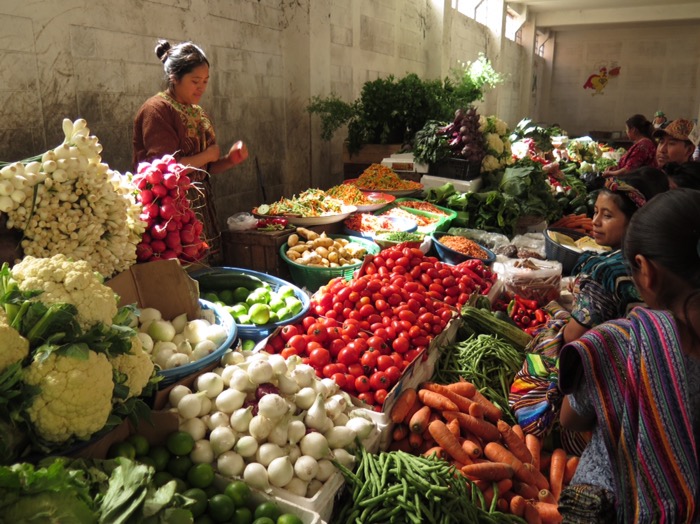
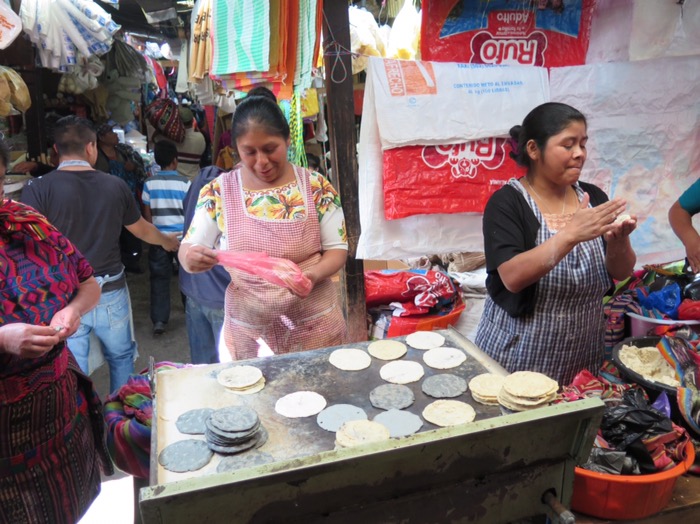
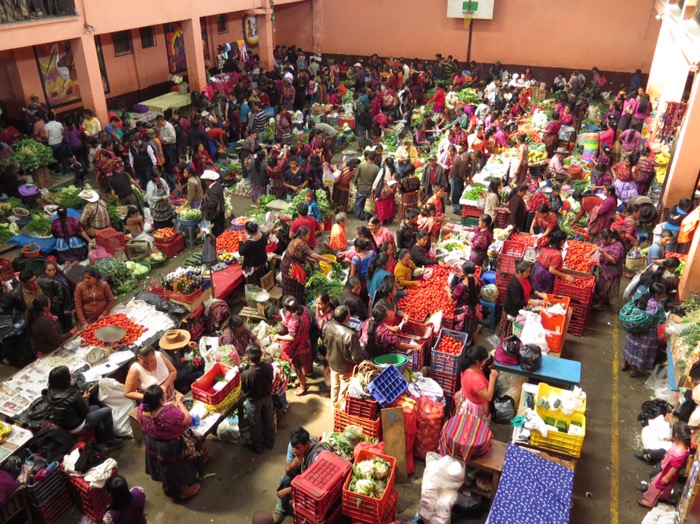
The pretty agricultural market town of Zunil is set in a lush valley and dominated by a towering volcano. The white colonial church that gleams above the red-tiled and red-tin roofs of the low houses is particularly photogenic.  Other draws include the weekly market, held on Mondays, and the image of San Simón, an effigy of a local Maya hero venerated as a (non-Catholic) saint. The effigy is moved each year to a different house.

Next stage: back to Antigua and the border crossing into Honduras.


Posted in Guatemala | Tagged , , | Leave a comment

The Chez Daniel Loop – Part One.

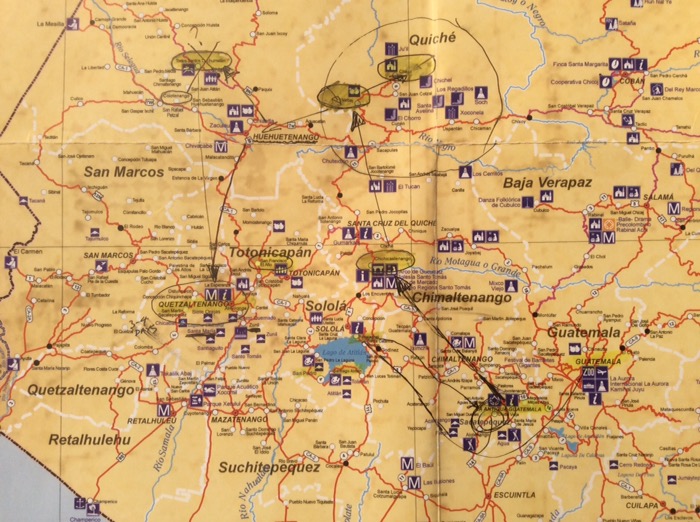
The Chez Daniel Loop.

A circuit of western Guatemala – as suggested by Daniel, the owner of B&B Chez Daniel in Antigua. 


Antigua to Chichicastenango: Surrounded by valleys, with nearby mountains looming overhead, Chichicastenango seems isolated in time and space from the rest of Guatemala. When its narrow cobbled streets and red tiled roofs are enveloped in mists, it’s magical.


Chichicastenango to Nebaj (via Huehuetenango): Set deep in a bowl in the dramatic, largely untouched Cuchumatanes mountains, Nebaj’s foreigner population consists of equal parts hardcore hikers and volunteers who work with the desperately poor communities in the surrounding countryside. The locals, removed from modern influences, proudly preserve their ancient way of life.

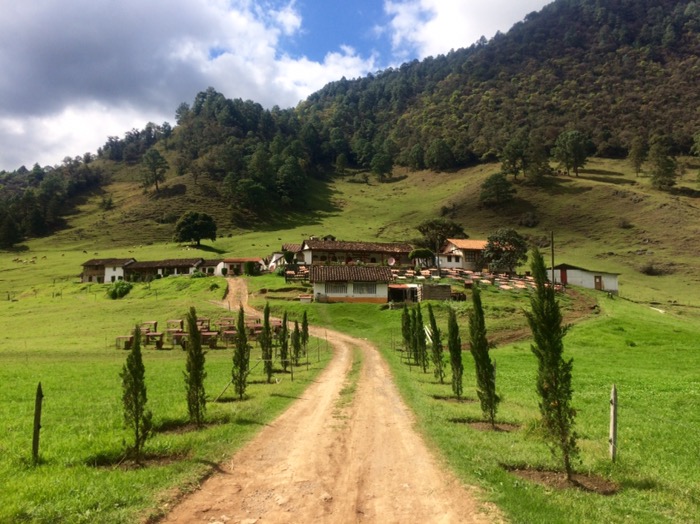
Nebaj to Hacienda San Antonio (Acul): Giuseppe Azzari Magini was a great Italian artisan cheese maker who was born in the Swiss Alps – an ideal location for making cheese.

In 1932 Giuseppe, who by now had been working in California for some years, left the United States and headed to Guatemala. He settled in Ancul and built what is now called Hacienda San Antonio.

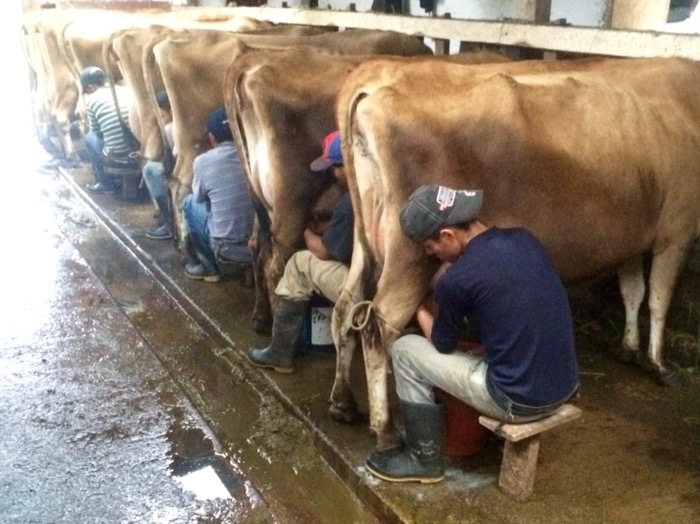
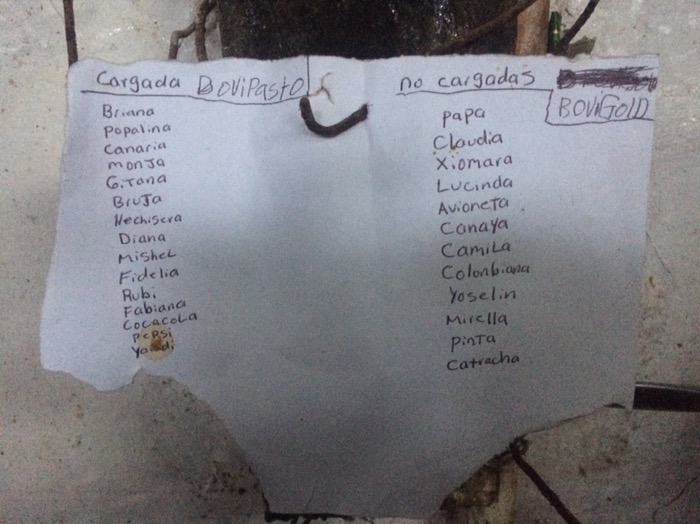
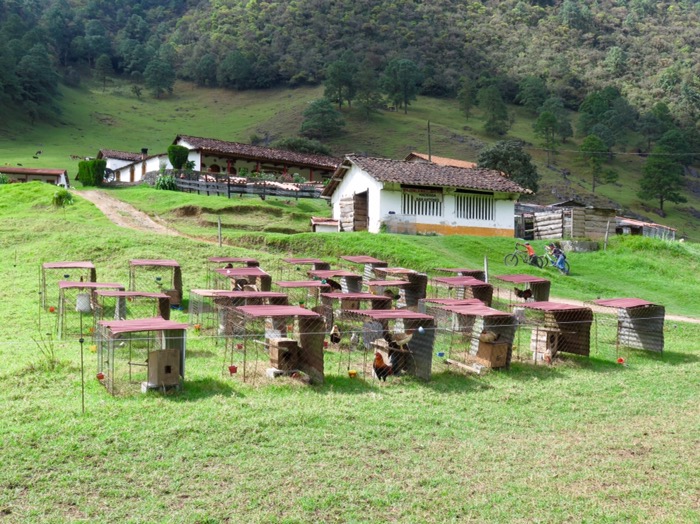
The Hacienda currently has 37 Jersey and Friesian cows that are all milked by hand; it takes five people around an hour to milk the whole herd. The milkers sit on a 1-legged milking stool which is strapped to them like a belt! Each cow has its own name. A rope is tied around their legs to stop them kicking! All the milk is organic and the level of hygine would put UK farmers to shame! Every cow is hand washed for around 3-minutes prior to milking. The Hacienda makes its own cream and cheese. Any surplus milk is collected, in churns, and sent to the nearby market.

Next stage: The Chez Daniel Loop – Part Two.


Posted in Guatemala | Leave a comment