La Violencia.

WARNING! You may find the following narrative and photographs disturbing.

After a period of relative peace, a struggle between Liberals and Conservatives broke out in 1948 with ‘La Violencia’, the most destructive of Colombia’s many civil wars, which left a death toll of some 300,000 people.

By 1953 some groups of Liberal supporters had begun to demonstrate a dangerous degree of independence. As it became evident that the partisan conflict was taking on revolutionary overtones, the leaders of both the Liberal and Conservative parties decided to support a military coup as the best means of retaining power and pacifying the countryside.

The dictatorship of General Rojas Pinilla was not to last. In 1957 the leaders of the two parties signed a pact to share power. The party leaders, however, repressed all political activity that remained outside the scope of their parties, thus sowing the seeds for the appearance of guerrilla groups.

Birth of FARC & the Paramilitaries:
During the late 1950s and early 1960s Colombia witnessed the founding of many guerrilla groups, each with its own ideology and its own political and military strategies. The most significant – and deadly – movements included FARC, Ejército de Liberación Nacional (ELN; National Liberation Army) and Movimiento 19 de Abril (M-19; April 19 Movement).

Until 1982 the guerrillas were treated as a problem of public order and persecuted by the army. President Belisario Betancur (1982–86) was the first to open direct negotiations with the guerrillas in a bid to reincorporate them into the nation’s political life. Yet the talks ended in failure, and the M-19 guerrillas stormed the capital’s Palacio de Justicia in November 1985, leaving more than 100 dead.

All sides have committed and continue to commit atrocities, and the UN High Commissioner for Refugees (UNHCR) says Colombia has more than 4 million internally displaced people (almost 10% of the population), with the rural poor caught in the crossfire between the guerrillas, the still-active paramilitaries and the army.

Excerpt From: Planet, Lonely. “Lonely Planet South America.” Lonely Planet. iBooks. This material may be protected by copyright.

Over the years ‘La Violencia’ has touched most Colombians in some way or another. For example, numerous members of the Echeverri family (the owners of Hacienda Venecia) have been kidnapped, with two members of the family actually being murdered by their kidnappers. As a result of this, all the passenger carrying vehicles on the farm are bullet proof.

The war between the various drug cartels was particularly brutal. “Terror became art, a form of psychological warfare. In Colombia it wasn’t enough to hurt or even kill your enemy; there was a ritual to be performed. Rape had to be performed in public, before fathers, mothers, husbands, sisters, brothers, sons and daughters. And before you killed a man, you first made him beg, scream, and gag… Or first you killed those he most loved before his eyes. To amplify revulsion and fear, victims were horribly mutilated and left on display.”

Excerpt from Killing Pablo by Mark Bowen.

20140428-103343.jpg

20140428-110053.jpg

20140428-110116.jpg

Posted in Colombia | Leave a comment

Bienvenido a Colombia.

Where is Colombia?
The Republic of Colombia is in northwestern South America. It is bordered by Venezuela and Brazil to the east, Ecuador and Peru to the south, Caribbean Sea to the north, Panama to the northwest, and the Pacific Ocean to the west. It has the second-largest population in South America, and the 29th largest in the world.

What is the capital of Colombia?
Santa Fe de Bogotá is the capital of Colombia. It was founded by Gonzalo Jimenez de Quesada. It has an estimated population of 8,600,000 and covers an area of 612.7 square miles!

What is the currency of Colombia?
Colombian peso has been the currency of Colombia since 1837.

What is the official language of Colombia?
Spanish, along with English, is the official language of Colombia.

What is the religion of Colombia?
The Colombian constitution guarantees freedom and equality of religion. Christianity is the dominant religion in the country: 95 % of the population is Christian while 1% follows indigenous religions and another 1% follows Judaism, Islam, Hinduism, and Buddhism.

What is the literacy rate of Colombia?
Literacy rate in Colombia is 92.7%. Basic education is compulsory by law.

What is the national emblem of Colombia?
The Colombian coat of arms contains a shield divided into three portions. On the top of the shield is an Andean Condor holding an olive crown. The condor symbolizes freedom. The national motto, ” Libertad y Orden” is on a scroll in between the bird and the shield. The national flag is draped on both sides of the shield.

Who is the political leader of Colombia?
The president of Colombia is both the head of the state and the head of the government. Executive powers are exercised by the government. Former minister of foreign trade, minister of finance as well as national defense, Juan Manuel Santos has been the president of the country since August 7, 2010. Serving under him is the vice president of Colombia, Angelino Garzon. He served as the second minister of labor and social protection, and was the 69th governor of Valle del Cauca. He assumed office on August 7, 2010.

What is the economy of Colombia like?
Colombian economy is the fourth-largest economy of Latin America. The estimated GDP of the country is 285.511 billion dollars. It was urbanized rapidly in the twentieth century. Colombia is rich in natural resources and is known as the world’s leading source of emeralds. It exports petroleum, coal, coffee, gold, etc., to its trading partners: United States of America, European Union, Venezuela and China.

20140428-074807.jpg

20140428-074847.jpg

20140428-074910.jpg

Posted in Colombia | Leave a comment

Feliz cumpleaños.

Celebrating my birthday – Colombian style.

A welcome break from the staff quarters came in the form of an invitation to spend the eve of my birthday at ‘Casa Principal’ (the main house). A room here normally costs circa £100 a night – it is a gorgeous place in an amazing location.

Casa Principal is equipped with a huge outdoor cinema, so that evening we watched ‘a good year’ staring Russell Crowe.

Next morning I was treated to ‘breakfast in bed’ followed by a leisurely ‘lie in’. All the staff at Hacienda Venecia had got to hear about my birthday and as I met them, as the morning unfolded, I was bombarded with smiles, hugs, and kisses. Later that day Hanna and I were driven into Manizales where we enjoyed lunch and some retail therapy.

At around 7.30 pm we arrived back at Hacienda Venecia and enjoyed a sumptuous meal with Juan Pablo and his parents. A simple but absolutely scrumptious birthday cake was also quickly devoured along with the odd glass of Malbec.

20140429-080827.jpg

20140429-080841.jpg

20140502-080439.jpg

20140502-080515.jpg

20140502-080551.jpg

Posted in Colombia | Tagged | Leave a comment

From ‘crop to cup’ – part 4 of 4.

Picture if you will a Pyramid – at the base of the pyramid can be found Robusta coffee then, as you climb up, you get Natural Arabica, then Washed Arabica, then speciality coffees – like ‘Kopi Luwak’. The price of the coffee increases the further up the pyramid you go.

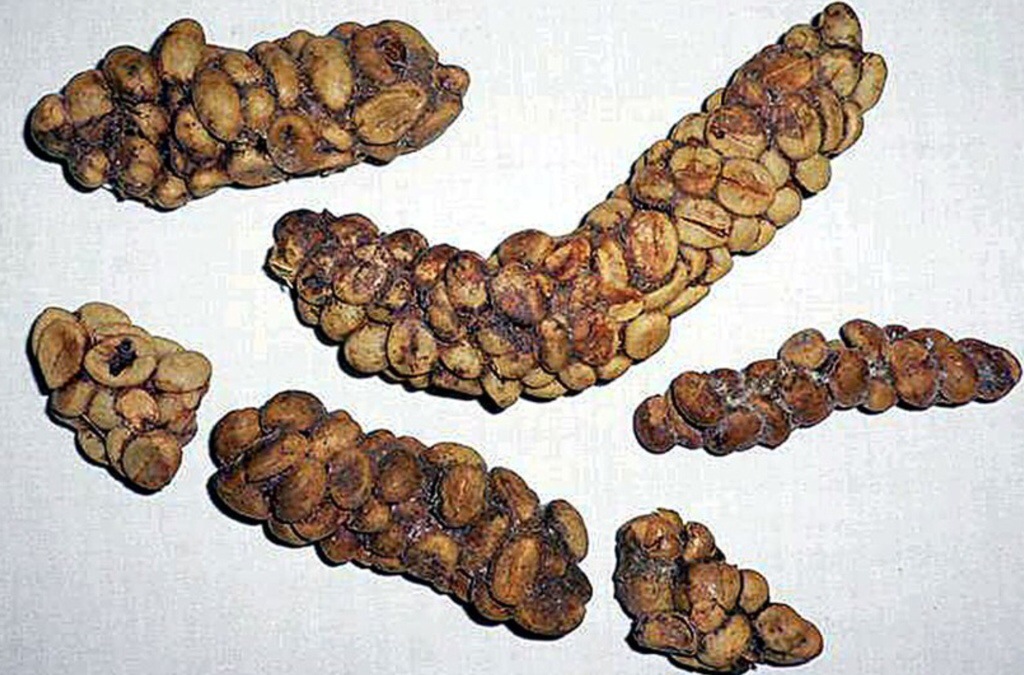
Kopi Luwak (Indonesian pronunciation: [ˈkopi ˈlu.aʔ]), or civet coffee, refers to the seeds of coffee berries once they have been eaten and egested by the Asian palm civet. Kopi Luwak can be found in Sumatra, Bali, and Java and is one of the most expensive coffees in the world. The luak, a small catlike animal, gorges after dark, on the most ripe, and best cherries. It digests the fruit and expels the beans, which our collected, washed, and then roasted. A 16 ounce bag would set you back £224.00 or £14.00 an ounce.

However, Colombian coffee is a ‘single origin’ coffee and is of excellent quality and therefore more expensive than blended coffees. It is also more expensive than naturally dried Arabica because of the work involved in the washing process. From harvesting to your home can take up to 1 year. All Colombian coffee is rigorously tested, with only the best being chosen for export. The reason that Colombian coffee cannot be naturally dried is all down to the humidity here.

Coffee is not usually roasted prior to exportation. Each country has it’s own ‘unique’ blending and roasting processes, which depends on the ‘culture’ of that country. In many cases, cheaper Robusta is blended with the more expensive Arabica. Different roasters have different blending strategies. Some use only two to four different coffees; these blends can have very distinct tastes and will vary a lot year to year. Other roasters will try to keep the blend’s taste the same year in, year out. They will do this by using seven to twelve different coffees, many from different plantations in the same country and region, so as to average out the annual variations of coffees from any one plantation.

The Roasting:
Roasting is where the coffee’s flavour is fulfilled. In the majority of cases the roasting process takes place in the country that imports the green coffee (Almond Coffee).

The green coffee beans are heated in large, rotating drums using temperatures of about 550 F (288 C). The tumbling motion of the drums keeps the beans from burning. The beans first turn a yellowish colour and smell a little like popcorn. After about 8 minutes, the beans “pop” and double in size. The beans have then reached about 400 F (204 C) and begin to brown as the oils within them start to emerge. This oil is called coffee essence or caffeol. The chemical reaction of the heat and coffee essence is called pyrolysis, and is what produces the flavour and aroma of coffee. A second “pop” occurs about three to five minutes later and signals that the bean is fully roasted. Roasting changes colour due to sugar Brownings.

When coffee goes through the roasting process it produces different aromas – first like straw, hay, bread, cakes, caramel, pop corn then burnt pop corn then coffee aroma. Roasting involves heat and ventilation. Low roasting produces sweet & acidic coffee, high roasting produces bitter coffee that is less acidic. Robusta coffee contains 2% caffeine, Arabica coffee contains 1% caffeine

Coffee beans will only keep for about 2-weeks after the packet has been opened, due to oxidation. Once opened coffee is best kept in a sealed container in a fridge. Ground coffee will only last for 7 days.

Marketing Colombian Coffee:
Juan Valdez is a fictional character who has appeared in advertisements for the Federation Nacional de Cafeteros de Colombia (National Federation of Coffee Growers of Colombia) since 1958, representing a Colombian coffee farmer. The adverts were designed by the Doyle Dane Bernbach ad agency, with the goal of distinguishing 100%-Colombian coffee from coffee blended with beans from other countries. He typically appears with his mule Conchita, carrying sacks of harvested coffee beans. He has become an icon for Colombia as well as coffee in general.

Other coffee options available:

Instant coffee:
Is made in a huge expresso then the moisture is removed by:
1. Evaporation or by
2. Freeze drying, then removal of the water crystals.

De caffeinated coffee:
The caffeine is removed using one of the following methods:
1. Ethyl Acetate – removes more than just the caffeine!
2. Solvents – removes more than just the caffeine!
3. CO2 – removes the caffeine only, but is a more expensive process.

So the next time you drink a cup of coffee spare a thought for what goes into producing it. The trip coffee takes, from the crop to your cup, turns out not to be straightforward after all, but rather a turbulent and unpredictable ride through the waves and eddies of international commodity dynamics, where the product itself becomes secondary to the wash of money and power.

20140419-063412.jpg

20140419-063441.jpg

20140419-063511.jpg

Posted in Colombia | Tagged , | Leave a comment

From ‘crop to cup’ – part 3 of 4.

Harvesting:
Colombian coffee is all about ‘freshness’. Due to its location, the central region of Colombia is able to take multiple harvests. All the coffee in Colombia is harvested by hand. In other countries, where the coffee is grown in flat regions, and where there is only one main harvest, the cherries can be harvested by machine.

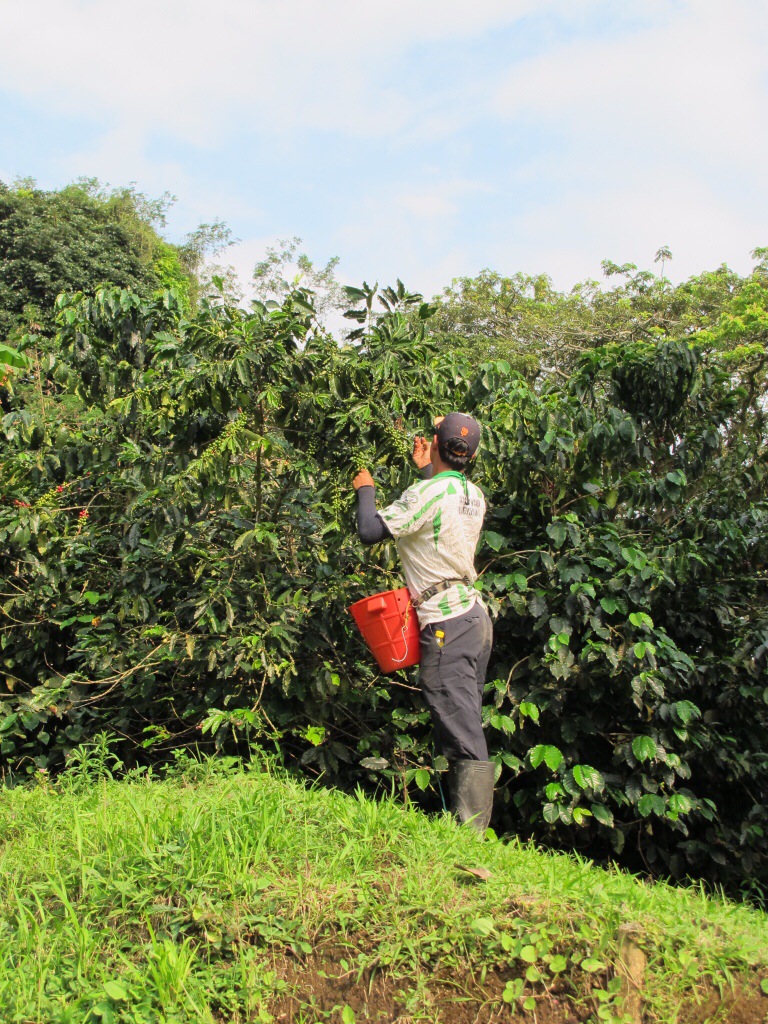
The pickers in Colombia collect the berries in baskets. Each time they reach the end of the field they empty their basket into a hessian sack. Each picker has a unique identification number. The pickers are paid by the amount they pick – ‘piece work’. The price they get per kg depends on the time of the season. During the high season they can pick 90 kg per day and get paid around 300 pesos per kg. Pickers can earn up-to 27,000 pesos per day. In the low season they are paid more per kg. The minimum wage in Colombia is 20,000 pesos per day. At the end of the working day the cherries are collected and taken to the processing plant.

Processing:
Colombian coffee can only be processed using the wet method, as opposed to the natural method. This is due to the humidity here. The cherries would just rot if you left them to dry naturally, and this would ruin the flavour of the coffee.

In the wet process, the fruit covering the seeds/beans is removed before they are dried. Coffee processed by the wet method is called wet processed or washed coffee. The wet method requires the use of specific equipment and substantial quantities of water. The coffee cherries are sorted by immersion in water. Bad or unripe fruit will float and the good ripe fruit will sink. The skin of the cherry and some of the pulp is removed by pressing the fruit by machine in water through a screen. The bean will still have a significant amount of the pulp (mucilage) clinging to it that needs to be removed. This is done in Colombia using the classic ferment-and-wash method. In the ferment-and-wash method of wet processing, the remainder of the pulp is removed by breaking down the cellulose by fermenting the beans with microbes and then washing them with large amounts of water.

For most coffees, mucilage removal through fermentation takes between 24 and 36 hours, depending on the temperature, thickness of the mucilage layer and concentration of the enzymes. The end of the fermentation is assessed by feel, as the parchment surrounding the beans loses its slimy texture and acquires a rougher “pebbly” feel. When the fermentation is complete, the coffee is thoroughly washed with clean water in tanks or in special washing machines. The washed coffee is then placed into silos where it is dried for 24 to 48 hours. The temperature of the driers varies between 20 and 50 deg Centigrade.

5 kg’s of cherries produces 1 kg of parchment, which produces 800 g of green coffee (almond coffee), which produces 600 g of roasted coffee beans.
Each plant produces 2.5 kg’s of cherries each year, therefore it takes 2 plants each year to produce 600 grams of coffee beans.

20140416-082341.jpg

20140416-082418.jpg

Posted in Colombia | Tagged , | Leave a comment

From ‘crop to cup’ – part 2 of 4.

Is that a fact?
We drink about 1.5 billion cups of coffee a day, with the USA drinking a 1/5 of this. In 2004 the coffee plantations of the world would have covered the country of Portugal. The 17 billion pounds of coffee grown worldwide in 2004 would have formed a pyramid with a base of more than 305 metres long on each side and would have towered to a height of more than 640 metres distracting tourists from the decidedly lesser Eiffel Tower at 318 metres.

There are currently 42 coffee producing countries in the world, with Vietnam and Brazil producing 60% of the worlds coffee. The number 1 producer is Brazil, number 2 is Vietnam, Colombia is number 3 – (growing 8% of the worlds coffee), and Indonesia is number 4.

Species.
A woody shrub, coffee can reach 10 metres in height, depending on the species and growth conditions. In cultivation however, it is usually pruned to about 2.5 metres to allow harvesting. Following pollination, the flowers wither, and each is replaced by a fleshy fruit surrounding a hard seed, like a cherry. Each “cherry” usually contains two seeds or coffee “beans”, although occasionally only one seed develops (called a “peaberry”).

Although there are more than twenty species within the genus coffea only two account for the vast bulk of the coffee drunk worldwide. Coffea arabica (known familiarly as arabica) is the original coffee and is native to the highlands of Ethiopia. Coffea canamphora var. robusta (known familiarly as robusta), is native to the hotter, wetter lowland forests of west Africa. Robusta entered the general commercial market relatively recently, after World War Two.

Coffee production in Colombia.
Colombia grows 1 million hectares of coffee. There are 500,000 families relying on this crop making the average size plantation 2 hectares. Hacienda Venecia grows nearly 200 hectares, making it an extremely big player.

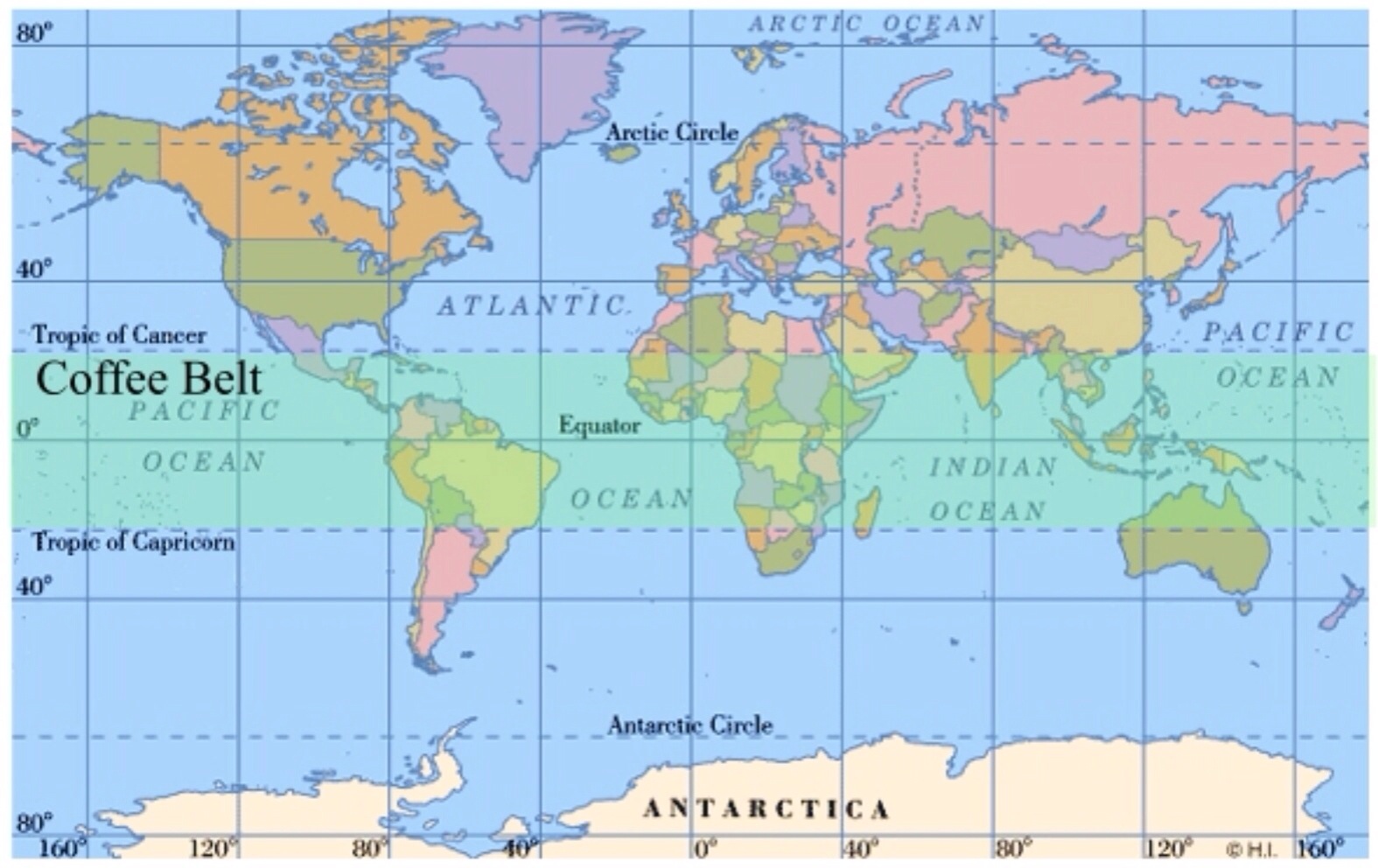
Coffee grows best between the Tropic of Cancer and the Tropic of Capricorn. In Colombia It is grown in the mountain regions, at 1000 to 2000 metres above sea level, where the temperature is between 18 and 25 deg C. Colombia lies about 5 degrees north of the Equator – this unique feature facilitates multiple harvests. This phenomenon is similar in Peru, Kenya and Tanzania (Mount Kilimanjaro).

Clouds pass over Central Colombia twice a year. First semester in the south, second semester in the north, therefore 2 rainy seasons and 2 dry seasons in the central region. The dry season encourages the flowering, the wet season encourages the berries to fill.

A coffee plant usually starts to produce flowers 1 to 3 years after it has been planted, and it is from these flowers that the fruits of the plant (commonly known as coffee cherries) appear, with the first useful harvest possible around 3 to 4 years after planting. The cherries ripen around eight months after the emergence of the flower. The berry changes colour from green to red, and it is at this point that they are harvested. In most coffee-growing countries, there is one main harvest a year; though in countries like Colombia, where there are two flowerings a year, there is a main and secondary crop, the main one April to June and a smaller one in November to December.

Due to the mountainous terrain, all coffee in Colombia is picked by hand.

20140414-070608.jpg

20140414-070704.jpg

Posted in Colombia | Tagged , | Leave a comment

From ‘crop to cup’ – part 1 of 4.

I have been receiving a lot of questions about coffee production here in Colombia.

First a history lesson.

Used traditionally by nomadic mountain warriors of the Galla tribe in Ethiopia, where the plant is indigenous, coffee was first eaten as a food sometime between 575 and 850 AD, long before it was made into a hot beverage, in 1000-1300 AD. Originally coffee beans were crushed into balls of animal fat and used for quick energy during long treks and warfare. The fat combined with the high protein content (not present in the beverage), was an early type of “energy bar”.

One well-known legend is that coffee was first discovered by a young goatherd named Kaldi who noticed his goats behaving frenetically after eating red berries from a nearby bush. Curious and hoping to energise himself Kaldi tried some. To his delight, his tiredness quickly faded into a fresh burst of energy and he began dancing about excitedly with his goats. It’s possible that Kaldi did not enjoy the flavour and threw them in the fire, which is how they may have got roasted for the first time.

The habit that Kaldi soon developed was noticed by a monk from a local monastery. The monk tried the fruits himself, and noticing the effect, came upon the idea of boiling berries to make a drink to help the monks stay awake during their religious services. News of the drink spread rapidly throughout all the monasteries in the kingdom.

From Ethiopia (Arabica coffee) it travelled to Yemen via the harbour of Mocha. In Arabia the beans were cooked, which killed them genetically – preventing their production in other countries – Arabia monopolised and controlled the market for a long time. However, in 1600 an Indian pilgrim managed to smuggle some genetically viable beans that he took to Ceylon (Sri Lanka). Around 16 years later the Dutch also smuggled some beans out of Yemen and grew them in greenhouses (in Amsterdam). From Amsterdam they took them to their colonies in the Caribbean and that’s how coffee came to South America. The Dutch gave it as a present to the French. The French probably took it to their colonies in South East Asia, such as Vietnam.

Ceylon, now Sri Lanka, used to grow coffee but a fungus destroyed the plantations and that’s why they started growing tea.

20140413-102406.jpg

20140413-102451.jpg

Posted in Colombia | Tagged , | Leave a comment

Hacienda Venecia.

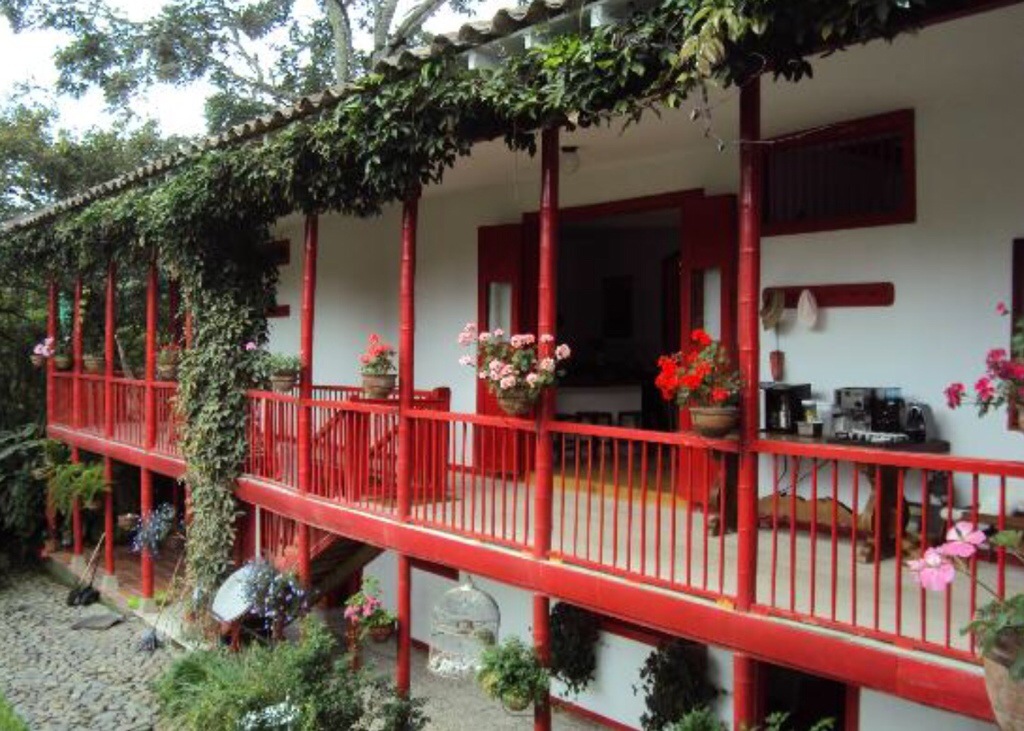
Located within the UNESCO World Heritage-listed ´Coffee Triangle´, just 20 minutes from Manizales, Hacienda Venecia is a fourth generation working coffee farm made up of 200 hectares, of which 170 hectares produce coffee.

Hacienda Venecia is a commercial coffee business, incorporating production, roasting and worldwide exportation. This is a real working coffee farm – you won’t see any actors here!

In 2009 the family decided to open the farm to guests, with the intention of providing an educational and informative experience of both the coffee making process and life on a coffee producing farm. Whilst sharing their knowledge, it is important and valuable for the local community to be inspired by the worldwide experiences that a foreigners visit brings.

As well as the guests accommodation they also have 12 employee homes. Each of the homes has a ‘boss’ (Patron de Corte), the ‘boss’ lives with his family and coordinates the work of the coffee pickers. Each morning, at around 6.30am, the ‘boss’ leads his group of pickers (cuadrilla) to the coffee fields. They go to preselected areas of the farm and pick the ripest of the cherries. At around 5.30 pm the coffee cherries are collected and taken to the processing plant. The farm normally employs around 100 pickers, however, at the height of the season the number of pickers can increase to over 500.

The pickers are nomads, travelling all over Colombia harvesting many different crops – such as cotton, fruit, cocoa, and of course coffee. They travel to the various regions by bus or jeep, looking for harvesting opportunities. They are humble, hard working and happy people. If you listen carefully, you can hear them singing and chatting as they go about their daily work.

In 2002 Hacienda Venecia was the first coffee farm in Colombia to become UTZ certified. The UTZ certificate stands for sustainable farming and better opportunities for farmers, their families and our planet. The UTZ program enables farmers to learn better farming methods, improve working conditions and take better care of their children and the environment. Through the UTZ-program farmers grow better crops, generate more income and create better opportunities while safeguarding the environment and securing the earth’s natural resources. Now and in the future.

In 2013 the farm received Fairtrade certification. Fairtrade is about better prices, decent working conditions, local sustainability, and fair terms of trade for farmers and workers in the developing world.

20140407-074445.jpg

20140407-074714.jpg

20140407-074835.jpg

20140407-074940.jpg

Posted in Colombia | 2 Comments

‘Wake up and smell the coffee’.

It was probably three weeks ago when the email appeared in my inbox, it was from my accountant. Attached to the email was an unwelcome letter from the Inland Revenue. The IR were chasing ‘outstanding payments’ and they wanted them sooner, rather than later. Settling the account would not be good for my bank balance, and ultimately my travel funds!

I had two options at this point, accept it and return to the UK a month early, or look for an alternative outcome. I knew I wanted to visit a coffee farm, so what about combining it with some volunteer work? I started to make some inquiries.

Juan-Pablo, the manager of Hacienda Venecia, was educated in Herefordshire (England) and spoke excellent English. We were sat in a local restaurant discussing my volunteer proposal. The meeting went well and he suggested I should start as soon as possible!

Hacienda Venecia offers excellent accommodation and an incredibly informative coffee tour. Located some 20-minutes from Manizales, and about 3 kilometres from the main highway, it can only be accessed via a steep, narrow, and very winding track. The farm mainly caters for European and North American visitors. Some of these visitors speak very good Spanish, whilst others arrive here without speaking a word. That’s where I come in. I offer my time and in return they provide me with free food and accommodation. I save money, learn about the production of coffee, and meet some great people. If there is nothing for me to do I get to relax by the pool or lie in a hammock and read. Simples!

So what are my duties on a Colombian coffee farm? I’ll answer that question in a moment. Firstly I need to quell a rumour that has started to gather momentum back in the UK. This is a real coffee farm – nothing more, nothing less. For those of you under the delightful illusion that I have joined an elite Colombian drugs cartel, sorry to disappoint, it ain’t happening here! Yes, the production of cocaine still goes on in Colombia but believe me, the government is doing everything it can to destroy the industry. The decadent days of Pablo Escobar, et al, are now firmly set in the past. Colombia is looking for a future in tourism not ‘Snow White’.

So, back to my duties, which appear to be evolving the longer I stay. I am currently involved in a range of activities including, ferrying people to and from from the highway, checking guests in, learning about the coffee tour, and generally helping wherever I can.

In addition, I have also been asked to get involved with the customer interface here; working on the website, interacting with the visitors, and helping with information transfer.

Coffee production is far more complex than I imagined and whilst I am currently taking in as much information as possible, it will be a little while before I can confidently deliver my own coffee tours.

http://www.haciendavenecia.com

How long will I stay? Who knows.

Next stage: Unknown.

20140330-065337.jpg

20140330-065416.jpg

20140330-065447.jpg

20140330-065627.jpg

20140330-065700.jpg

20140330-065734.jpg

20140330-065807.jpg

Posted in Colombia | 4 Comments

The 659 steps

The tiny town of Guatapé is a popular Medellin getaway for tourists and locals alike who want to wander its pretty streets and take boat trips out onto the artificial lake, El Embalse del Peñol. Looming over the lake is La Piedra del Peñol, a vast granite monolith – challenging you to climb the man made staircase glued to its side.

Part of Guatapé was flooded in 1970 in order to create the lake that now generates much of the region’s power. Along it’s cute streets many of the houses are decorated with zocalos (colorful concrete bas-relief scenes). They were originally designed to prevent chickens pecking at the walls, and to stop children chipping away at the buildings with ball games.

La Piedra del Peñol or El Peñon is a 200m-high granite monolith that soars above the banks of El Embalse del Peñol. Climbing the rock’s 659 steps is pretty tough but once you are at the top you can hover above the eagles, and as you stand, gasping for breath, you have a magnificent panorama of the beautiful countryside.

Next stage: Hacienda Venecia.

20140324-093420.jpg

20140324-093510.jpg

20140324-112009.jpg

20140324-112134.jpg

20140324-112257.jpg

20140324-112748.jpg

Posted in Colombia | Tagged | 1 Comment