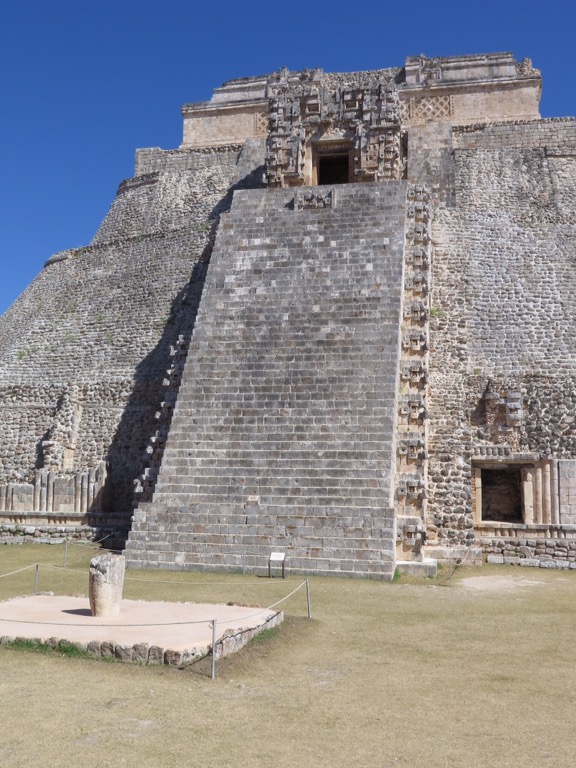
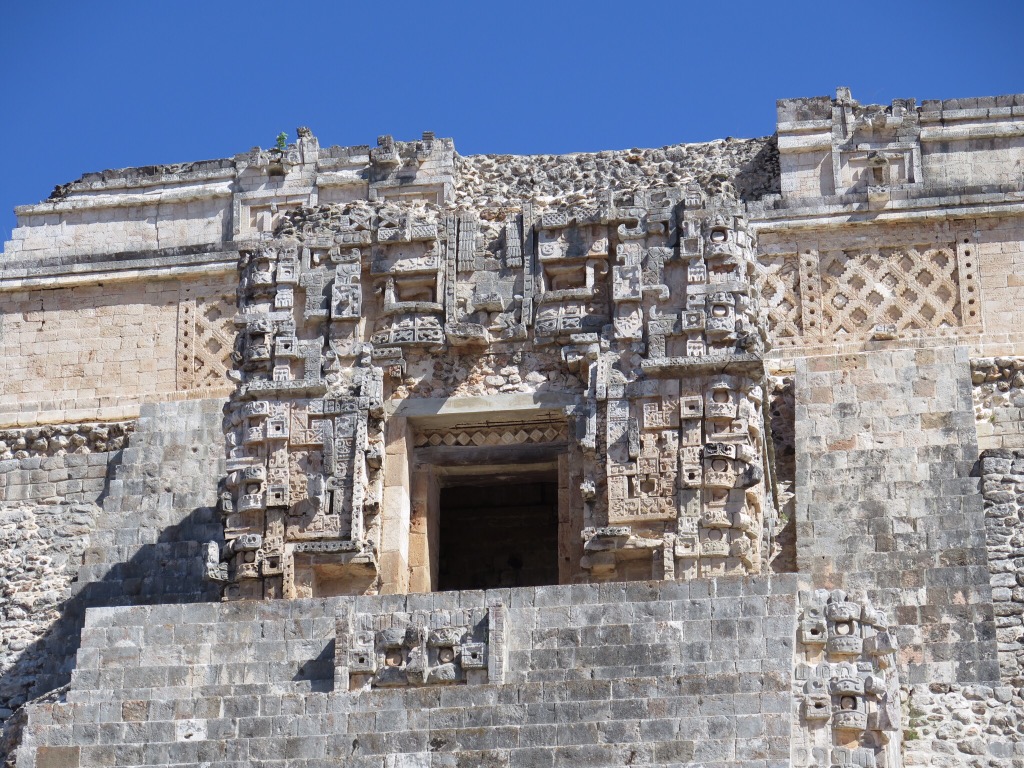
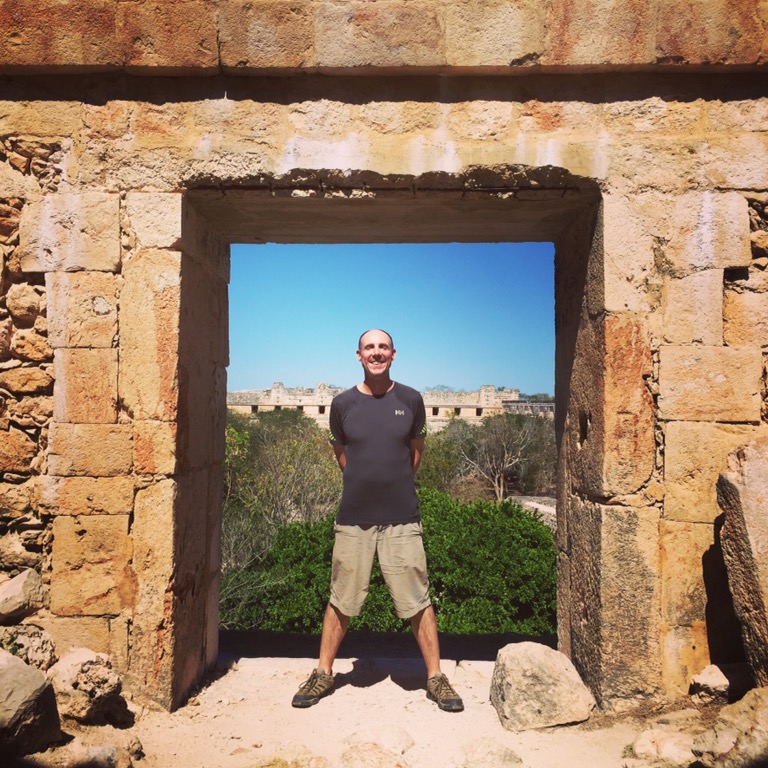
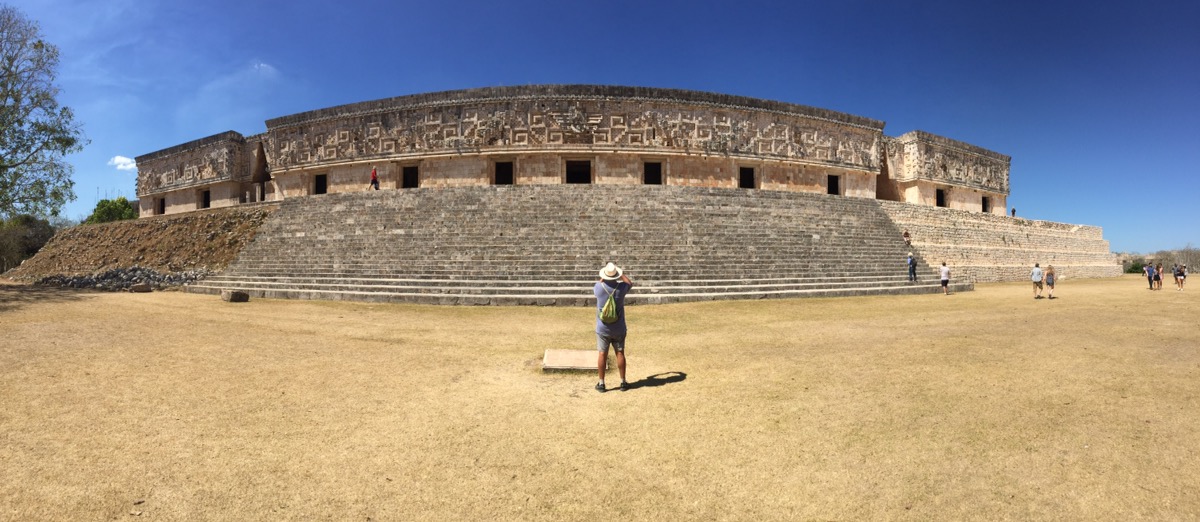
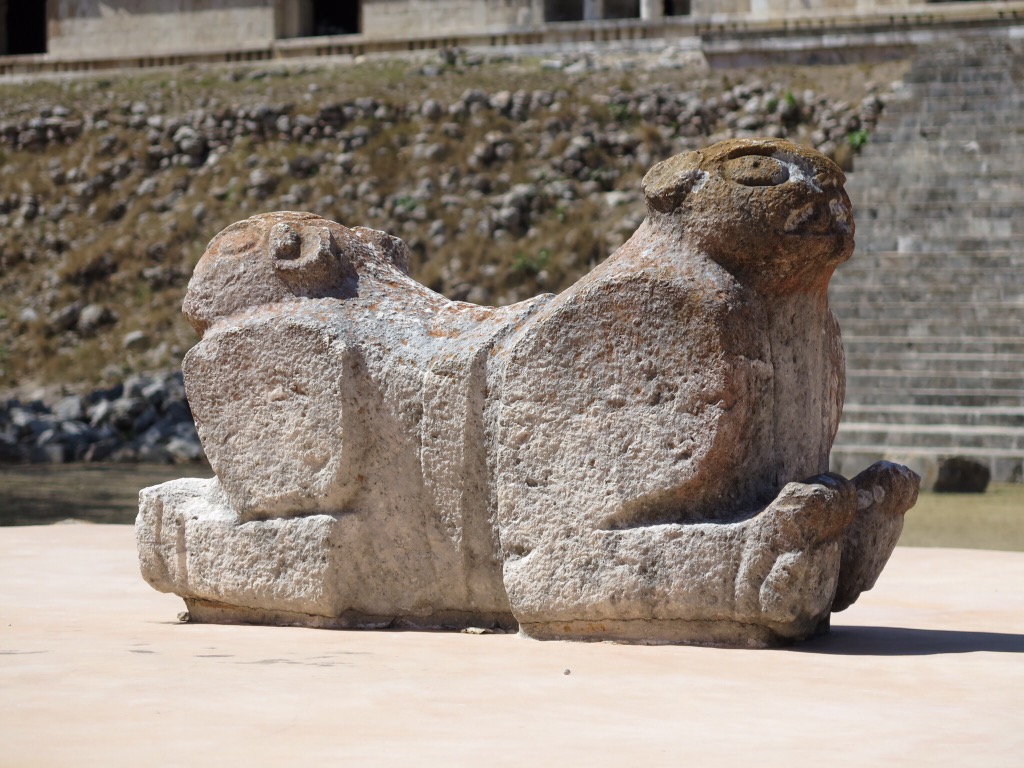
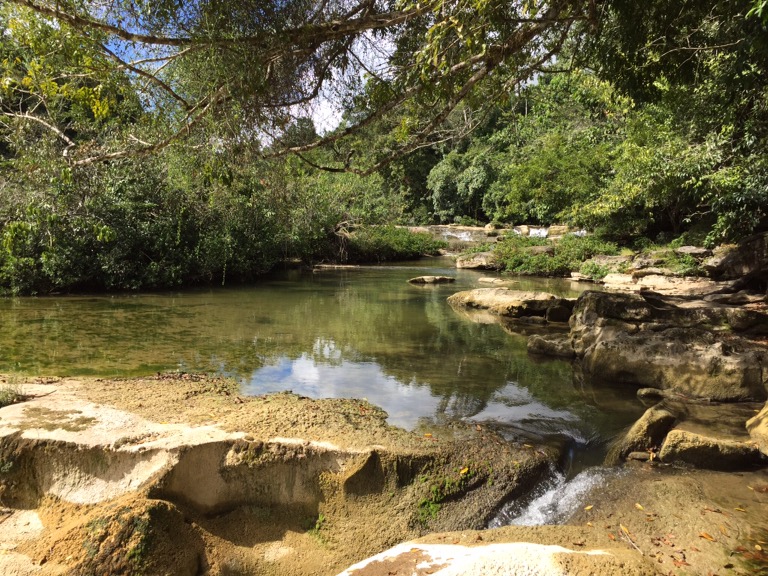
Las ruinas de Uxmal (Mérida).

By now you might well be thinking one of two things; all Richard seems to do is visit Mayan ruins or; there must be a lot of Mayan ruins in Guatemala, Belize, and The Yutacan. Of course you could be thinking both. If  you were on an archeological pilgrimage you could possibly spend over a year visiting them all.  I cannot help bumping into a few of them as I make my journey northwards from Guatemala City to Mexico City. Mérida is no exception with – Uxmal:

Pronounced OOSH-mahl, this impressive site 50 miles from Merida, easily accessible by public transport, is one of the best restored and awe inspiring archaeological sites in the Yucatán, as captivating as Chichen Itza but without the Cancun crowds – apparently. 

This was the main city and religious centre in the region for nearly 300 years in the late classical period 850-925 AD. Its architecture is characterized by low horizontal palaces set around courtyards, decorated with rich sculptural elements and details. There are two pyramids on site, one smaller one in the traditional style that you can climb, plus the unique curved Pyramid of the Magician (115 feet high) that you cannot. 

While much work has been done at the popular tourist destination of Uxmal to consolidate and restore buildings, little in the way of serious archeological excavation and research has been done. The city’s dates of occupation are unknown and the estimated population (about 15,000 people) is a rough guess. Most of the city’s major construction took place while Uxmal was the capital of a Late Classic Maya state around 850-925 AD. After about 1000 AD, Toltec invaders took over, and most building ceased by 1100 AD.

It’s easy to get here from Mérida using public transport.


Next stage: Sunday in Mérida.
Posted in Mexico | Tagged | Leave a comment

The Faulty Towers of Mexico.

Since the Spanish conquest, Mérida has been the cultural capital of the entire Yucatán Peninsula. At times provincial, at others ‘muy cosmopolitano,’ it is a town steeped in colonial history, with narrow streets, broad central plazas and the region’s best museums.

Mérida is not an ‘undiscovered Mexican gem’ like some of the tourist brochures claim. Simply put, it’s a tourist town, but a tourist town too big to feel like a tourist trap.

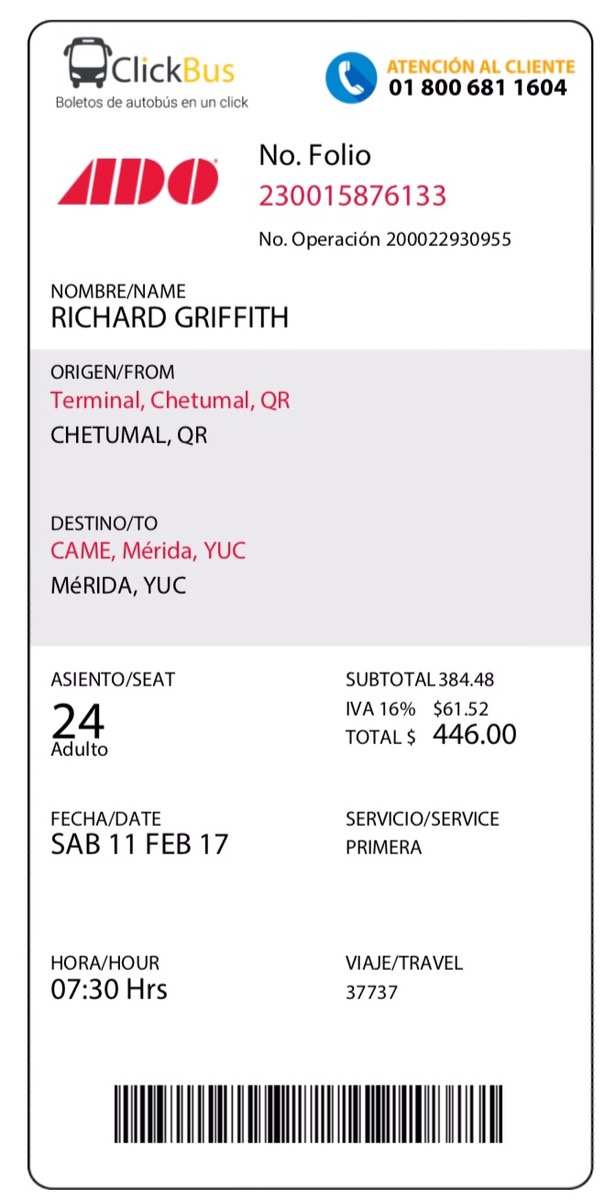
Mérida seemed like the perfect place from which to kick off my adventure into the state of Yucatán. The ADO first class bus left Chetumal at 07:30 and glided into Mérida bus station 6-hours later, for the reasonably priced ticket of £18.00. It was then a short taxi ride, costing £1.50, to my guesthouse.

I am still keeping an eye on my budget deficit and so, after a fair amount of research, I decided to stay at a guesthouse by the name of Yucatán Vista Inn – a place that ultimately reminded me very much of Faulty Towers. The reviews were varied to say the least, but the place was close to the centre of town, and the price was right. 

Here is a recent review from TripAdvisor:

Feedback from client:

I was astonished with our experience at this guesthouse. In fact, the night we arrived I had to re-read the reviews to make sure it was the same place with the same owner.

The guest house is clean, has a/c and a lovely pool. Room 2, a small room next to the pool is lovely, quiet and private. However, what negatively impacts the place is the owner. He means well, but his social awkwardness and disorganization made me feel like he’s in the wrong business. There is no warmth, generosity or ease in his manner. Consequently, the place lacks charm. Breakfast, if he arrives in time to make it, is white bread, coffee and jam.

Management Response:

At the time you arrived, there was no-one but myself running the place, including cleaning the rooms, and the pool, preparing the continental breakfasts, and doing the administration which is now quite onerous due to the new tax reforms, and the abolition of the ‘pequeno contribuyente’ flat tax regimen. Perhaps your personal attack on me tells more about you than about me.

My personal footnote:

In reality, once I got to know the owner (Alan – from London) he turned out to be a really nice guy. I think ‘eccentric’ would describe him best. 

During my stay I got to meet some lovely people who were returning long-stay-guests. All in all, Yucatan Vista Inn turned out to be a great choice.

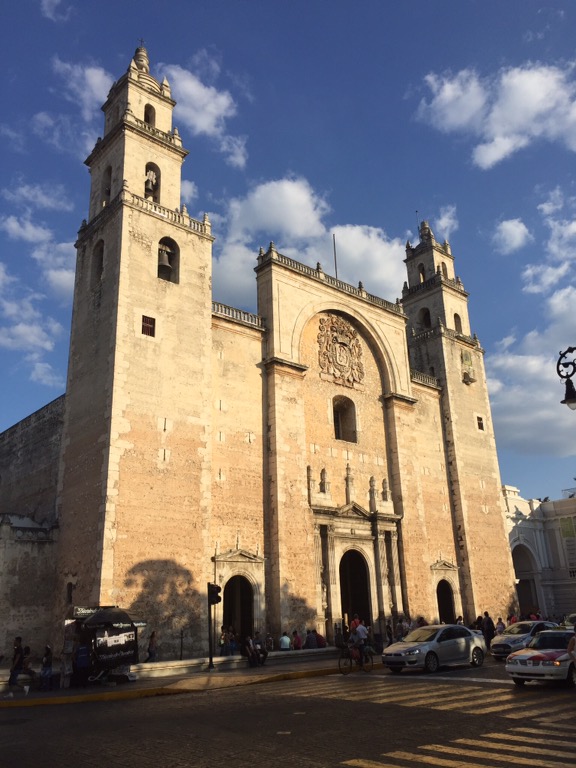
Mérida Cathedral.

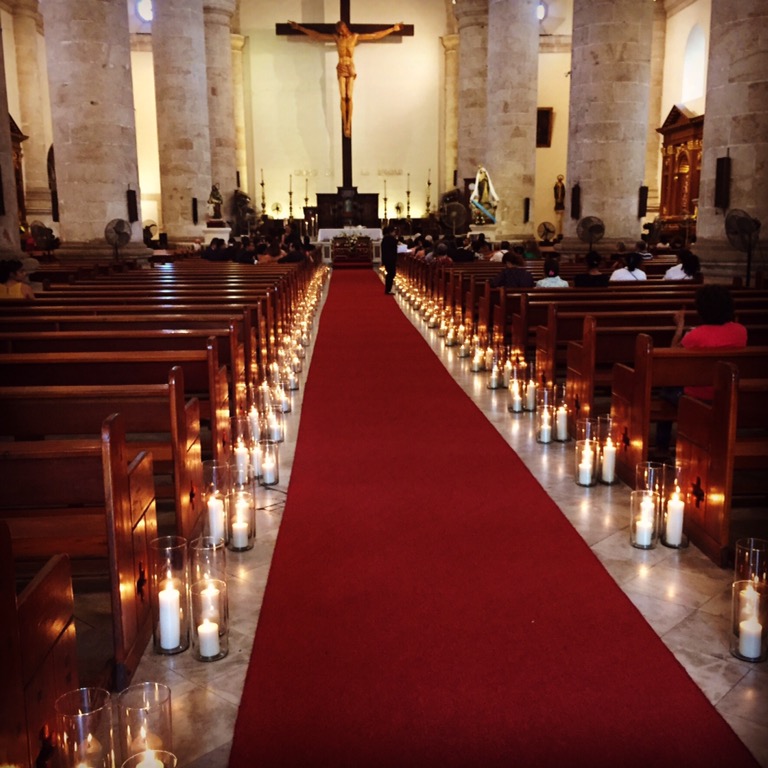
Mérida Cathedral – candles lining the isle.


Next stage: More about Mérida.
Posted in Mexico | Tagged | Leave a comment

Bienvenido a México.

Chetumal is a relatively quiet city going about its daily life. The bayside esplanade hosts carnivals and events, and the modern Maya museum is impressive (though a bit short on artifacts). Excellent Maya ruins, amazing jungle and the border to neighbouring Belize are all close by.

Chetumal was my springboard into Mexico, specifically the eastern part – ‘The Yucatán’. Arriving here was a reverse cultural shock from the relative third world status of Belize; the contrast was incredible. Whilst Chetumal may well be classed as ‘quiet’ it was ‘loud and vulgar’ compared to Belize. Comercial ‘excess’ is everywhere – from shopping malls to high end restaurants.

I was lucky enough to find a private room in an excellent hostel – Hostelito Chetumal – for a little under £20.00, including breakfast. I was even able to book an online bus ticket to my next destination using the hostel’s super fast wifi. 

I think I’m going to like Mexico.

What my research tells me about bus travel in Mexico – my transport of choice for the next 30 days.

Traveling by bus across Mexico is apparently a pleasant experience, exceeding most travellers initial expectations. Since the early 1990’s, Mexico has invested billions of dollars in new roads, including high speed toll roads, which connect all of Mexico’s major towns and cities.

In parallel with Mexico’s investment in its road network, Mexico’s bus companies invested heavily to create an extensive network of bus routes, offering passengers the opportunity to traverse the entire country by bus.

Although there are several classes of bus service the most popular among visitors (and those interested in traveling comfortably) are first and executive class, which transport passengers in comfort (and safety), on high specification, quiet, modern air conditioned buses. These buses only travel on the toll roads (where possible), and very seldom make intermediate stops, thus making the journey fast and efficient.

The ADO website is a great place to start planning and also to buy tickets.

Mexico’s Yucatán and Chiapas.

OCC and ADO first class buses.


Next stage: Mérida.
Posted in Mexico | Leave a comment

Border crossing – Belize to Mexico.

More often than not, crossing borders can be a daunting and sometimes nerve racking experience. The excitement of receiving a new stamp in your passport is quite often compromised by the uncertainty of what to do, where to go, how much to pay, and whether you’re being ripped off.

On the day that I left the very comfortable and friendly ’embrace’ of Rainforest Haven Inn (San Ignacio) I was filled with many retrospective thoughts. I was leaving my favourite town in Belize and would soon be leaving the country itself.

Belize was not at all what I expected. It’s expensive, it’s dirty, it’s chaotic, it’s quirky, and it has the most uncomfortable chicken buses I’ve experienced in the whole of Latin America. However, I’m actually glad that I visited this unique country. My wallet may well have been breathing a sigh of relief as I was leaving but my heart was not. There was something about Belize that finally struck a chord in my inquisitive nature.

Yes, there’s very little left to remind of its former connection with Great Britain, yes, it’s struggling with its independence and yes, there’s a lot of poverty. However, the people of this relatively tiny country are so incredibly friendly and so very laid back.

The bus from San Ignacio, heading for Belize city, left at 07:30 and broke down not long into the journey. Thankfully another bus was not too far behind and there were enough spare seats to accommodate myself and my fellow travellers.

I arrived at the Belize city bus terminal just in time to catch the 11:00 am chicken bus travelling to Chetumal (Mexico). The bus was full but it was obvious who was heading into Mexico – the gringos stuck out like sore thumbs.

It took around 4-hours, including the border crossing, to get to Chetumal. Surprisingly, the bus driver and his female “clippy” held our hand every step of the way making our exit and entry completely stress free.


Next stage: Welcome to Mexico.

Posted in Belize | Leave a comment

The stone woman – San Ignacio (Belize).

San Ignacio is renowned for its close proximity to Belize’s famous Maya ruins, as well as being a hub for outdoor activities including caving, hiking, kayaking, horseback riding, and more. It is also one of the last towns in Belize before entering Guatemala, where many visitors go to visit the Tikal Maya ruins.

San Ignacio itself is really quite small and therefore easy to explore on foot. There are some good accommodation options and some excellent restaurants. San Ignacio was my favourite place in all of Belize; the people are so helpful and friendly.

Many of San Ignacio’s archeological sights lie outside of town but are easy to access on foot or by local bus. The only activity I did not participate in was a visit to the ATM cave complex. At over $100 USD it was out of the realms of my budget.

Cahal Pech, right on the edge of town, was a city of some importance from around 900 BC to AD 800. There are 34 buildings spread over 6 acres (2.4 hectares) and grouped around seven plazas. Plaza B, about 500ft (150m) from the museum building and parking area, is the site’s largest plaza and also the most impressive.

Xunantunich (shoo-NAHN-too-nich), a short bus ride from San Ignacio, is an amazing Maya site. Its name means ‘Stone Woman’, which refers to the ghost of a woman claimed by several people to inhabit the site. Apparently she is dressed completely in white, and has fire-red glowing eyes. She generally appears in front of El Castillo; ascends the stone stairs and disappears into a stone wall.

Sitting atop el Castillo, the second tallest structure in Belize at some 130 feet (40 m) tall, watching the sun rise and the jungle unfold below me, was one of the most amazing things I have ever experienced.

Belize City to San Ignacio – 2 hrs by Express Bus.

Cahal Pech.

Ferry en route to Xunantunich.

View from the top of el Castillo.

View from the top of el Castillo.

El Castillo.


Next stage: Crossing the border into Mexico, via Belize city.

Posted in Belize | Leave a comment

Into the lion’s den – Belize City.

“You might find Belize City menacing, but you certainly won’t find it dull”. Lonely Planet guide to Belize.

For some extraordinary reason, that I am really struggling to recall right now, I decided to spend a night in Belize city, en-route to San Ignacio (western Belize). As it turned out, Belize city ended up being a detour rather than an en-route!

Leaving the relative safety of the main bus station in Belize city felt like walking into the proverbial ‘lion’s den’. As a method of avoiding eye contact I donned sunglasses and broke into a head-down-power-walk in the general direction of my pre-booked accommodation. I managed to ignore the many shouts and heckles that accompanied my journey and safely made it to my destination in a little under 15-minutes;  mentally traumatised but physically unscathed. 

Sea Breeze Hotel is a budget traveler’s dream, though I have to admit that the razor wire, surrounding the property, was somewhat unnerving! My allocated room was super clean, for the price, and the owners, Mr and Mrs Kalam from Bangladesh, were friendly and very accommodating.

Belize City doesn’t exactly top the list of tourist destinations in Belize. In fact, many visitors choose to bypass the country’s only major urban area. This might be because the country’s main attractions are natural and nautical, rendering it superfluos to visit its only metropolis. Of course me thinks the more likely explanation is that the city has a bad reputation for poverty and crime!

On a positive note, the city’s s ramshackle streets are alive with colorful characters who represent every facet of Belize’s ethnic make up, especially the Creoles. The urban scenery encompasses not just fetid canals and grungy slums, but also handsome colonial houses, a great little museum, housed in a former prison, and a beautiful cathedral.

St. John’s Cathedral was built between 1812 and 1820 with bricks that had been used as ballast aboard ships from England, it was the first church to be built in the colony of British Honduras.

Belize city proved to be character building!

City museum – on the site of a former prison.

St. John’s Cathedral.


Next stage: Amazing San Ignacio.

Posted in Belize | Leave a comment

The laid back beach village of Hopkins.

Had I not stayed in such disappointing accommodation, Hopkins would have rated high in my ‘places to visit’ in Belize. Out of character, I decided to book a room in advance, a decision I  would live to regret; once the deposit is paid there is no going back!

This friendly, slightly scruffy, coastal village attracts travelers looking to soak up sea breezes and Garifuna culture. It’s an unpretentious place and makes a good base for explorations to the cays, reefs and islands. It’s also a great place to meet locals and fellow travellers, though for me, not at hostal Funky Dodo!

Founded in 1942 by people from Newtown, a nearby Garifuna settlement that was destroyed by a hurricane, the village is named after Frederick Charles Hopkins, a Catholic priest who drowned in the waters here in 1923.

Hopkins stretches about 1.5 miles along the coast and is divided by the 4.5 mile sealed Hopkins Rd from the Southern Hwy into North Side and South Side.

If I was a betting man I would suggest that hostal ‘Funky Dodo’ is heading for the same fate as it’s name sake. Of course I could be completely wrong – good quality, cheap, accomodation is currently hard to find in Hopkins. I don’t mind doing basic but I do mind paying above basic prices.

Positives: Met some really interesting people, including three gorgeous chicas from England. Enjoyed some fantastic food – especially the Jerk Chicken – hot and spicy.

The beautiful clean beach at Hopkins

My overpriced prison cell at Hostal Funky Dodo.

The long overdue “Full English”.


Next stage: Belize City.

Posted in Belize | Tagged | Leave a comment

Placencia.

British Honduras was the name of a territory on the east coast of Central America, south of Mexico, after it became a British Crown colony in 1862. In 1964 it became a self-governing colony. The colony was renamed Belize in June 1973 and gained full independence in September 1981. British Honduras was the last continental possession of the United Kingdom in the Americas. Wikipedia.

My next stop over, heading north along the east coast of Belize, was Placencia.

Placencia is a true beach-holiday strip on the mainland. It’s very popular with North American expats and tourists – something that is extremely obvious the moment you arrive. Perched at the southern tip of a long, narrow, sandy peninsula, the village has long be known as ‘the cay you can drive to’ – a fully-paved 27-mile road heads off the Southern Highway via Maya Beach and Seine Bight to the tip of the peninsula.

If you are looking for a laid back ambience, varied accommodations and some excellent restaurants then this beachfront hangout is for you. If it’s off-the-beaten-path adventure and cheaper living you’re after, it might serve better as a place to check out for a day or two and move on.

I stayed in Placencia for two nights at Sail Fish Resort and really enjoyed it.

Sail Fish Resort.

Swim up bar, nice touch.

Some swanky properties!

Some not so swanky properties!

Next stage: Hopkins.

Posted in Belize | Tagged , | Leave a comment

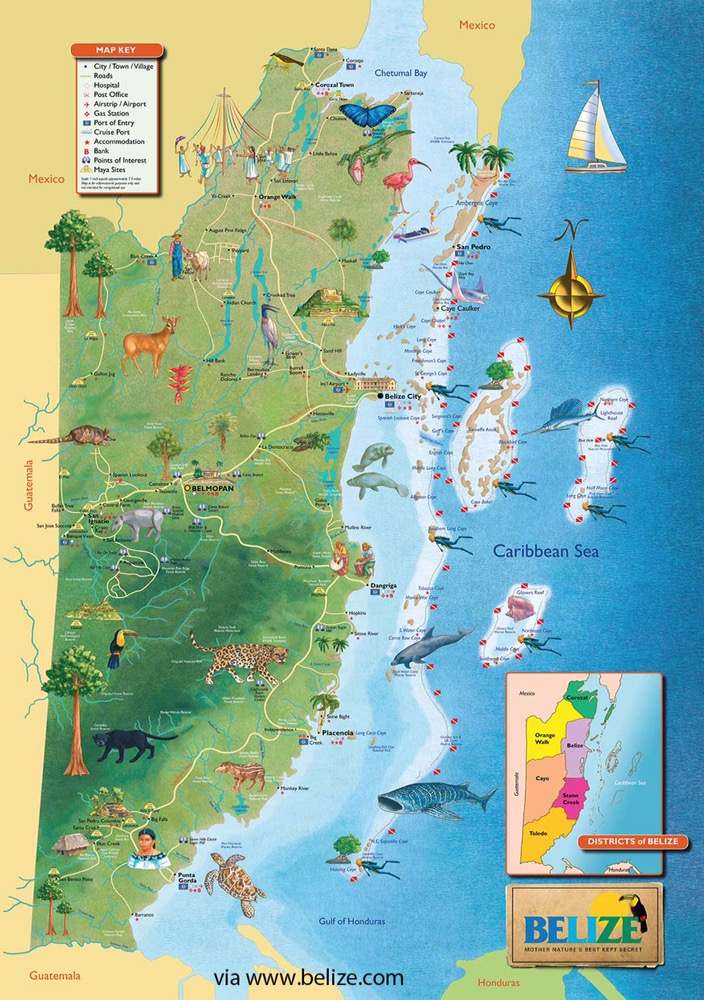
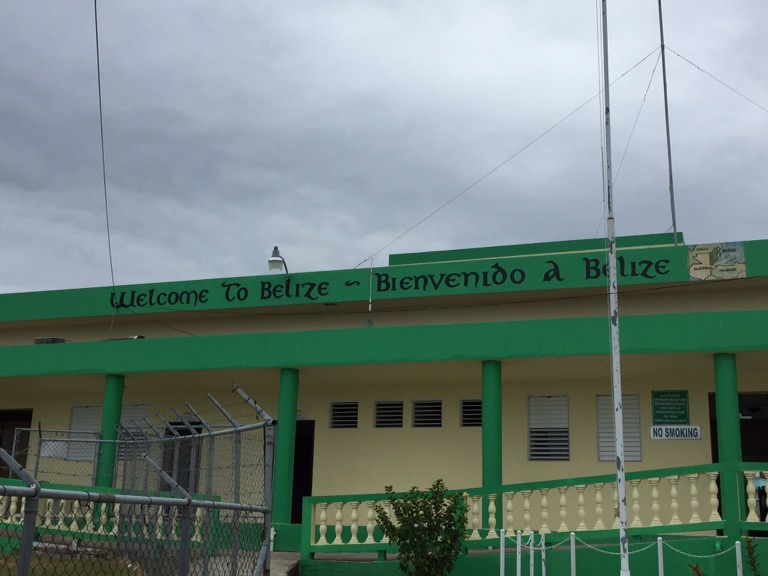
Welcome to Belize (formerly known as British Honduras).

Travel route from Punta Gorda in the south to Belize city in the north.


I guess I should have realised what lay ahead when I had to pay £25.00 for the 1-hour boat journey from Livingston to Punta Gorda (PG). You don’t get much for your ‘buck’ here; Belize is expensive.

I don’t quite know what to say about Belize; now that I have been here a few days I have started to get my head round the country. However, to start with….. well let’s just say, it’s an unusual country compared to the rest of Central America.

The southern seafront town of Punta Gorda is so laid back that most people don’t even call it by its full name – all over Belize it’s known simply as PG. PG was founded for the Garífuna who emigrated from Honduras in 1832. Though it’s still predominantly Garífuna, it’s also home to the usual bewildering variety of Belizean citizenry: Creoles, Q’eqchi’ Maya, expat Americans, Brits, Canadians, Chinese and people from eastern India
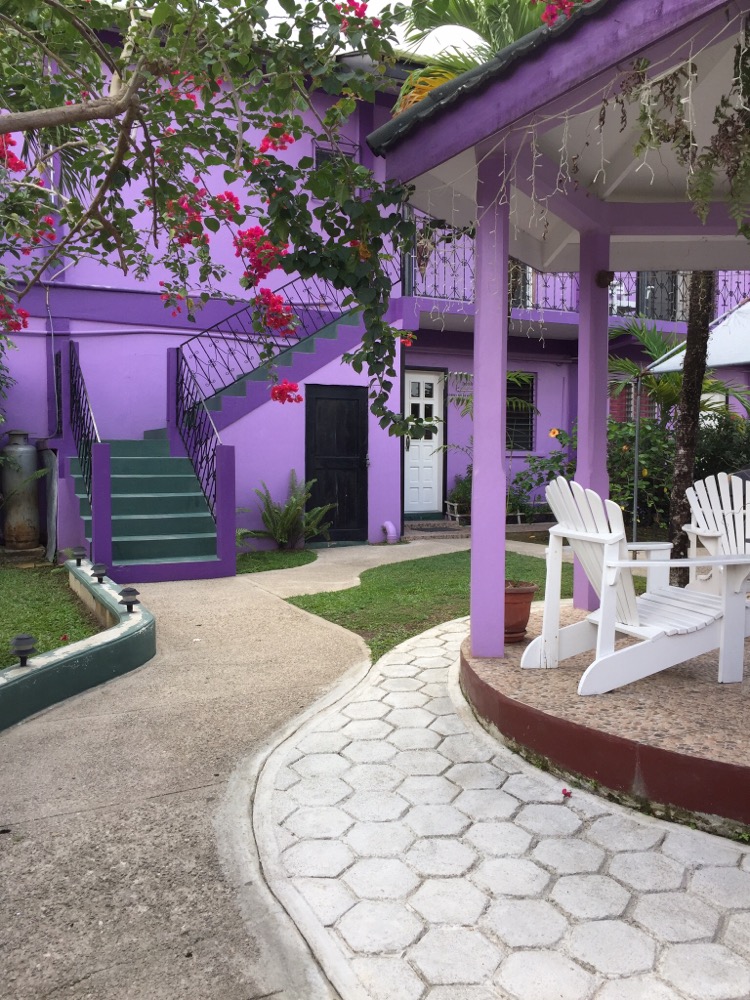
In hindsight it was one of my favourite places in the whole of Belize. I met some really nice people here, ate in some super cool, and quite cheap restaurants, and stayed at a lovely B&B – Tate’s Guest House.

I also met a lovely lady from my birth county of Buckinghamshire. Jo and her husband run a travel agency and small guest house in PG. Check out their web site at: PG Tours.

Welcome to Belize.

Tates Guest House.

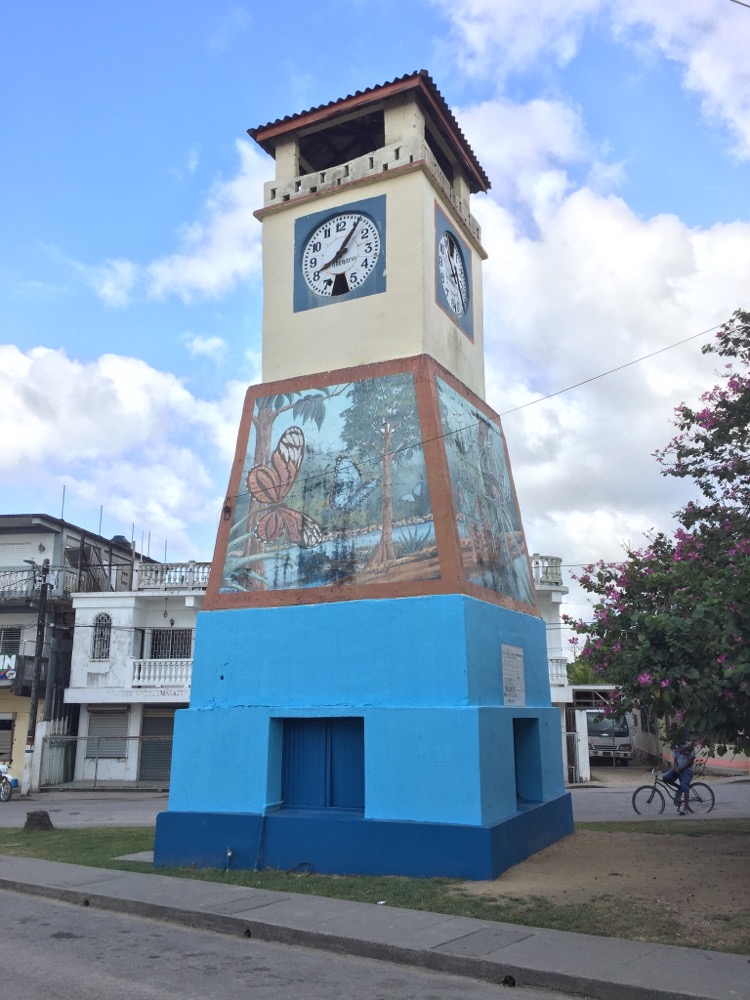
Clock Tower in PG.

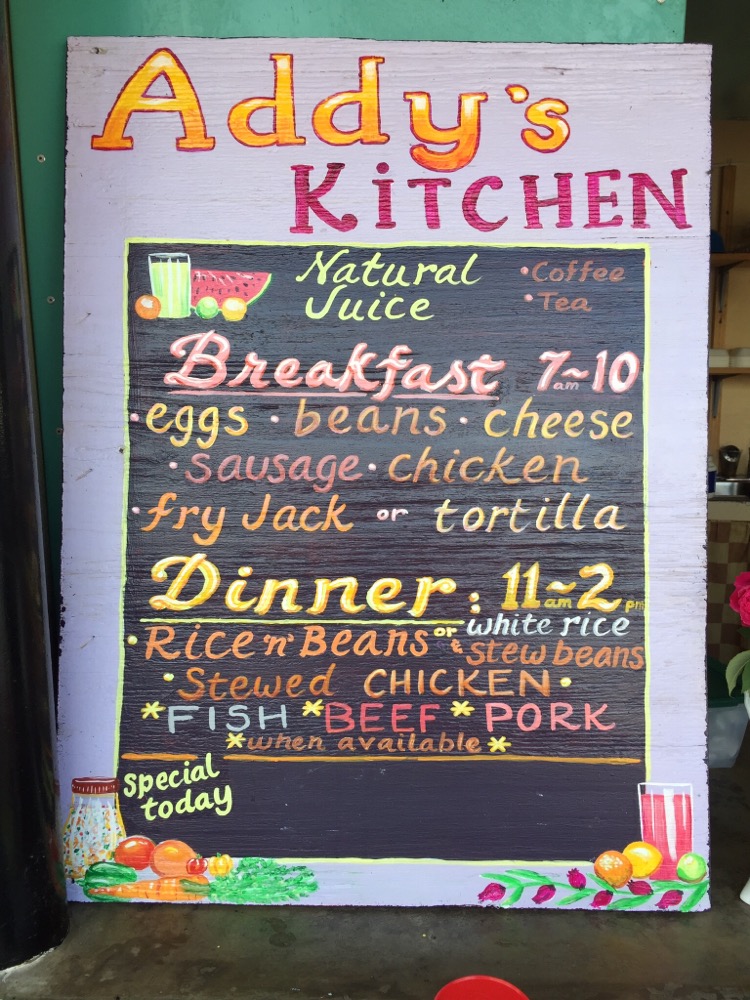
Traditional breakfast at Addy’s

Rio Dulce National Park.


Next stage: Placencia.

Posted in Belize | Leave a comment

Rio to Livingston (for Belize) by river boat.


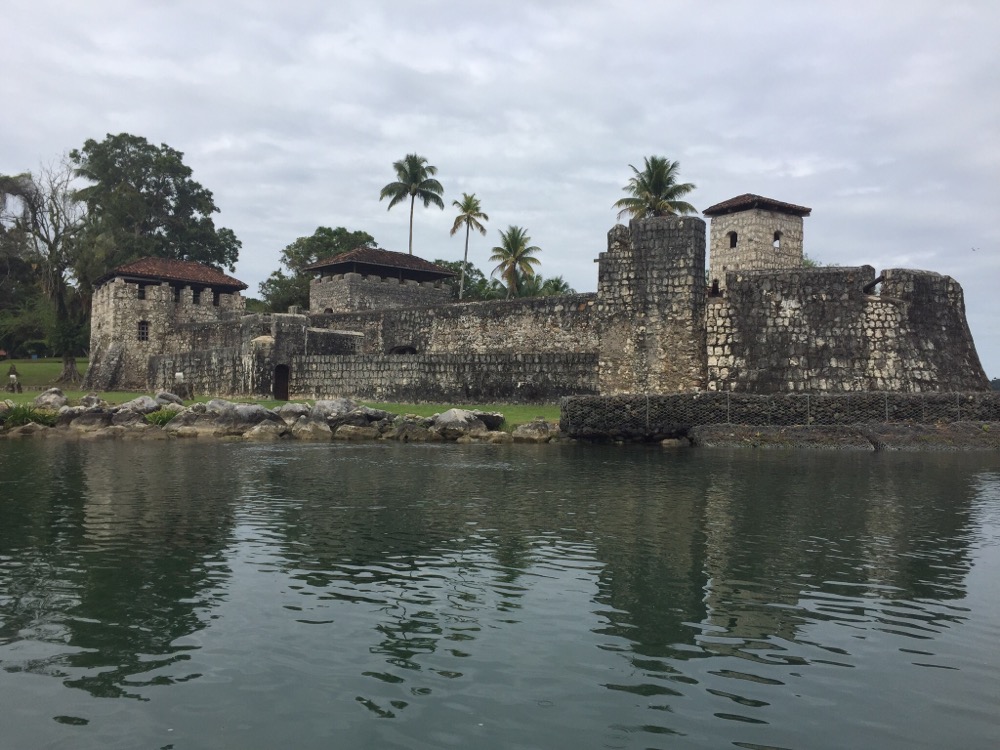
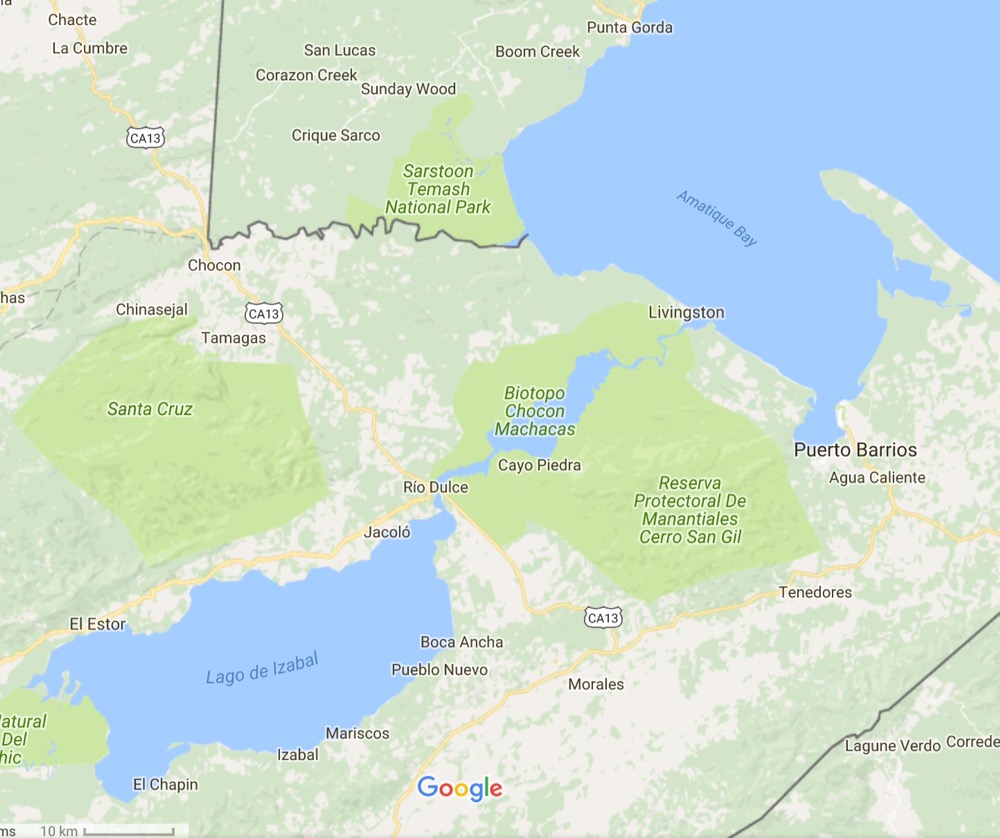
Lago de Izabal is Guatemala’s largest lake. Most visitors stay at Río Dulce village, north of the bridge where Hwy CA-13, the road leading north to Flores and Tikal, crosses the lake. East of this bridge is the beautiful Río Dulce, which opens into El Golfete lake before flowing down into the Caribbean at Lívingston; the river trip was one of the highlights of my visit to eastern Guatemala. Other lake highlights include El Castillo de San Felipe (an old Spanish fortress) and the Bocas del Polochic river delta.

Lívingston is quite unlike anywhere else I have been to in Guatemala. Unconnected by road from the rest of the country (the town is called ‘Buga’ – mouth – in Garífuna, for its position at the river mouth), boat transportation is quite good here, and you can get to Belize with a minimum of fuss (in theory). Unfortunately, on the day that I arrived there was no direct boat to Punta Gorda (PG) in Belize. Thanks goes to a Garafuna, Pablo, who rang a Puerto Barrios boat to come and pick me up. Livingston is not the place you want to spend a night unless you are really desperate.

The Garífuna (Garinagu, or Black Carib) people of Lívingston and southern Belize are the descendants of Africans brought to the New World as slaves. They trace their roots to the Honduran island of Roatán, where they were forcibly settled by the British after the Garífuna revolt on the Caribbean island of St Vincent in 1795. From Roatán, the Garífuna people spread out along the Caribbean Coast, from Belize to Nicaragua. Intermarrying with the Carib people, as well as with Maya and shipwrecked sailors of other races, they’ve developed a distinct culture and language incorporating African, indígena and European elements. Lonely Planet guide to Central America.

The Spanish fortress of El Castillo de San Felipe.


Next stage: Belize.

Posted in Guatemala | Tagged , | Leave a comment