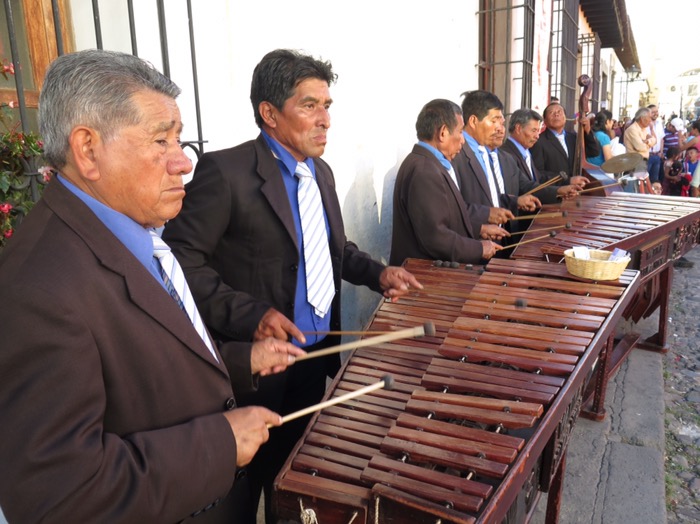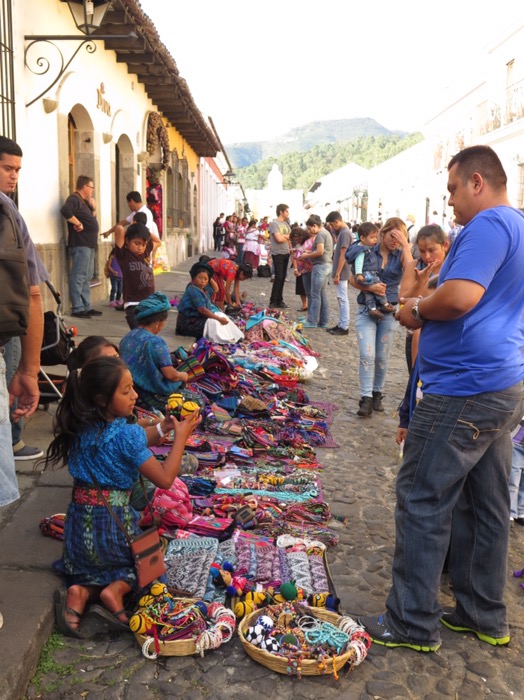
“Guatemala’s tourism showpiece, Antigua, remains far more than a tourist attraction. A place of rare beauty, major historical significance and vibrant culture, it’s the country’s one must-visit destination.”

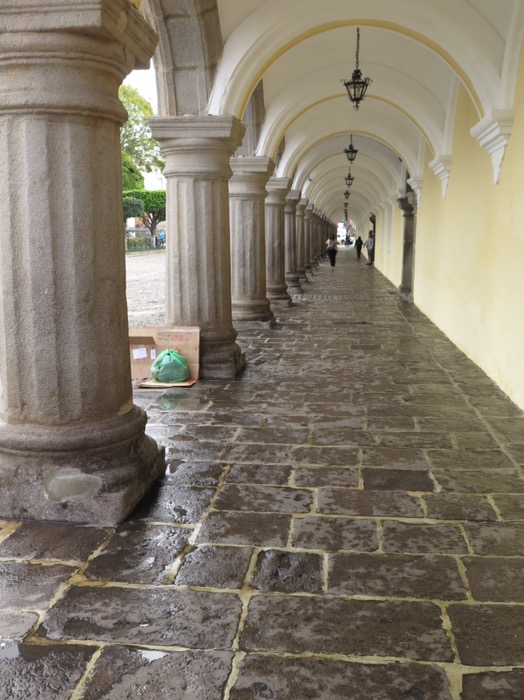
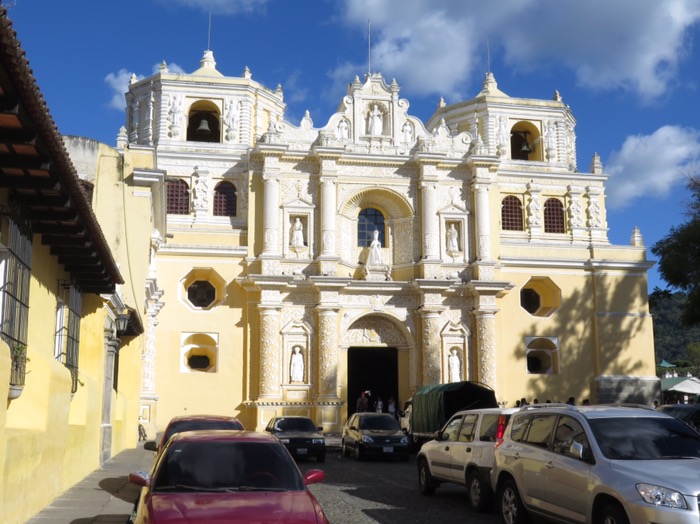
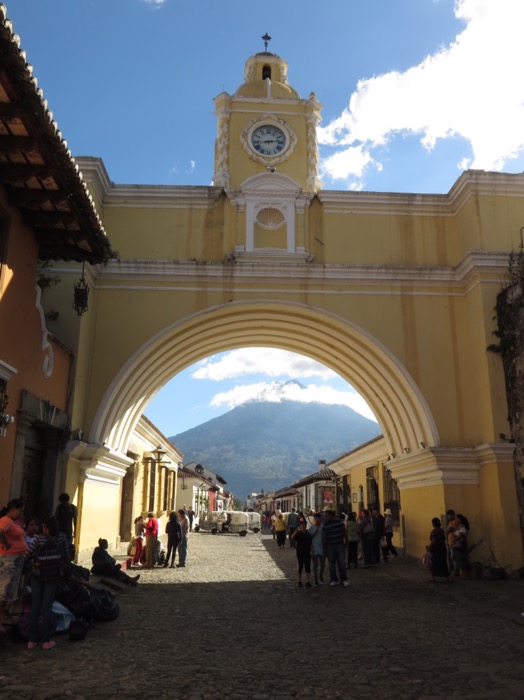
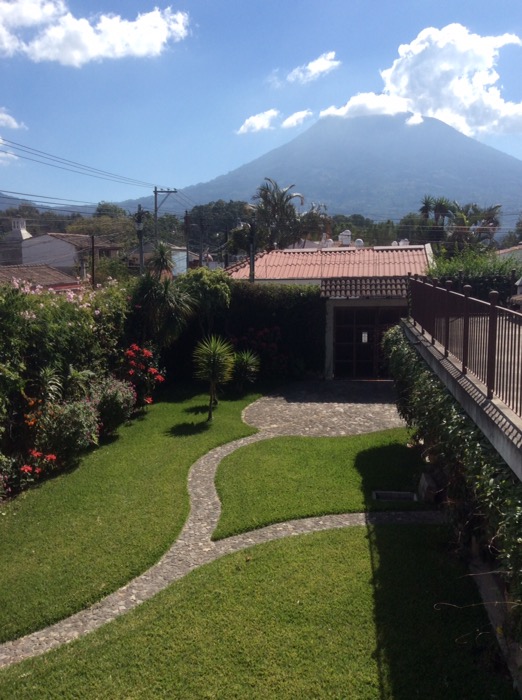
A former capital (the seat of government was relocated to Guatemala City following several major earthquakes during the colonial period) Antigua boasts an astonishing catalogue of colonial relics in a magnificent setting. Its streetscapes of pastel facades under terracotta roofs unfold amid three volcanoes: Agua (3766m), Fuego (3763m) and Acatenango (3976m). Designated a Unesco World Heritage Site and with an ideal climate, it’s a great place for walking (though it gets quite chilly after sunset). While many old ecclesiastical and civic structures are beautifully renovated, others retain a tumbledown charm, with fragments strewn about the place and sprays of bougainvillea sprouting from the crumbling ruins.

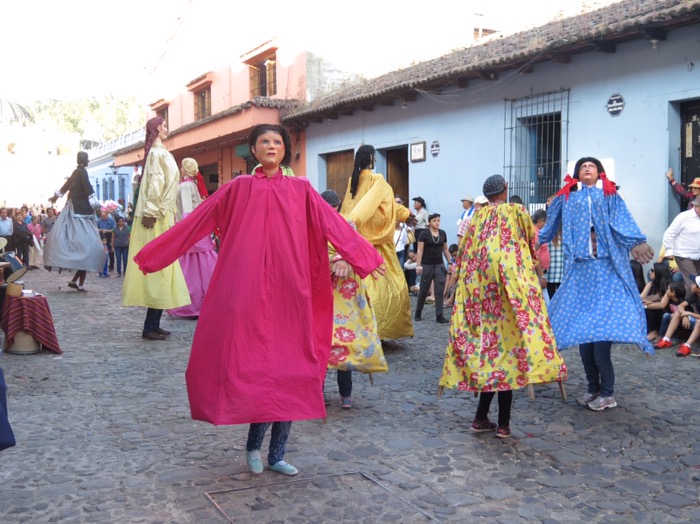
Thanks to the dozens of Spanish language schools that operate here, Antigua has become a global hot spot; boasting fine dining, plenty of colonial-chic accommodations and an extremely cosmopolitan nightlife. But the foreign presence by no means dominates the atmosphere. Antigua remains a vibrant Guatemalan town, its churches, plazas and markets throbbing with activity.

I spent New Year in Antigua and managed to bag an excellent B&B called Chez Daniel. Owned by an American guy and his Guatemalan wife, it’s a top notch place with great views to boot.

Next stage: The Chez Daniel Loop.


Posted on by Richard Griffith | Leave a comment

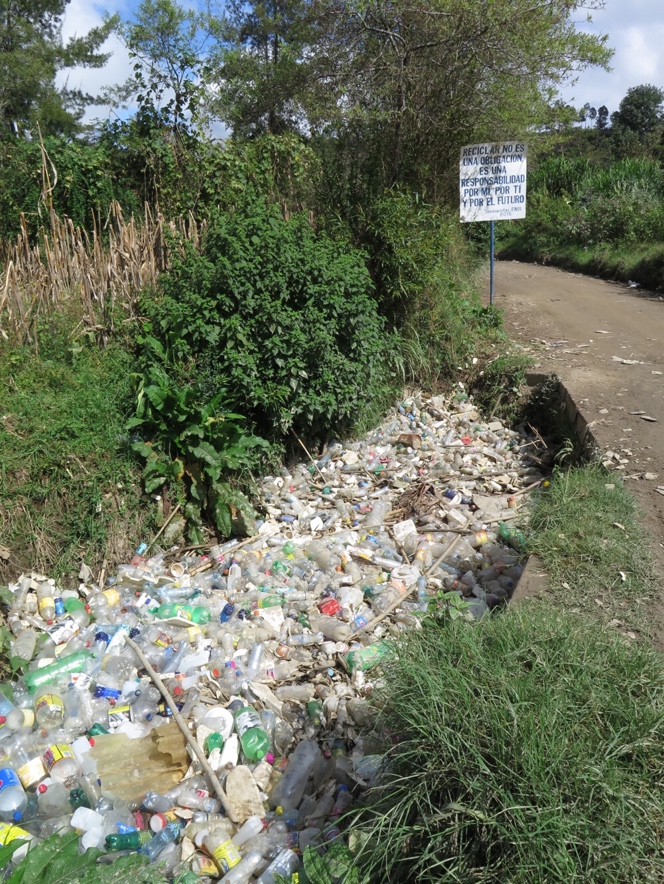
What on earth is mankind doing?

Underneath that seething mass of plastic bottles runs a small stream.

The sign in the background reads:

“Recycling is not an obligation it is a responsibility for me, for you and for the future.”

Posted in Guatemala | Leave a comment

All good things, inevitably, come to an end.

My time in Panajachel [pana hachel] and more notably my time with Magda, and her delightful family, has sadly come to an end. The last two weeks have certainly gone quicker than I would have liked, but it has been a rare and enjoyable treat to stay in one place for more than just a few days. Travelling is a transient ‘occupation’ and I rarely get the opportunity to peal back more than a few layers of the proverbial onion when I normally visit a place. It was also very special to be with a family over Christmas, it’s never my most favourite time of the year. With a heavy heart I made my farewells. I shall miss the closeness of this incredibly warm and welcoming family immensely. However, the time has now come to branch out and see a little more of Guatemala.

Santiago Atitlán:

South across the lake from Panajachel (Pana) on the shore of a lagoon, squeezed between the volcanoes of Tolimán and San Pedro, lies Santiago Atitlán, known to everybody as Santiago. A 20-minute boat ride from Pana, it’s the most workaday lake villages of them all. Whilst it might well be the most visited village outside Pana, Santiago manages to cling to the traditional lifestyle and clothing of its indigenous people.

Having stayed in a small simple room for the past two weeks it was time to splash out and stay somewhere with a few luxuries. My room was huge, with a comfy king size bed and crisp white sheets. And for the first time in weeks I had my own bathroom. Hotel Tiosh Abaj is set in spectacular grounds complete with manicured gardens, right on the edge of Lake Atitlán. I spent my time (equally) between relaxing on a sun bed, in the hotel grounds, and exploring the delightful little town, which is easily accessible on foot. Just my kind of town.

The hotel served excellent food, excellent coffee and red wine by the glass! Heaven! I loved Santiago.

San Pedro La Laguna:

Price wars between competing businesses appear to keep San Pedro among the cheapest of the lakeside villages. The beautiful setting seems to attract visitors en mass whose varied interests include: drinking, fire twirling, African drumming, Spanish classes, volcano hiking, wearing as little as possible and hammock swinging.

In hindsight:

To truly appreciate Panajachel you unfortunately have to gloss over the hoards of people, the traffic, the rubbish strewn everywhere, and the constant barrage from street vendors. The other villages somehow manage to maintain a quieter air, whilst still offering a reasonable degree of comfort. That said, Panajachel was a great stepping stone from my western lifestyle to the very different lifestyle of the western highlands of Guatemala. Without it, the resultant culture shock would have been far more acute. In addition, Jabel Tinamit was a great school in which to learn how to speak Spanish correctly!

Next stage: New Year in the beautiful former capital of Guatemala – Antigua.


Posted in Guatemala | Leave a comment

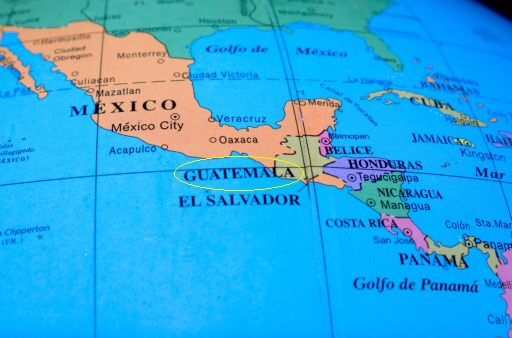
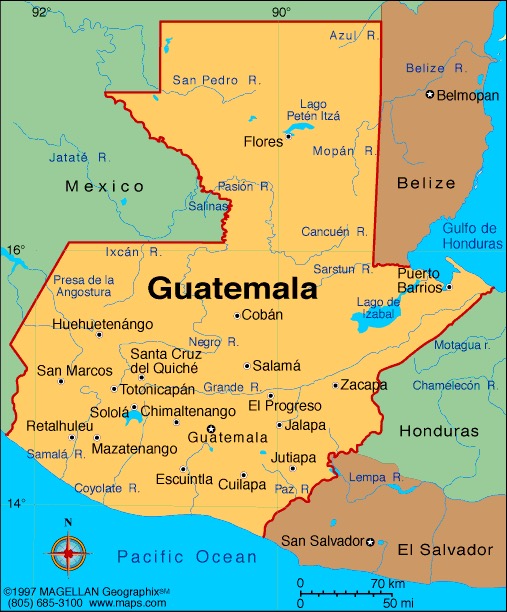
Guatemala.

Capital: Guatemala City.

Area: 42.042 sq mi. Great Britain 80.823 sq mi.

Population: 15.8 million. Great Britain: 61.0 million.

Guatemala is proving to be a magical place. If you’re into indigenous cultures, the mountains, the markets, kicking back lakeside or exploring atmospheric pre-Columbian ruins and gorgeous colonial villagers, you’re going to be captivated. Travel here – once fraught with danger and discomfort – now appears to be characterised by ease; you can do pretty much whatever you want, and your experience will only be limited by your imagination and time – so it would seem.

Civil War During the 1960s and ‘70s, economic inequality and the developing union movement, forced previous oppression to new heights. Amnesty International estimates that 50,000 to 60,000 Guatemalans were killed during the political violence of the 1970s. In 1976 an earthquake killed about 22,000 people and left about a million homeless.

In 1982 General José Efraín Ríos Montt initiated a ‘scorched earth’ policy in Guatemala . Huge numbers of people – mainly indigenous men – from more than 400 villages were murdered in the name of anti-insurgency, stabilization and anti communism. An estimated 15,000 civilians were tortured and massacred; 100,000 refugees fled across the border to Mexico. In response, four guerrilla organizations united to form the URNG (Guatemalan National Revolutionary Unity).

The Signing of Peace Accords In 1996 Álvaro Enrique Arzú Irigoyen of the middle-right party was elected. In December he and the URNG signed peace accords ending the 36-year civil war, a war in which an estimated 200,000 Guatemalans were killed, a million were left homeless and untold thousands ‘disappeared’.

The greatest challenge to peace stems from inequities in the power structure. It’s estimated that 70% of the country’s arable land is owned by less than 3% of the population. According to a UN report, the top 20% of the population has an income 30 times greater than the bottom 20%. Or, as many Guatemalans will tell you, there are seven families who ‘own’ Guatemala.

Guatemala is now on a slow road to recovery from its civil war wounds. While this is in part due to the passing of generations who lived through the war, official recognition of some atrocities has been an important step in the recovery process. A campaign is underway to exhume clandestine cemeteries used by the military to bury ‘disappeared’ dissidents and the legal processes have at last begun, with some war criminals being brought to justice. So far the heftiest penalty to be handed down was to ex-Military Commissioner Lucas Tecún, who was sentenced to 7710 years in prison!

Facts and figures courtesy of Lonely Planet guide to Central America.


Posted in Guatemala | Leave a comment

Navidad.

It has been a tough first week getting a decent nights sleep in Magda’s house. There are a number of contributing factors:

1. Cockerels – it sounds as though there are hundreds of them in the vicinity of Magda’s home, ‘Cocka doodle doodling’, not only early in the morning, but also throughout the night.

2. Dogs, again, it sounds as though there are hundreds of the bloody things barking all night long.

3. Then we have the ‘fire crackers’, which have been going off throughout the day and night with increased regularity.

4. Lastly, my head is buzzing with all the Spanish that I have been learning.

Christmas in Gutemala doesn’t appear to be anywhere near as commercial as it is in the UK. That said, there are still plenty of decorations adorning the shops and houses, and of course each house has the obligatory Christmas tree.

There weren’t any Spanish classes on Christmas Eve, which allowed me to buy the rest of my presents for Magda and her family. I had purchased a few ‘typically British’ gifts back in the UK but needed to top these up. These gifts also required wrapping.

We have now been joined by Rebecca, a young medical student from Massachusetts (USA). Beca has proved to be a valuable asset during the meal time banter with Magda. She helps deflect some of the more difficult questions that get thrown my way. Beca and I are studying at the same Spanish school. However, she is a league or two ahead of me! Beca is a slim and very attractive young lady of about 23. She has a wonderful sense of humour and we get on well. 

Christmas Eve supper was at the normal time followed by a much needed siesta. 

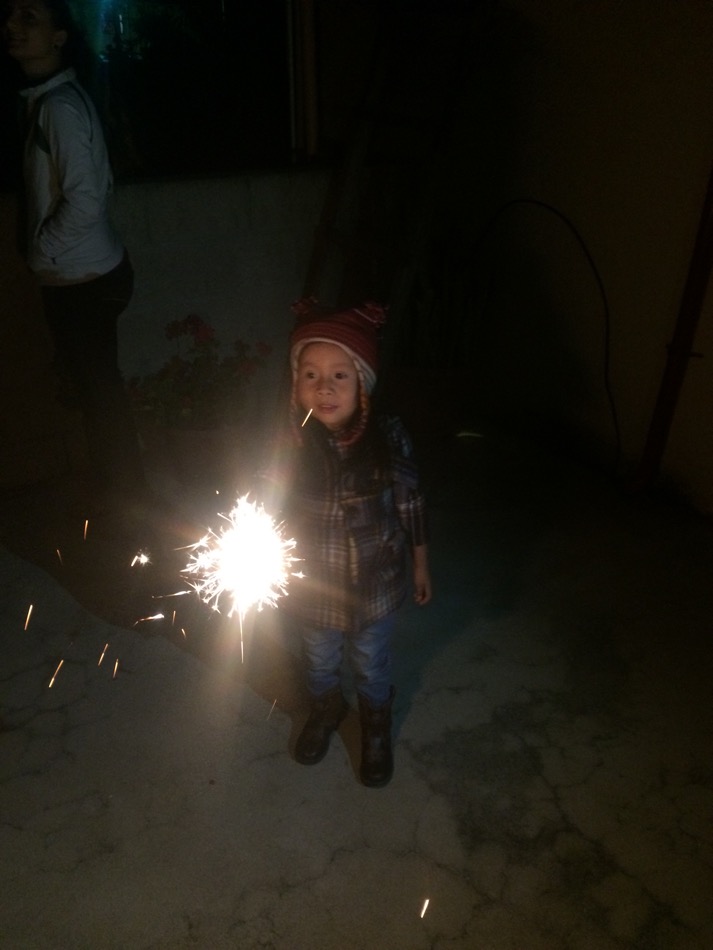
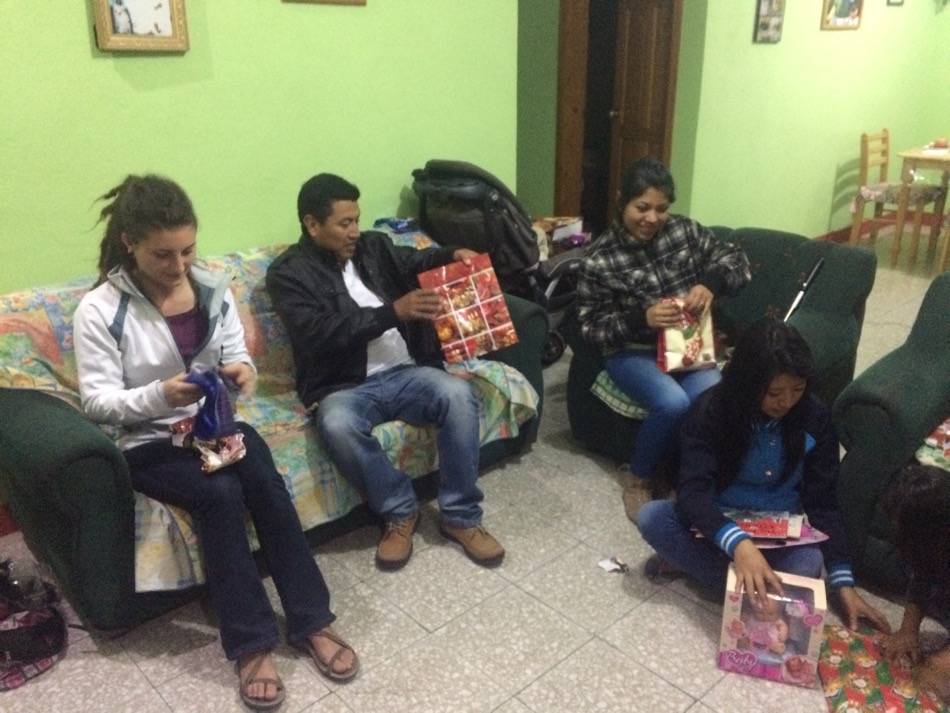
At midnight Beca and I joined the family on their rooftop terrace to watch the plethora of fireworks that were fizzing up all around us. It was a very impressive sight indeed. We then returned to the living room to open our presents. As you can imagine, 3-year old Dulce was extremely excited. We then sat down to an unusual ‘spread’. 

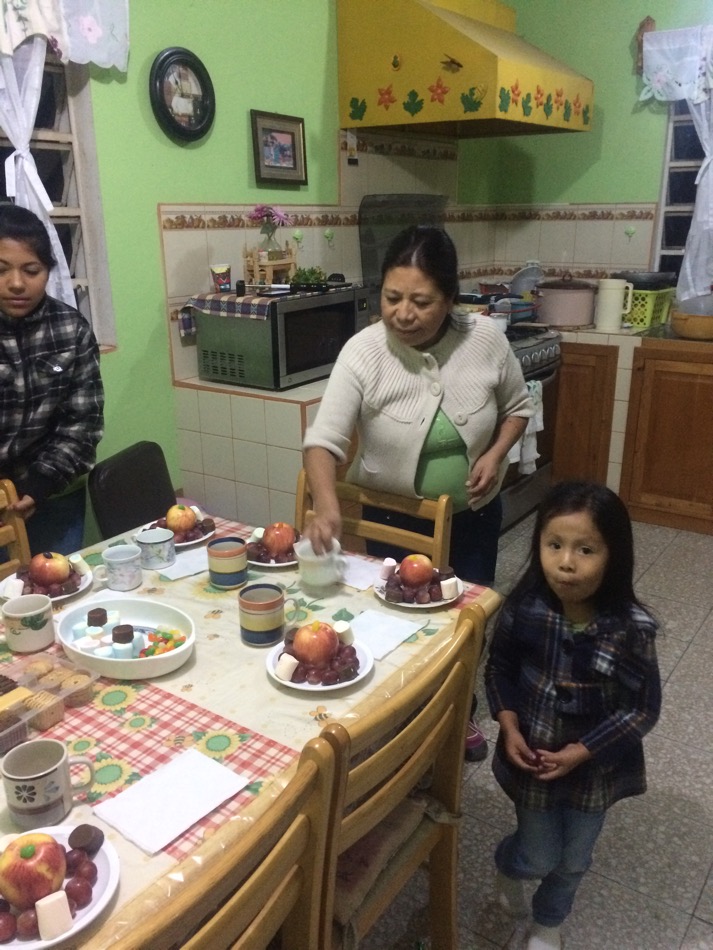
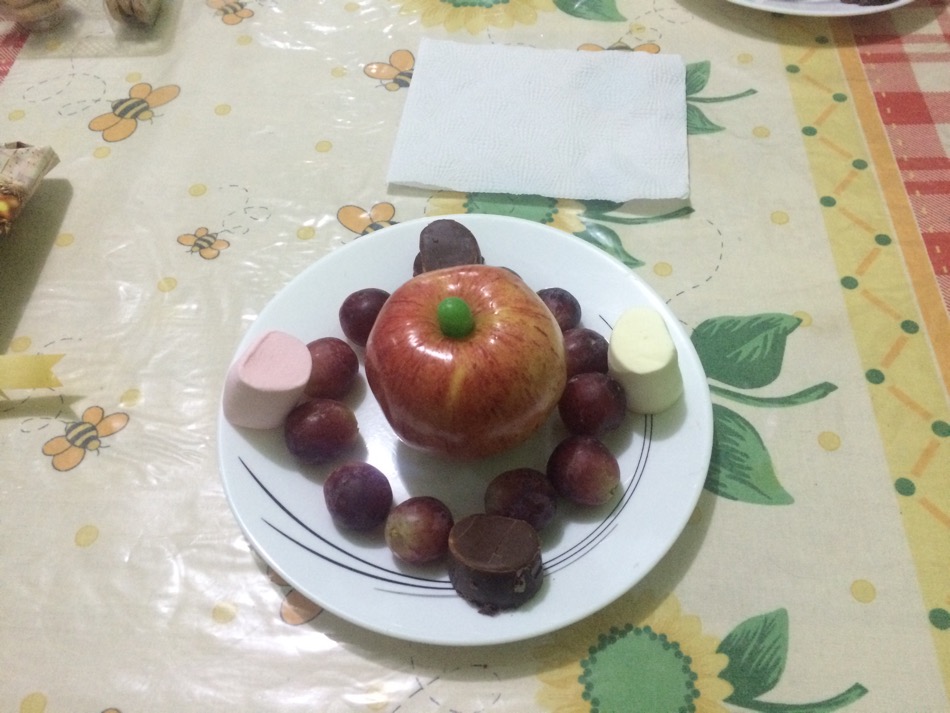
The kitchen table was beautifully adorned. At each place setting there was a plate on which was strategically placed an apple, some grapes and various sweets and chocolates. The centre piece on the table was a huge jug of Punch – non-alcoholic, I sadly have to report!
I doubt anyone was going to have a hearty appetite at this time in the morning and so by 2am everybody was suitably full and suitably tired enough to bid each other goodnight. 

The following day Beca and I went on walk about and had lunch in town. It didn’t really feel like a Christmas Day, it was a scorching hot day, but folk were obviously in a jovial mood.

There was no Boxing Day, no Boxing Day Sales, and the ‘day after Christmas Day’ was like any other normal day –  just as it should be. Two days is enough to celebrate Christmas.

Next stage: a visit to Santiago de Atitlán and San Pedro.


Posted in Guatemala | Tagged | Leave a comment

Bienvinido a Guatemala.

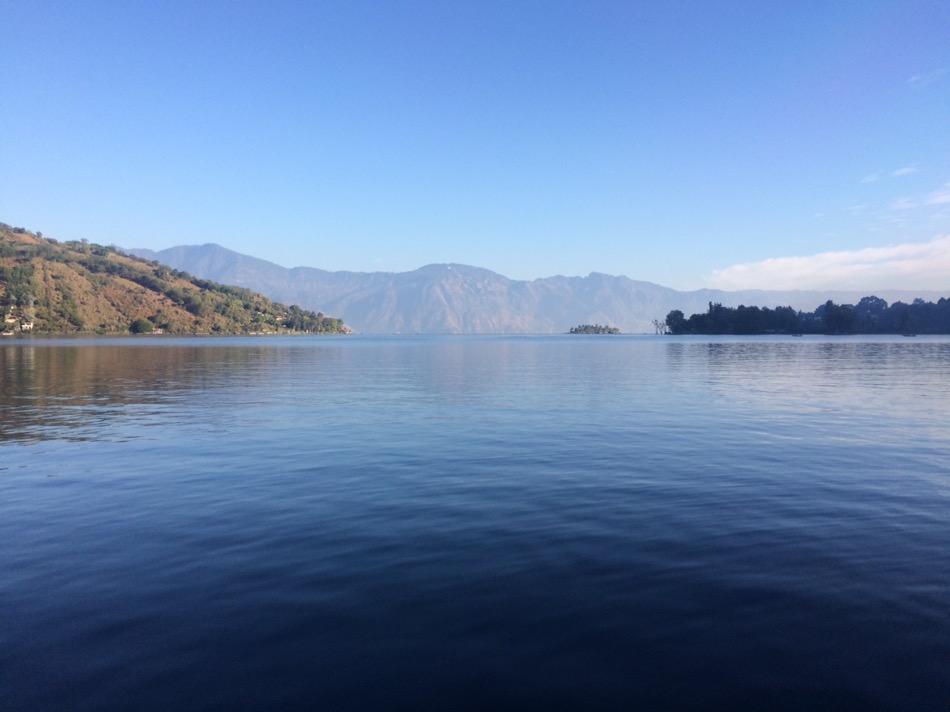
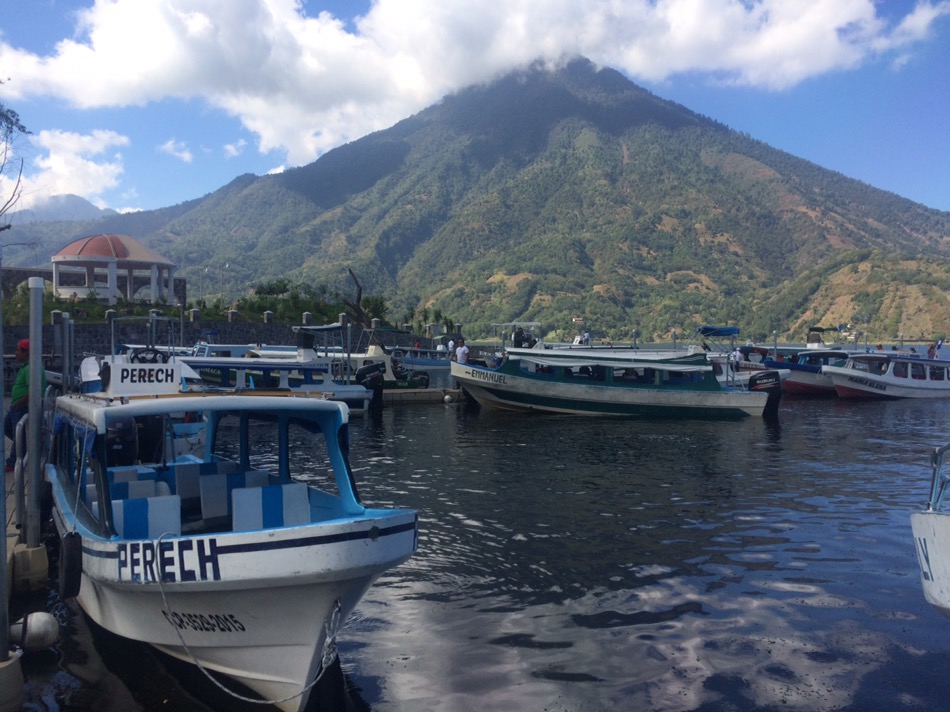
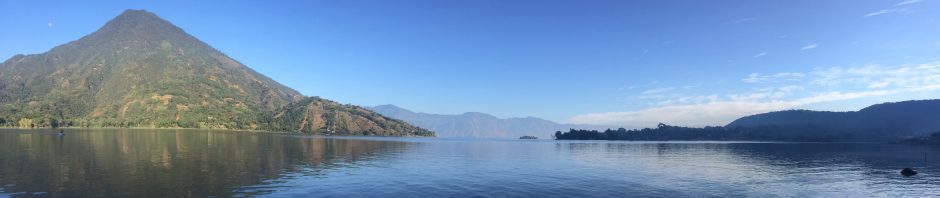
Lago de Atitlán, Guatemala. 

The picture postcard location of Lago de Atitlán has proved to be an excellent place to start my adventures in Guatemala. It’s is a huge lake with around 14 towns loosely scattered around its circumference. The lake basin is volcanic in origin with three (active) volcanoes towering above its southern flank. 

Following a swift exit from the capital (Guatemala City) – reputedley one of the most dangerous cities in the world – I arrived in Panacjachel (known simply as ‘Pana’). Pana is the largest of the lakeside towns and the most developed. It takes around 3 to 4-hours to get here from Guatemala City.

I have signed up for a 2-week Spanish course at the language school of Jabel Tinamit. The cost, including full board and lodging, plus 4-hours of ‘one to one’ Spanish lessons (Monday to Saturday), is $200 per week. 

I am staying with a host family who live in a small suburb that is around 20 minutes (on foot) from the centre of town. The family is small by Guatemalan standards. Magda, the obvious head of the household, is (I guess) in her early forties. She is a warm welcoming person with a big heart and very high standards. The house is immaculately clean and well run. The husband of Magda, Theodoro, works as a waiter in one of the bigger hotels in town. Somewhat overshadowed by Magda, he appears to be a kind and gentle man. They have three children; Johnny (21), Karla (19), and Andy (15). Karla, a single Mum, has a gorgeous three year old daughter called Dulce who runs to me for a hug every time she see’s me!

Their home is located at the end of a long, narrow, winding passage way, surrounded by other similar sized houses. My bedroom is clean, but sparse. I have a king size bed but no en suite bathroom. 

My day starts at 06:30 when I get up for a ‘tepid’ shower. Breakfast is at 07:00 and normally consists of fruit, or eggs, with coffee or tea and toast. Magda always joins me for breakfast and I hopefully nod or shake my head in the right place as she babbles away in rapid Spanish. 

At 07:40 I set off for ‘school’. Lessons start at 08:00 on the dot. My maestra (teacher) is Patricia. I guess she is around 25. She has two children and lives with her husband, her two sisters and her Mother and Father. 

Patricia has gauged my level of Spanish extremely well. The lessons are challenging but manageable. I try, whenever possible, to inject a level of humour – Patricia appears to find it amusing?

Lunch is at midday and supper is at 18:30. I take lunch but skip supper; instead choosing to ‘dine out’ in one of the many cheap restaurants scattered around town. It makes for a change of scenery and gives me a welcome break from having to keep up a false pretense! I made the school boy error of giving Magda the impression that my Spanish is better than it actually is! Big, big mistake! 

One thing has become very obvious….. I have a long way to go before I become fluent! However, as Patricia says, “poco a poco” – little by little. 

Next instalment: Christmas with Rebeca and the family of Magda.


Posted in Guatemala | Tagged | Leave a comment

The Medieval Tower.

In the later medieval period, Shrewsbury was encircled by a defensive wall with a number of watch towers at intervals.

Town Walls Tower is the last surviving of these watch towers and it was given to the National Trust in 1930.

The Tower is currently leased to the nearby School, and is open three weekends each year in June, August and October.

IMG_5498

In the 1860’s the tower was converted into a dwelling by John Humphreys, of Swan Hill Court. In 1930 his daughter, Rachel Humphreys, gave the tower to the National Trust.

Screen Shot 2015-10-10 at 13.15.47 copy

The Burleigh map of 1575, during the reign of Queen Elizabeth I, shows the full extent of Shrewsbury’s town walls. The Welsh bridge is located at the top of the map, English bridge to the bottom. The watch towers can be seen to the left. It is believed that Town Walls Tower is the one nearest to English bridge.

IMG_5493

The upper door gave access to the ‘allure’ or walkway which extended along the walls. The lower door would have been at street level.

IMG_5482 IMG_5487 IMG_5489

Posted in United Kingdom | Tagged , | Leave a comment

Black Country – Living – Museum.

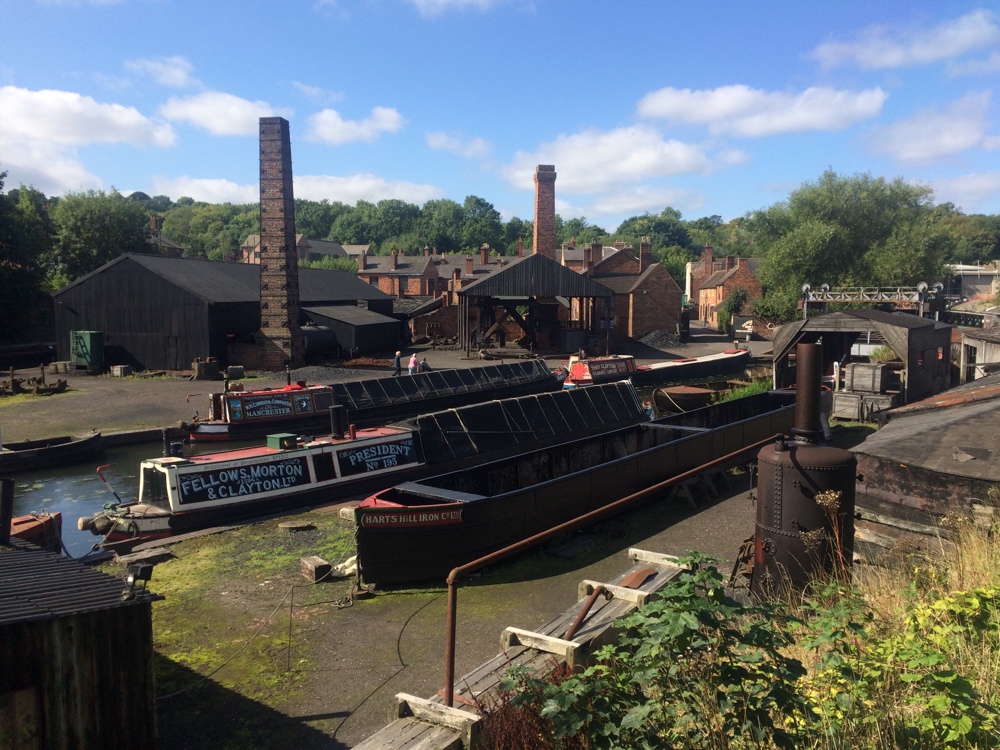
An amazing vist today – The Black Country – Living – Museuem – highly recommended.

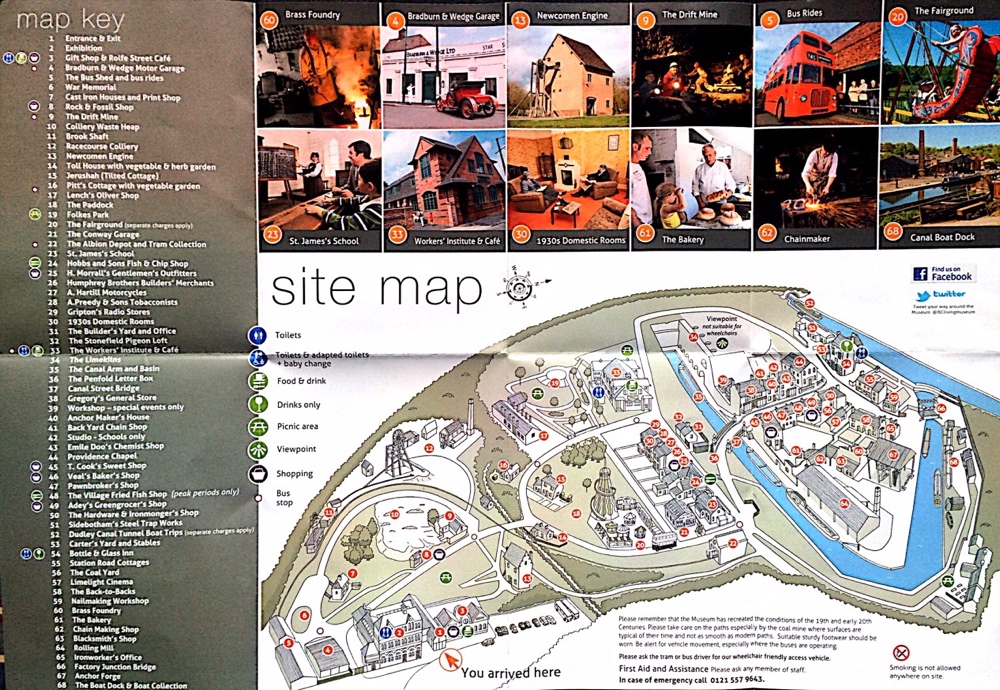
Map.jpg

Canal.jpg

Boat.jpg

Posted in United Kingdom | Tagged | Leave a comment

A spot of porridge.

HM Prison Shrewsbury was a Category B/C men’s prison in Shrewsbury, Shropshire. It closed in March 2013.

The former prison site, on Howard Street, adjacent to Shrewsbury railway station, is near the site of the Dana Gaol, a medieval prison. The name The Dana is still often used for the prison, as well as being the name of the road to one side of the prison and the pedestrian route that runs from near the front of the prison into the town centre via a footbridge over the station. The now disused platform 8 at the station, masked from the opposite platform by a high wall, was used for transporting prisoners between 1868 and the First World War.

Between 1902 and 1961 seven people were executed, by hanging, within the walls of HMP Shrewsbury for the crime of murder.

Richard Wigley aged 34 yrs on Tuesday, 18 March 1902 (Mary Ellen Bowen [girlfriend])
William Griffiths aged 57 yrs on Tuesday, 24 July 1923 (Catherine Hughes [mother])
Frank Griffin aged 40 yrs on Thursday, 4 January 1951 (Jane Edge)
Harry Huxley aged 43 yrs on Tuesday, 8 July 1952 (Ada Royce [girlfriend])
Donald Neil Simon aged 32 years on Thursday, 23 October 1952 (Eunice Simon [estranged wife] & Victor Brades [her lover]
Desmond Donald Hooper aged 27 yrs on Tuesday, 26 January 1954 (Betty Smith)
George Riley aged 21 yrs on Thursday, 9 February 1961 (Adeline Mary Smith [neighbour])

The names of their victims appear in parentheses. In almost every case the murder victim was female. Executions took place at 08.00 am. All executed prisoners were buried in unmarked graves inside the prison, as was customary. The four executions which took place during the 1950s were all conducted by Albert Pierrepoint and his assistant. The last execution in 1961 was conducted by Harry Allen and his assistant. In February 2014 the Ministry of Justice stated that the remains of ten executed prisoners were exhumed from the prison in 1972, cremated at a local crematorium and the ashes scattered there.

Shrewsbury Prison is now open to tours:

The development comes after the Shrewsbury Prison’s owner, Trevor Osborne, struck a deal with Jailhouse Tours to operate the Castlefields site from the start of next month. Joel Campbell, owner of Jailhouse Tours, said he was delighted with the deal and would be looking forward to starting work.

Mr Campbell said people would be able to take part in a variety of different events at the prison, with 90 minute tours planned as the “bread and butter” of the operation.

He said: “It will be a tour where people go through the journey a prisoner would go through, from the gates at the entrance, through to the rooms where the searches would take place, through to the cells.

“People will get to see all the different wings, get to understand more about the history, from its beginnings right up to the present day, and how that has changed.

“They will get to see all the stuff people like to see, the segregation units, the suicide watch, showers, the hanging rooms.”

IMG_5147

IMG_5149 IMG_5151 IMG_5150 IMG_5154 IMG_5156 IMG_5157

Posted in United Kingdom | Tagged | Leave a comment

The Ridgeway – 87 miles – Overton Hill to Ivinghoe Beacon.

The Ridgeway National Trail stretches 87 miles (139km) across five counties, starting at Overton Hill near Avebury in Wiltshire and passing through Oxfordshire, Berkshire, Hertfordshire and ending at Ivinghoe Beacon in Buckinghamshire.

The Ridgeway is often described as ‘the oldest road in Britain’. It’s clear that parts of the route were in use 5000 years ago (or more). The Ridgeway, as we know it today, is in fact the middle section of the Greater Ridgeway, an ancient system of tracks that stretches from Lyme Regis on the Dorset coast up to Hunstanton on the Norfolk coast. 

Day One: Overton Hill to Ogbourne St George – 9 1/4 miles.

This section of the walk has many interesting sights, including the historically rich village of Avebury.

IMG_4938

Day Two: Ogbourne St George to Sparsholt Firs – 16 miles.

This stage provides easy walking along incredibly broad grassy tracks. There are some great views plus several interesting archaeological sites and natural phenomena worth investigating. This is the most remote section of the walk.

IMG_4949 IMG_4952 IMG_4942

Day Three: Sparsholt Firs to Streatley – 17.5 miles.

An easy and uneventful section of the walk.

Day Four: Streatley to Watlington – 15 1/2 miles.

This stage of the walk is most enjoyable, especially after the previous sections. From the twin towns of Streatley and Goring the path follows the Thames for around 5 1/2 miles.

IMG_4974 IMG_4986 IMG_5050 IMG_5042

Day Five: Watlington to Wendover -17 1/4 miles.

Although this section is pleasant enough, it’s fairly uneventful. The walking is easy with only a few steep sections – so you can really slow down, relax and enjoy the scenery.

Day Six: Wendover to Ivinghoe Beacon – 11 1/2 miles.

Most of this last section winds its way through beautiful mature woods but it is a steady uphill slog for most of the way.

IMG_3511 image

Posted in National Trails | Tagged | Leave a comment