The one horse town of Chiclayo.

My penultimate stop before crossing the border into Ecuador. Chiclayo! One of the drabbest towns that I have so far visited in all of Peru! It’s a place of dodgy street corners and seedy hotels; mine doubled up as a love hotel during the day, which is fine but ‘noise’ travels in a hotel with tiled floors and no carpets! The town offers only two things for the independent traveller. 1. It’s a ‘useful’ transit stop for a journey to or from Ecuador. 2. And the most important, it’s major draw card – El Señor de Sipán – the only real reason that anyone, in their right mind, would contemplate a visit to this god forsaken hole.

The Lord of Sipán (El Señor de Sipán) is the name given to the first of several Moche mummies found in the region by archaeologist Walter Alva in 1987.

Some archaeologists consider the find to be one of the most important archaeological discoveries in South America in the last 30 years – the main tomb was found intact and virtually untouched by thieves. It can probably be compared to the 1922 discovery of the boy king Tutankhamun, in wealth, importance and shear size

The museum of the Royal Tombs of Sipán is located in nearby Lambayeque (a short bus journey from Chiclayo) and holds most of the artefacts, along with stunning displays that help interpret the tombs. It is one of the most outstanding museums I have so far visited in Peru. Our tour guide spoke perfect English and managed to work us into a frenzy showing us one jaw dropping display after another.

For further information check out: Museo Tumbas Reales de Sipán

Next stage: Piura and the border crossing into Ecuador.
(null)

(null)

(null)

Posted in Peru | Tagged , | Leave a comment

Once great empires, now turned to sand and mud.

Comfortable and safe; Cruz del Sur (CdS) are the epitome of bus travel here in South America. They may not be the cheapest but they certainly are the best. Sadly my overnight departure from Huaraz to Trujillo (allegedly a journey of 8-hours) could not be accommodated by CdS and so I opted for Movil Tours. They were good but sadly not in the same league at CdS.

Trujillo.

Founded by Pizarro in 1534 and named after his hometown in Spain, Trujillo quickly grew into northern Peru’s biggest city, though it had been ground zero for several civilizations prior to the Spanish.

The reason for my visit to Trujillo were the nearby 1500-year-old Moche pyramids, Las Huacas del Sol y de la Luna, which loom over the desert landscape as testament to once great empires now turned to sand and mud. In addition, the ancient Chimú adobe metropolis of Chan Chan is also located not too far away.

Huaca de la Luna has an amazing museum, which is near the ticket office where the local bus drops you off. To reach the pyramid, from the museum, is a 5-minute walk. Entrance to Huaca de la Luna can only be made with a guide. My Spanish is obviously improving because I did get the drift of pretty much everything the guide explained. The tour takes around one and a half hours and takes you to some of the main highlights of this massive pyramid. Huaca del Sol is currently closed to the general public.

Click here for further information on the two pyramids.

Next day it was a visit to Chan Chan. This was a more difficult place to visit. The local bus drops you off at the end of a dirt track, it’s then a 30-minute walk to the site. I then waited an hour for an English speaking guide – this place was too amazing not to understand completely what was being said! I was lucky enough to join an American couple who had just arrived on a cruise ship. We split the cost and our guide proved to be excellent and gave a great tour.

Chan Chan was the capital of the Chimú kingdom (AD 850 and 1470), located on the north coast of Peru. Chan Chan’s heyday was between AD 1200 and 1470. It was then conquered by the Inca people.

Chan Chan covered an area of 2.5 square miles, and included some 10 enclosed palace complexes, 35 intermediate or elite residential compounds, and thousands of small rooms. The population has been estimated at 30,000 people or more.

Click here for further information on Chan Chan.

Next stage: Chiclayo.

(null)

(null)

(null)

(null)

(null)

(null)

(null)

Posted in Peru | Tagged | Leave a comment

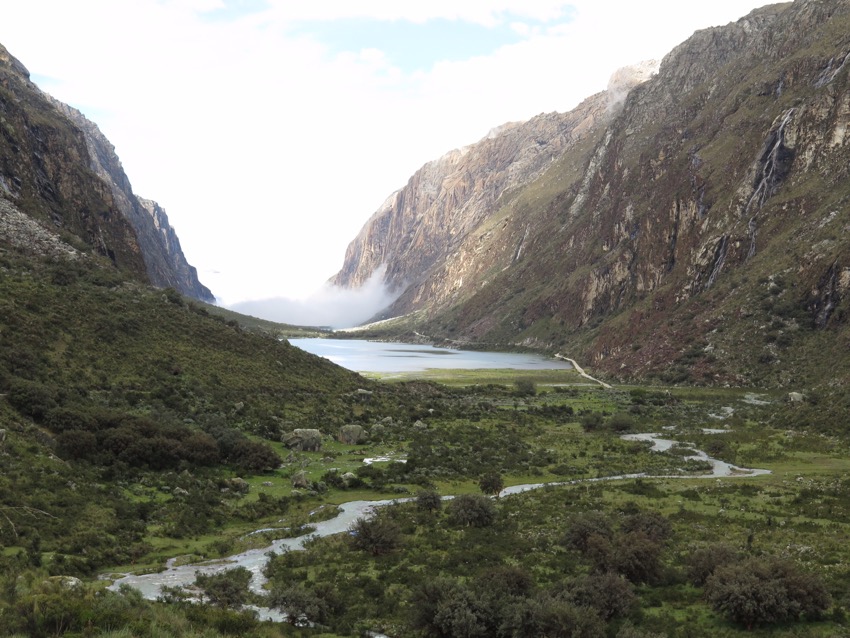
Lago 69.

“The restless Andean adventure capital of Huaraz came into its own based on a blessed location amidst some of the prettiest mountains in the world. Though nearly wiped out by the earthquake of 1970, Huaraz rebounded to become Peru’s high-adrenaline showpiece, with trekking and mountaineering leading the heart-thumping charge. It buzzes with adventure seekers of all ilks in high season (May to September) and slows to little more than a crawl the rest of the year, when many folks shut up shop and head for the beaches.” Lonely Planet South America.

Lago 69 – Altitude Max: 4550m / 14,928ft.

Lake 69 lies just at the flank of The Pisco and Chacraraju Mountains and is supposed to be one of the most beautiful aqua colored glacial lakes in Northern Cordillera. Considered by most hikers as one of the most impressive scenic day hikes in the entire region, it is a unique and special place. The hike is rated as medium to hard because of the altitude and challenging last section, just before you reach the lake.

It was a 5am start and a tough hike but extremely rewarding.

Whilst in Huaraz I also managed to satisfy my yearning for a good curry. The fiery curries at Chilli Heaven, an English-run restaurant, were some of the best that I have tasted in South America.

Next stage: Trujillo.

(null)

(null)

(null)

(null)

Posted in Peru | Tagged , | Leave a comment

Lima and CIP.

With a population of over seven and a half million, Lima is home to one-third of Peru’s population; a huge city by any standard.

For most people a visit to this fast-moving metropolis is all about ‘culture and cuisine’. However, for a potato ‘expert’ no stay would be complete without a visit to CIP – The International Potato Centre. It was an extremely interesting place to visit and the staff were incredibly welcoming.

Visit the CIP website

I’d like to say that Lima was a great city to visit but sadly it was not. Places of interest are spread far and wide and the only (safe) way to visit them is by taxi, which is never a cheap option for a budget traveller.

I did manage to visit one historic site – Huaca Pucllana, which was a 30-minute walk from my hostel. Huaca Pucllana, also Pucllana or Huaca Juliana, is a huge adobe and clay pyramid located in the Miraflores district of Lima and built from seven staggered platforms. It takes its name from the Quechua word “pucllay,” meaning “game,” which in its entirety can be translated as “a place for ritual games.” It served as an important ceremonial and administrative center for the advancement of the Lima Culture, a society which developed in the Peruvian Central Coast between the years of 200 AD and 700 AD.

Next stage: Huaraz and Lago 69.

(null)

(null)

Posted in Peru | Tagged | Leave a comment

Mysterious lines and 1000-year old mummies.

Nazca Lines.

Bone dry and baking hot, Nazca was a desert-scorched dead town until a flyby by American scientist, Paul Kosok, revealed one of Peru’s most enigmatic and mysterious achievements.

A 20-minute flight in a 5-seater CESSNA set me back £50 and was an awesome way to get a birds eye view of these enormous engravings. One of the largest (96m long) and most amazing is the humming bird.

Chauchilla Cemetery – Nazca.

The cemetery of Chauchilla was discovered in the 1920s, but had not been used since the 9th century AD. The cemetery includes many important burials over a period of 600 to 700 years, starting in about 200 AD.

The bodies are so well preserved due mainly to the dry climate in the Peruvian Desert but the funeral rites were also a contributing factor. The bodies were clothed in embroidered cotton and then painted with a resin and kept in purpose-built tombs made from mud bricks. The resin is thought to have kept out insects and slowed bacteria trying to feed on the bodies. The long hair of the mummies in the pictures below signifies that they were ‘shaman’ (high priests) – their hair would not have been cut throughout their entire life.

Click here to view part of the flight across the Nazca lines.

Next stage: Lima.

(null)

(null)

(null)

(null)

(null)

(null)

Posted in Peru | Tagged | Leave a comment

Cañón del Colca.

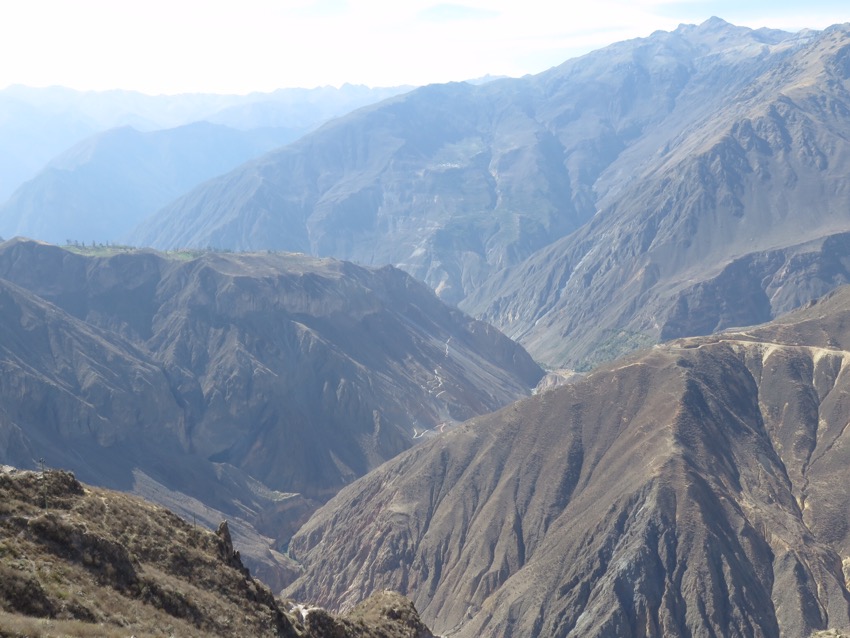
Colca Canyon is located in southern Peru, about 100 miles northwest of Arequipa. It is one of the world’s deepest canyons (circa 3191m) and a truly spectacular place to visit.

My journey from Arequipa began at 1am, ahead of me lay a bone jarring 6-hour bus journey.

Why on earth I should chose to get on a bus at such an unearthly hour still astounds me and all for the sake of a bird; except on this occasion the bird in question was the Andean Condor. In order to see this elusive creature I had to reach my destination by day-break.

Cruz del Cóndor is a rocky outcrop where Andean condors can be seen gliding on thermal air currents. It’s a great place to meet fellow travellers – stuck in the middle of nowhere with nothing to do, except wait, you strike up conversations with people from all over the world. Sadly there were no Andean Condors to be seen – despite waiting for over 2-hours.

A 20-minute bus ride further on is Cabanaconde – an excellent base for some spectacular hikes into Colca Canyon, including the popular trek down to Sangalle (The Oasis).

Cabanaconde is my kind of place. A picturesque and tranquil little village with nothing much to do apart from relax or hike. My hotel was a delightful establishment with comfy rooms and an excellent restaurant.

My hike down to Sangalle commenced around 9am, just as all the tour groups were completing their particular hike up! Apparently they had started at 5am to avoid the fierce sun, which was just about to peak over the top of the canyon. I would be climbing back up in the full sun of the day!

It was an amazing decent into The Oasis and once I reached the bottom I enjoyed a soothing swim in on of the many pools. My ascent back to Cabanaconde was a slow and arduous climb; the sun was beating down ferociously and each step was a challenge. By 3pm I had made it back – sweaty and exhausted.

Next stage: Nasca.

(null)

(null)

(null)

Looking down to ‘The Oasis’.

(null)

Posted in Peru | Tagged | Leave a comment

Valle Sagrado.

‘Once you’ve seen one Inca ruin you’ve seen them all’, is simply not true. They are all unique, incredible feats of engineering, and each one has something different to offer the inquisitive visitor.

The Sacred Valley of the Río Urubamba is situated about 15km north of Cuzco – as the condor flies. Its star attractions are the lofty Inca citadels of Pisac Urubamba, and Ollantaytambo.

It’s not hard to succumb to the charms of sunny Pisac (elevation 2715m), a bustling colonial village just 33km northeast of Cuzco at the base of a spectacular Inca fortress perched on a mountain spur. The laid back attitude of this delightful village is a welcome break from Cusco. The Inca citadel lies high above the village on a plateau with a plunging gorge on either side. It’s a steep 4km hike to get there but once you do it’s a jaw dropping experience.

In Urubamba (elevation 2870m), the nearby amphitheater-like terraces of Moray and salt mines of Salinas, where thousands of salt pans have been harvested since Inca times, are breathtaking places to visit. Very few tourists make it here thus providing an extremely peaceful and thought provoking visit

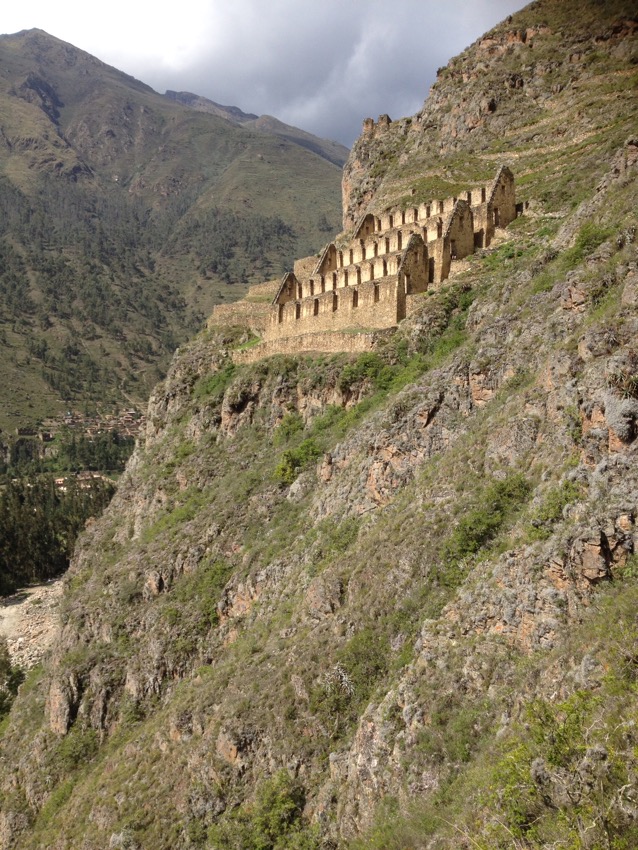
Tiny Ollantaytambo (elevation 2800m) is the best surviving example of Inca city planning and the most atmospheric of Sacred Valley destinations. Its massive fortress stands sentinel over the cobblestoned village like a guardian against the heavens.

Next stage: Cusco to collect replacement camera. Then to Arequipa, and Colca Canyon.

(null)

(null)

(null)

(null)

(null)

(null)

(null)

(null)

Posted in Peru | Tagged , | Leave a comment

Machu Picchu.

For most visitors to Peru, and even South America, a visit to the Inca city of Machu Picchu (MP) is the long-anticipated high point of any trip. In a spectacular location, it is the best known archaeological site on the continent.

I chose to visit Peru during the rainy season, which created positives and negatives. On the plus side there a fewer visitors, making for a less crowded journey and easier booking of hostels and buses. On the negative side it rains, in certain parts of the country, most days. If it rains on the day of your visit to MP dense cloud engulf the city and you don’t get see a thing.

But first I had to get there. It’s an operation that involves a lot of planning. I chose not to hike the Inca Trail. Four days hiking with three nights under a tent, in potentially atrocious conditions, is not my kind of fun.

Aguas Calientes (AC), the nearest town to MP, can only be reached on foot or by train. As I had chosen to arrive in AC by train, tickets to MP had to tie in. I also wanted to visit the steep-sided mountain of Wayna Picchu (WP), which overlooks MP. Only 400 people are permitted to climb WP per day. Visitors to MP are limited to 2500 per day. Tickets sell out quickly, especially for WP.

A visit to the ancient city is not cheap. My day ticket (to WP and MP) cost £55 and the return train ticket from Cusco cost £110.00. In addition you have a potential nights accommodation in AC to consider. All in all it cost me just over £200.

With all this planning I was convinced that the whole thing would be a huge anticlimax. Boy was I proved wrong.

MP is one of the most amazing places I have ever visited in my life. Sadly with no camera I had to resort to documenting my visit using my iPhone; good but not as good as my Canon G12!

Next stage: Sacred Valley.

(null)

(null)

(null)

(null)

(null)

(null)

Posted in Peru | Tagged | Leave a comment

Cusco – gateway to Machu Picchu.

“The high-flying city of Cuzco sits at a 3300m crossroads of centuries-old Andean tradition and of course modern Peruvian life. Claimed to be the continent’s oldest continuously inhabited city, it was once the Inca empire’s foremost stronghold. It is now both the undisputed archaeological capital of the Americas as well as one of the continent’s most staunchly preserved colonial living museums.” Lonely Planet – South America.

Turismomer proved to a great choice to whisk me, overnight, from Puno to Cuzco in absolute luxury; it was a 7-hour bus journey and I slept the whole way.

Hostel Wara Wara is a tough 15-minute walk (uphill) from Plaza Armas, however, the views across the city from their balcony are stupendous. Miguel and his wife run a wonderful hostel with a real ‘home from home’ feel.

Sure Cusco is a big city but the touristy bits are mainly located in and around the centre, so it can easily be explored on-foot. First activity: orientation exercise with a free city walking tour.

As well as the city to explore there are four extremely impressive Inca ruins only a short ‘colectivo’ journey away. All can be visited in a long day: Tambo Machay, Puca Pucara, Qenko, and Sacsayhuamán (easily remembered by travellers as ‘sexy woman’).

Black Tuesday – camera stolen somewhere in Cusco!

Next stage: Machu Picchu.

IMG_2906.JPG

IMG_2900.JPG

IMG_2901.JPG

IMG_2902.JPG

Posted in Peru | Tagged | 2 Comments

Puno sightseeing.

Two day tours and an unexpected street parade.

The Yavari story:

“The oldest boat on Lake Titicaca, the iron-hulled Yavari was built in England and shipped in 2766 pieces around Cape Horn to Arica, then transported to Tacna by train and hauled by mule over the Andes to Puno (taking a mere six years), where it was reassembled and launched in 1870. Due to a coal shortage, the engines were often powered by dried llama dung”. Lonely Planet – South America.

Tap here for further information

Sillustani:

Sitting on rolling hills in the Lago Umayo peninsula, the ruined towers at Sillustani stand out for miles against the unforgiving landscape. The ancient Colla people were a warlike, Aymara-speaking tribe that buried their nobility inside impressive chullpas (funerary towers), made from massive coursed blocks and reaching heights of up to 12 metres.

Tap here for further information.

Next stage: Cuzco – gateway to Machu Picchu.

IMG_0932.JPG

IMG_0939.JPG

IMG_0926.JPG

IMG_2538.PNG

IMG_2972.JPG

Posted in Peru | Tagged | Leave a comment