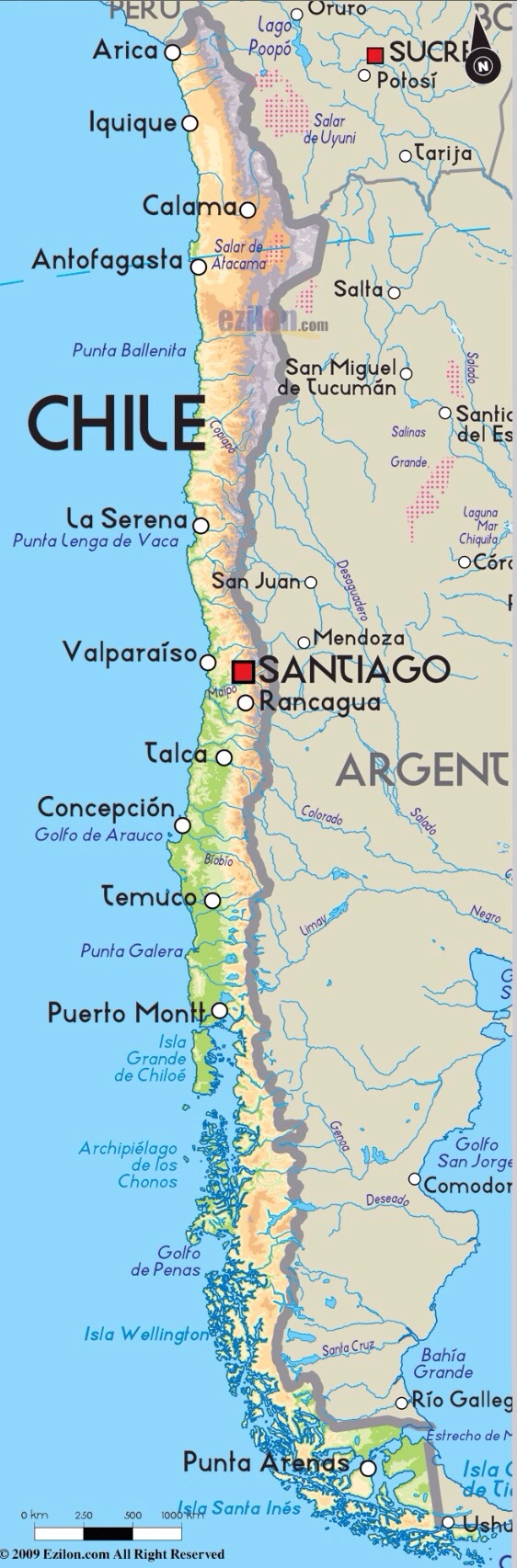
Brimming with wonderful restaurants and cafés, stunning vistas, super friendly people, and a ‘things to see and do’ list that most cities would die for.
Let me introduce Valparaiso, the spectacular faded beauty of its chaotic hills, the maze of steep, sinuous streets, alleys and stairways, all piled high with crumbling mansions, a city that will remain in my heart forever.
Rene, the owner of B&B La Nona, where I was staying, is a mine of information. Upon arriving at his beautiful home, which he shares with his wife, I was given my first cup of decent coffee in weeks. Rene then talked for nearly an hour about what to see and do in Valparaiso. I had initially planned to stay here for a couple of nights, in the end I stayed much longer.
Valparaiso played a very important role in the second half of the 19th century, when the city served as a major stopover for ships traveling between the Atlantic and Pacific oceans by crossing the Straits of Magellan.
Valparaiso mushroomed during this golden age, when the city was known by international sailors as “Little San Francisco” and “The Jewel of the Pacific.”
Examples of Valparaiso’s former glory include Latin America’s oldest stock exchange, the continent’s first volunteer fire department, Chile’s first public library, and the oldest Spanish language newspaper in continuous publication in the world, El Mercurio de Valparaiso. The opening of the Panama Canal and subsequent reduction in ship traffic dealt a staggering blow to Valparaiso resulting in the crumbling facade that you see today.
Because the slopes of the hills are so steep, many of the surrounding areas of Valparaíso are inaccessible by public transport. That is why the elevators serve the function of linking the high part of the city with the low part. The first one opened in 1883.
Bizarrely, graffiti is actively encouraged here, resulting in some amazing pieces of art work.
La Sebastiana Museum:
La Sebastiana is one of poet Pablo Neruda’s three quirky homes that have been converted into museums honoring the distinguished Nobel laureate’s work and life. Neruda is Chile’s most beloved poet, and the country’s most famous literary export. Even if you haven’t familiarized yourself with Neruda’s work, this museum is worth visiting to explore this eccentric home and view the whimsical knickknacks he relished collecting while traveling in Africa, Asia, and Europe. Neruda searched for poetry in the most mundane of objects. From a carousel horse brought from Paris to a chest of drawers wrenched from a ship, Neruda developed a collector’s zeal for what most people would view as junk. The poet called himself an “estuary sailor”; although terrified of sailing, he nevertheless was spellbound by the sea, and he fashioned his homes to resemble boats, complete with porthole windows.
Valparaiso started to envelope me with its charm from the moment I arrived. It’s the first time during my travels to date that I actually felt so very sad to be leaving a place.
Next stage: Crossing the Andes.