Camino De Santiago (Gran Canaria).

Camino De Santiago

Day Zero – Sunday: arrival and anticipation.

The journey really began before the walking did. I took the bus from Las Palmas Gran Canaria to Maspalomas, in the south of the island, and checked into the Corallium Beach by Lopesan, a large resort hotel right by the sea. It felt slightly surreal to be staying somewhere so polished and comfortable on the eve of a pilgrimage-style walk, but I enjoyed the contrast. A final evening of rest, the sound of the ocean, and an early night to prepare for the days ahead.

Day One – Faro de Maspalomas to Arteara (Monday).

An early, 07:00 am, breakfast at the hotel – the choice was immense. I then caught the bus to Estación Maspalomas and set off walking at around 08:30 – from Faro de Maspalomas (the lighthouse of Maspalomas). The morning started cool and pleasant, but it didn’t take long for the heat to build. The path was very well marked, which was reassuring, and surprisingly quiet – I encountered very few other walkers.

Faro de Maspalomas.

I passed many small hamlets along the way. The noticeable thing being agriculture and the need for water storage for irrigation.

By around 13:00 I reached the bus stop at Arteara, I was feeling very satisfied with my first day on the trail.

Distance: 11.5 miles. Time: 3 hours 49 minutes. Elevation gain: 1,598 feet.

Cactus forest.

While waiting for the bus back to Maspalomas, at the end of the walk, a Tejeda-bound bus stopped and an Indian family disembarked – a couple with two girls, aged about six and eight. They were heading for the Camel Safari Park, only to return shortly afterwards when they discovered it was closed. We started chatting. They live in Hounslow and met, as a couple, in the UK, though both were born in India and had worked independently in Kenya. The woman works in a hospital laboratory. The children were also very chatty. They shared some of their food with me. It was one of those lovely, unexpected Camino moments where strangers share a slice of life while waiting for a bus.

Later, an elderly gentleman appeared from nowhere, clearly out of breath. He told us he was 84 years old and from Berlin. He’d been hiking.

The bus headed back to Maspalomas arrived at 14:20. We all boarded. I then headed back to my hotel for a beer, and a well earned rest.

Day Two – Arteara to San Bartolomé de Tirajana (Tuesday).

I took the bus from Maspalomas back to Arteara and started walking at around 10:00. Once again, it was warm from the outset. The climb was steady and demanding, but manageable.

I felt a pang of sadness at the start of today’s walk. The Camel Safari Park that the Indian couple were looking for was not the one they checked out. Just around the corner was the active park. The poor guy had got so close but not close enough.

I arrived in San Bartolomé de Tirajana at around 13:30.

Distance: 6.25 miles. Elevation gain: 2,302 feet. Time: 2 hours 45 minutes.

Our intrepid traveller.

I stopped for lunch near the main square and enjoyed a large bowl of vegetable soup. A young Eastern European couple, who were obviously cyclists, sat nearby, very chatty with each other; I noted that he ordered their food in reasonable Spanish. Afterwards, I went in search of my accommodation, Rural Suite Santiago de Tunte. It was a very nice place, though surprisingly chilly inside. I spent the rest of the afternoon exploring the village, enjoying the afternoon sun and taking things slowly. By evening it was getting chilly. Evening meal of Steak with pepper sauce.

Day Three – San Bartolomé de Tirajana to (almost) Cruz de Tejeda (Wednesday).

The local bakery was open by 7am; cafe con leche with two croissants. I set off walking around 08:00 – in cold, drizzly conditions. It was immediately clear that this was going to be a tough day. Early on, I met four people from the Czech Republic, and we stopped briefly to chat and take photos.

My Czech Republic friends.

As the day wore on, the weather deteriorated. The rain intensified, the wind picked up, and I became increasingly cold. My waterproof clothing began to fail, letting water in, and in many places the path had turned into a stream.

I reached Campamento El Garañón and made the difficult decision to abort the hike. Safety came first. I headed downhill to try to escape the strong wind and cold rain. At one point I had cross a huge dam wall at Presa de Los Hornos. The path along the top of the wall was flooded, and I had to wade through about a foot of water. My feet were now soaked and freezing cold.

I eventually found a car park with a few cars in it. The rain was torrential, my phone was malfunctioning, and I was struggling to think clearly. I briefly considered asking for a lift, but one by one the cars left, and I missed my window of opportunity.

With no better option, I followed the paved road downhill until I came across a bus stop. I couldn’t figure out the bus timetable and felt close to panic from the cold. Nearby, I spotted a small shack with a young man inside. I explained my situation. He told me there was a bus to Tejeda at 12:00. It was 11:59.

I made it back to the bus stop just as the bus arrived. My hands were shaking from the cold and I couldn’t get my money out. The driver told me to get on and not worry about paying. Eventually, once I had warmed up slightly, I managed to pay him.

We arrived in Tejeda (not Cruz de Tejeda) half an hour later. I had warmed up considerably. I found my accommodation, but the door was locked. I knocked – no answer. I phoned – no answer. Eventually some other guests let me in.

The host, Alicia, came rushing across to greet me. She explained that my room would be ready shortly. The previous guests were still in residence. When she saw how wet and cold I was, she brought me hot tea.

Twenty minutes later, I had my room. I stripped off completely, dried everything – including my hiking shoes – with a hair dryer, and slowly thawed out. It was an enormous relief.

Distance: 6.1 miles. Time: 4 hours. Elevation gain: 3,500 feet.

Day Four – Campamento El Garañón to Cruz de Tejeda (Thursday).

After the drama of the previous day, this felt like unfinished business. I took the 09:30 bus from Tejeda to Cruz de los Llanos, and then retraced my steps back to Campamento El Garañón before continuing on the path towards Cruz de Tejeda.

The weather was drizzly but manageable, and compared to Wednesday, it felt positively kind.

Distance: 3.61 miles. Time: 1 hour 24 minutes. Elevation gain: 389 feet.

From Cruz de Tejeda, I then walked back down to Tejeda, which took about an hour, enjoying the sense of closure after the previous day’s forced retreat.

View across Tejeda.

Day Five – Cruz de Tejeda to Gáldar (Friday).

The day began misty. I took the 09:30 bus to Cruz de Tejeda, to the start of today’s walk and set off full of anticipation. It would be down hill all the way today.

It turned out to be a fabulous hike. As I descended, the weather improved dramatically. The views were spectacular, stretching all the way to Tenerife, where Mount Teide stood out clearly on the horizon at 3,718 metres (12,198 feet).

View across to Tenerife and Mount Teide.

The path took me through beautiful farmland, with sweeping views down towards Gáldar. I passed plastic-covered banana plantations and the occasional potato field – a fascinating contrast of traditional and modern agriculture.

Farm land – cross crossed by sheep.

By around 15:00, as I neared Gáldar, my feet and knees were starting to complain, but the end was in sight. I reached my apartment at about 15:30, tired but deeply content.

Distance: 13.69 miles. Time: 4 hours 57 minutes. Elevation gain: 1,063 feet. Elevation loss: 5,830 feet.

Journey Statistics:

Total distance walked: 41 miles / 66 kilometres Total time walked: 19 hours – spread over 5-days. It is quite possible to do it over 3-days. Accumulated ascent: approximately 2,700 metres / 8,859 feet. Accumulated descent: 2,600 metres / 8,530 feet.

Summary:

Walking the Camino de Santiago in Gran Canaria was a journey of contrasts: sun and rain, comfort and discomfort, solitude and chance encounters. It tested my resilience on the hardest day and rewarded me with unforgettable landscapes and human kindness when I needed it most. A Camino in every sense of the word.

Posted in Canary Islands | Tagged | Leave a comment

A week On The Beautiful Island Of El Hierro, Las Canarias.

El Hierro is the smallest of the seven islands that make up the Canary Islands. El Hierro is small, rugged, and blissfully unhurried. In December, with low winter sun and fewer visitors, it felt extremely remote. I spent a week on the island relying entirely on public transport (buses, shared taxis, and my own feet) basing myself in La Frontera in the El Golfo valley.

El Hierro delivered exactly what I needed: relaxation, stunning views, villages, volcanic landscapes, and an opportunity to practice my waning Spanish language skills.

Day 1. Sunday

Gran Canaria → Tenerife Norte → El Hierro

The day started early. At 05:30 as I walked from my accommodation, Aminta Home, to San Telemo bus station – in Las Palmas de Gran Canaria, catching the 06:00 bus to the airport. Breakfast was a quick airport affair.

After a short connection, via Tenerife Norte, I landed on El Hierro at around 13:00. Almost immediately I met Vox and Regina, a delightful German couple, of a similar age to me. It turned out we were staying at the same hotel; travel has a way of throwing these encounters at you.

We caught the local bus from the airport to Valverde. From Valverde, we shared a taxi to La Frontera, winding steeply into the El Golfo valley.

For me, the afternoon was spent doing very little: unpacking, sitting on the balcony, and soaking in the dramatic view from the balcony of my hotel.

View from Hotel Ida Inés

Dinner was at Sol de España, a no-nonsense local restaurant that would become a familiar stop.

Day 2. Monday

La Frontera & the Camino de Jinama

This was my “local day,” easing into the rhythm of the island.

In the morning, I tackled the Camino de Jinama, the historic route connecting El Golfo with San Andrés.

Both spectacular and challenging, the Camino de Jinama follows an ancient donkey trail up the vertical mountainside behind La Frontera. Once the only link between El Golfo and northern El Hierro, it’s now one of the island’s most rewarding hiking routes. It can be done in either direction, but climbing up is less jarring on the knees – and you’ll wrap up with seriously thrilling clifftop views.

View from Camino de Jinama

At the end of the path I continued on to the village of San Andrés (approximately 4.7 km), where I caught the bus to Valverde followed by a conecting bus back to La Frontera.

Back to Sol de España for dinner, though by evening I started feeling really sick. One of those creeping, heavy feelings that suggested a dose of flu might be on the way!

Day 3. Tuesday

Eco-Museo de Guinea, Giant Lizards & Lava Coast

Despite feeling very much under the weather, I pushed on with one of El Hierro’s true highlights.

Using the R04 circular bus, I headed out from La Frontera to the Eco-Museo de Guinea. The museum, which opens at 10:00, is a cluster of traditional stone houses, simple, atmospheric, and very El Hierro.

Eco museo de Guinea

Next door is the Giant Lizard Recovery Centre, dedicated to saving the island’s endemic lizard species. Seeing them up close makes you realise how fragile and unique this place really is.

From there, I walked along the lava-shaped coast toward La Maceta and Las Puntas, where natural pools meet the Atlantic. The landscape here feels raw and unfinished.

The afternoon was spent resting, trying to shake off whatever bug I’d picked up.

Day 4. Wednesday

El Pinar – Forests & History

A visit to the southern highlands.

I caught the R03 from La Frontera to Valverde and then switched to the R02 up to El Pinar, a quiet village surrounded by pine forest.

El Pinar feels different from El Golfo – cooler, greener, and more inland. I visited the archaeological museum, where a young staff member explained everything in excellent English, adding depth to the island’s pre-Hispanic history.

After exploring the village, I returned the same way, arriving back in La Frontera by early afternoon. Another enforced rest followed.

Day 5. Thursday

Mirador de la Peña & Valverde

This was a classic El Hierro day: views first, culture second.

I took the R03 to Valverde, then the R02 up to Mirador de la Peña, César Manrique’s iconic viewpoint. The terrace overlooks the entire El Golfo valley, and on a clear day the perspective is breathtaking – sheer cliffs dropping to the sea.

Mirador de la Peña

After lingering at the viewpoint for a while, I returned to Valverde and visited the ethnographical museum, a small but worthwhile stop that gives a fascinating insight into traditional island life.

By late afternoon I was back in La Frontera, content but still low on energy.

Day 6. Friday

Sabinosa in the Clouds

The weather finally turned: low cloud and damp air.

I took the R012 bus to Sabinosa, a remote village perched on the western edge of the island. With visibility reduced, the mood was quiet and introspective.

From Sabinosa, I walked back toward La Frontera along the old canal path – an atmospheric route even in grey weather. The rest of the day was spent at the hotel, resting and watching the clouds drift.

Dinner out in La Frontera, at a different restaurant, was forgettable enough not to repeat, but the evening redeemed itself with an unexpectedly charming local children’s rehearsal for their Christmas show – one of those moments you’d never plan but always remember.

Day 7. Saturday

Back to Gran Canaria

After breakfast, I left a small gift of (Ferrero Rocher) for the hotel receptionist; a simple gesture, but one that felt right after a week of fabulous hospitality.

I downloaded Lee Child’s Reacher, Book One, and caught the R03 to Valverde at noon. After 90 minutes at the bus station, the 14:00 bus took me to the airport.

The flight was delayed until 18:00, giving me plenty of time to read and sleep in the terminal.

Back in Gran Canaria, heavy rain greeted the bus ride into Las Palmas. I picked up supplies at a Spar and walked to my accommodation Aminta, trip complete.

Final Thoughts

El Hierro is perfectly doable without a car if you’re patient, flexible, and happy to slow down. December adds a quiet, slightly melancholic beauty – cool air, soft light, and near empty buses.

Posted in Canary Islands, Indonesia, Uncategorized | Leave a comment

Camino De Jinama: A Hike To Remember.

Start: La Frontera – El Hiero (The Canaries).
End: Mirador de Jinama
Length: 4.4 km | Time: 2 to 2.5 hours
Difficulty: Challenging

The Hike

Start your journey at the Plaza de la Candelaria in La Frontera. The trailhead is located directly across from the square, next to the Joapira cafe-restaurant. Look for the ‘Jinama’ sign and follow the yellow-and-white markers. You’ll soon spot a wooden sign that indicates the 4.4 km route. Take the fork to the left and begin your ascent.

For the first stretch, you’ll walk along a paved road, passing through residential areas that gradually give way to volcanic vineyards. As you continue, the path turns into a signposted stone trail, crossing the main road as it climbs.

After about 1 km, the path levels out and takes you into a lush laurisilva forest. Here, you’ll reach the Cruz del Fraile, a wooden cross perched atop a rock—perfect for a quick rest and some photos. From this point, the trail becomes steeper, winding up in tight switchbacks through forests of mocán trees.

At around 2.5 km, the trees open up to reveal stunning cliffside views. You’ll arrive at El Miradero, an incredible lookout point offering breathtaking vistas. After soaking in the views, the path dives back into the forest, passing the Descansadero de la Virgen, a stone bench in the heart of the laurisilva.

Around 3.5 km, the trail opens up again, revealing sheer drops and ridgetop pines. Soon, you’ll come across a peaceful picnic area before reaching your destination: the Mirador de Jinama, perched at 1,230 meters. The panoramic views here are jaw-dropping, with the rugged cliffs sweeping down almost directly to where you began.

Optional Extension

If you’re up for more adventure, you can continue from the Mirador for an additional 4.7 km (signposted), heading through agricultural fields toward the village of San Andrés. From there you can take the bus to Valverde for onward travel.

Historical interpretation.

The track was historically used by the islanders when they moved dwellings seasonally in the traditional “mudadas” on El Hierro.

The “mudadas” refer to the movement back and to of islanders, twice a year, from the Higher grounds.

“… Twice a year, the whole Island descends upon the Valle del Golfo. The people from Isora went to Belgara, the islanders from La Villa to El Lunchón, La Plaza, La Carrera and to Las Lapas, whilst the inhabitants of El Barrio made for Las Puntas, Guinea, Los Mocanes, and the folk from San Andrés went to Los Llanillos. Only a few stayed permanently in El Golfo or Frontera, the people from Merese and Las Toscas, who were very humble folk. Since this happened once a year, we could hardly say that El Golfo had a stable population, since it was only in one place that there were permanent residents, Tejeguate with the rest representing a ‘floating’ population”

The traditional ‘mudadas’ gave rise to true caravans of animals, goods and chattels being transported along this track. Donkeys were used to carry all of the tools they needed to tend to their vines and fruit trees, together with the chickens and the other pen animals required to survive. The ‘mudada’ arose from the need to ensure a warm climate for the offspring of the herds to be born safely and reared, whence the islanders moved back to the higher grounds again.

Posted in Canary Islands | Leave a comment

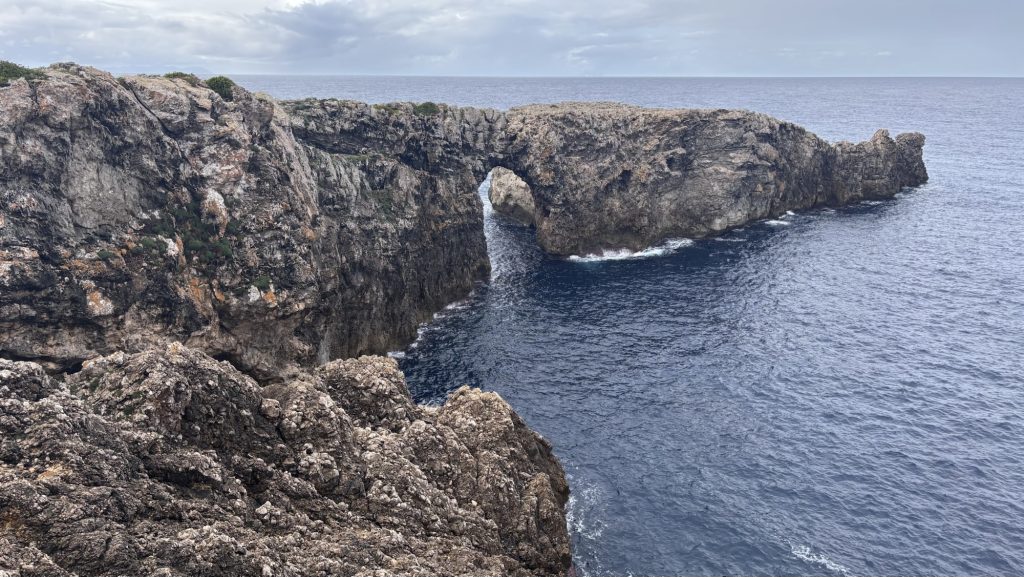
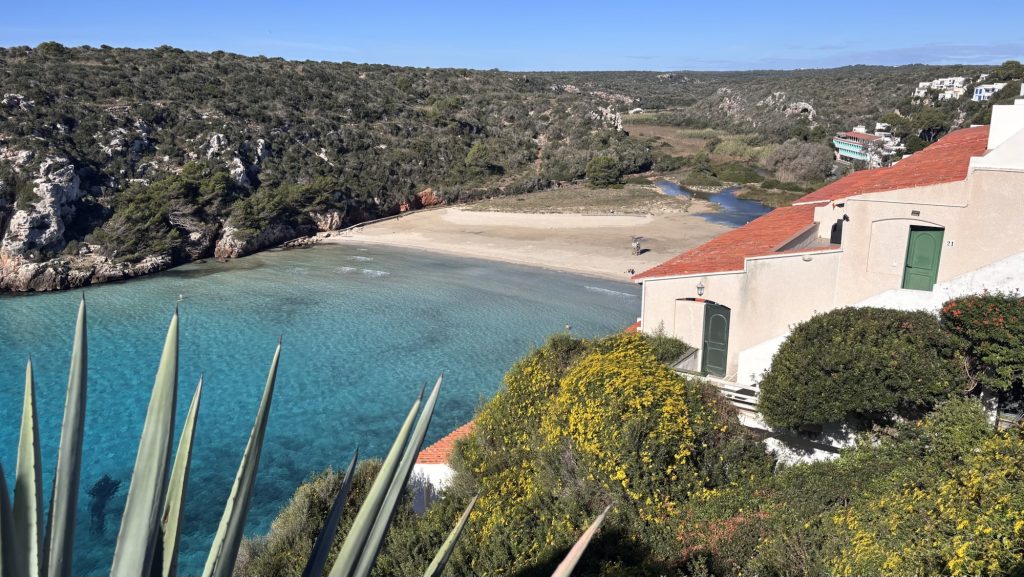
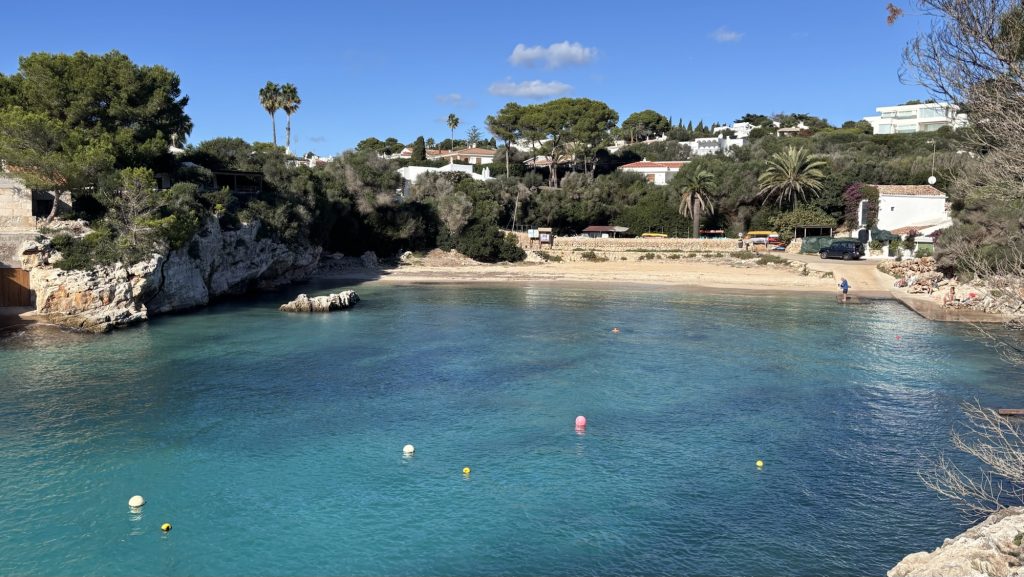
Walking Menorca’s Wils Edge: Camí De Cavalls.

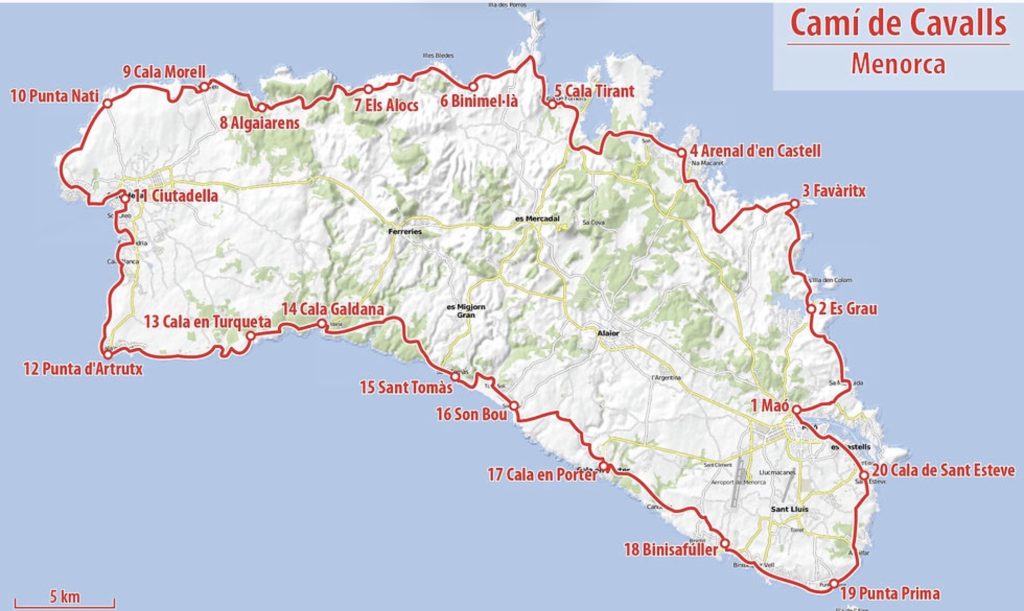
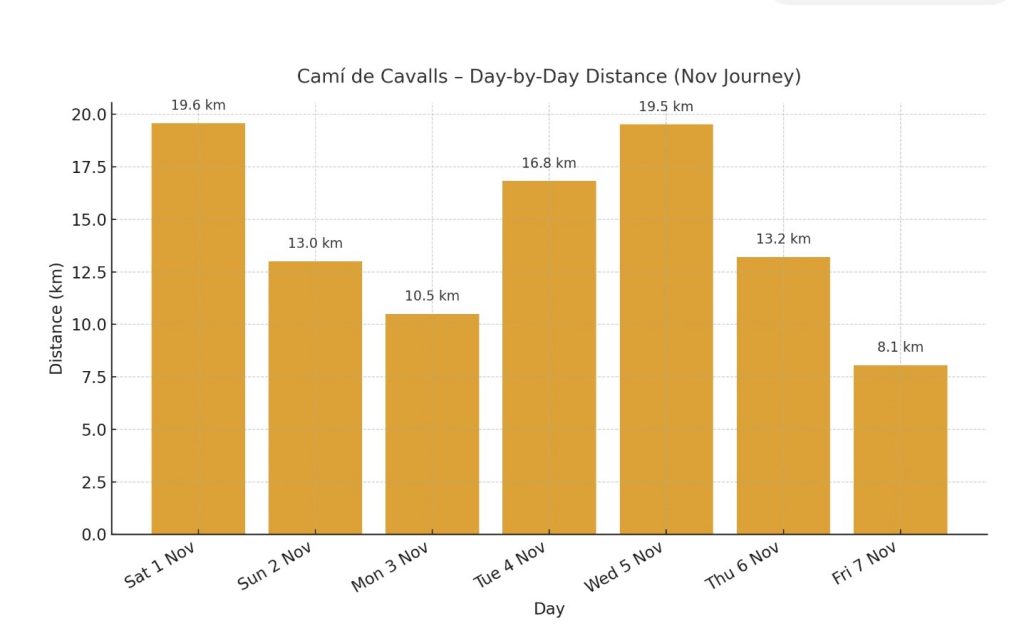
Camí de Cavalls, Sections 10–20 (Ciutadella to Maó). Dates: 1st – 7th November 2025. Distance covered: 100 km (62 miles).

Menorca After the Tourist Season Ends.

Imagine a long-distance hiking trail that never strays far from shimmering turquoise seas and hidden coves. You can follow it as a continuous circuit or enjoy it in shorter, scenic day walks. Each day ends with delicious local food and the comfort of a welcoming hotel.

If you love quiet paths, turquoise coves, and the feeling of having an island almost to yourself, walking the Camí de Cavalls in Menorca during the off-season is an unforgettable adventure.

This historic 185 km path circles the island’s coastline, once used by soldiers and horsemen to patrol its shores. Today, it’s one of Europe’s most scenic long-distance walks.

During my trip, in early November, I managed ticked off Sections 10 to 20, Ciutadella to Maó, just after the official tourist season had come to an end.

With many of the islands buses no longer running and the resorts closing down, Menorca felt calm, wild, and entirely mine. Getting around meant a mix of buses, lifts, and luck — but that was very much part of the charm.

Day-by-Day Journey.

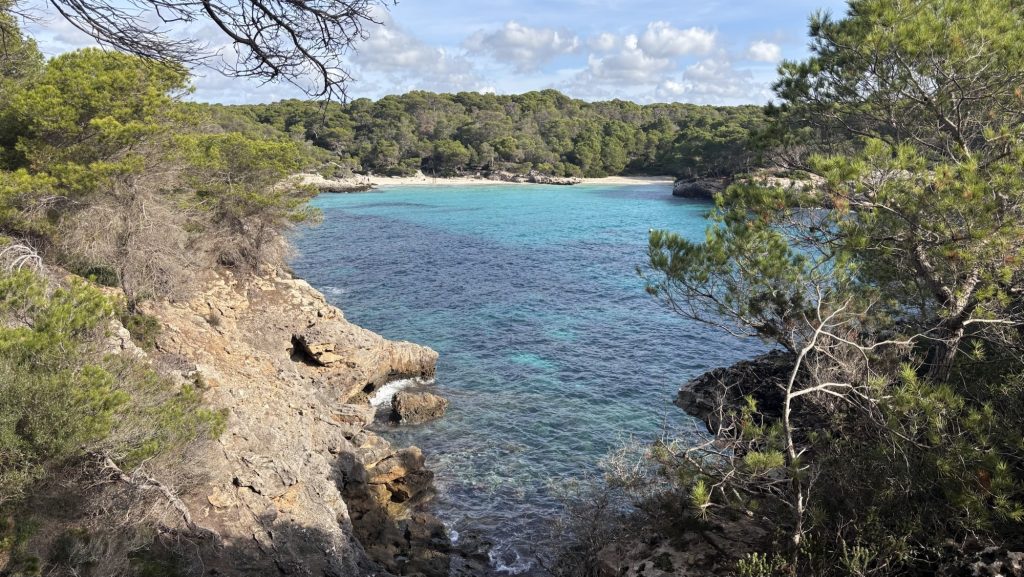
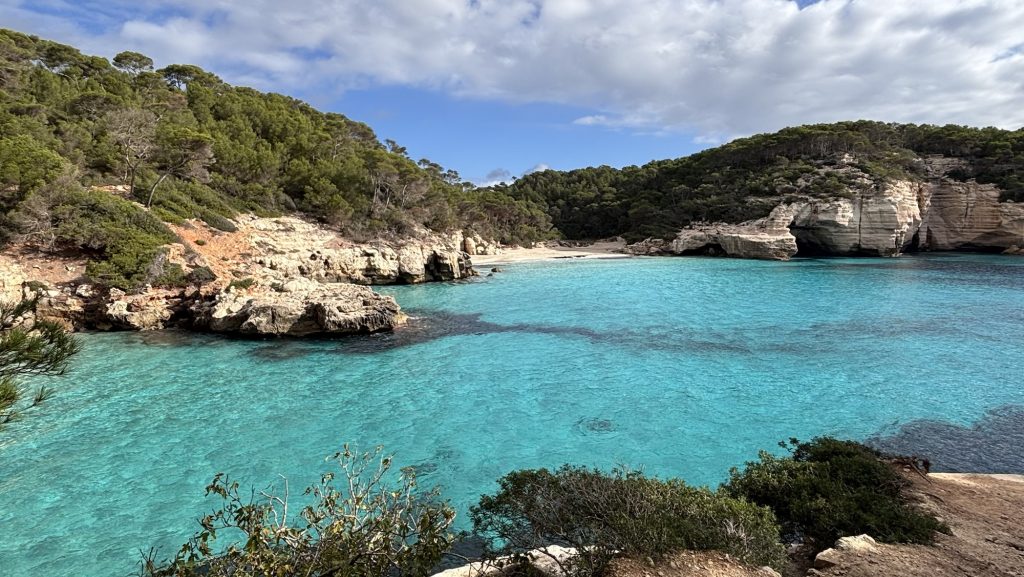
Saturday, 1st November – Cala Galdana to Cala Turqueta (Section 13, 6.38 km).

A bus from Ciutadella to Ferreries followed by a friendly lift from a hotel worker, en route to work, got me to the trailhead – at Cala Galdana. The pine forests were silent, the beaches deserted and the summer chaos had faded – leaving only the sound of wind and waves.

Feeling strong, I carried on…

Cala Turqueta to Cap d’Artrutx (Section 12, 13.2 km).

The path followed cliffs and coves in golden light. It was a long, but rewarding start to my Camí de Cavalls adventure. I thumbed a lift back to Ciutadella; two young lads who were heading off to a friends BBQ, stopped and drove me to the outskirts of the city.

Sunday, 2nd November – Cap d’Artrutx to Ciutadella (Section 11, 13 km).

With the timetable thinning out, I managed to reach Cap d’Artrutx on one of the few buses that were still operating. I then followed the trail back to Ciutadella. The coastline was rugged and empty. Stopped off along the way at a local cafe for a macchiato.

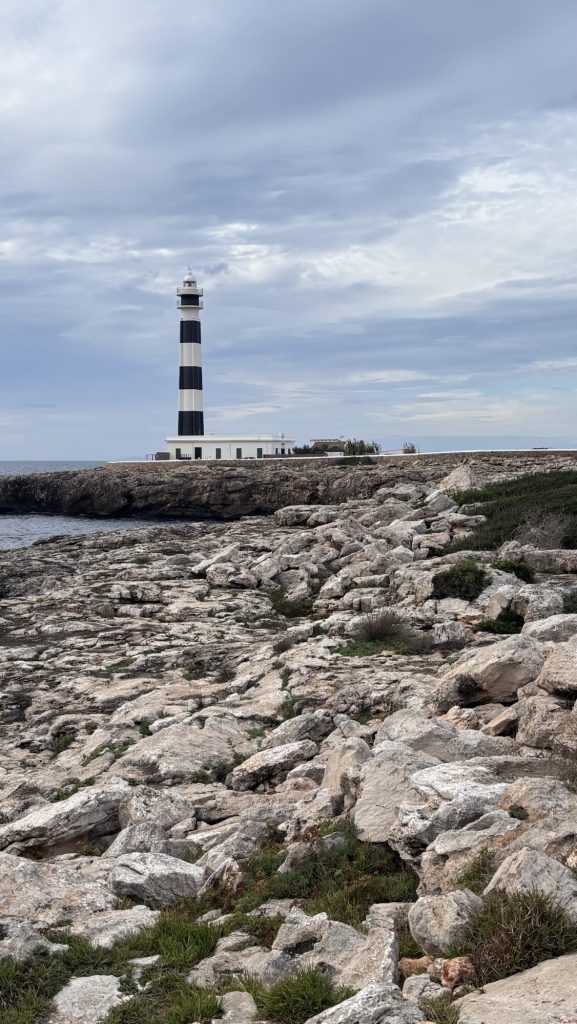
Monday, 3rd November – Ciutadella to Punta Nati (Section 10, 10.5 km).

A grey and miserable start. Today I walked from Ciutadella to Punta Nati lighthouse in steady rain, surrounded by open farmland and stone walls. Even getting slightly wet, it was hauntingly beautiful – Menorca stripped back to its bones.

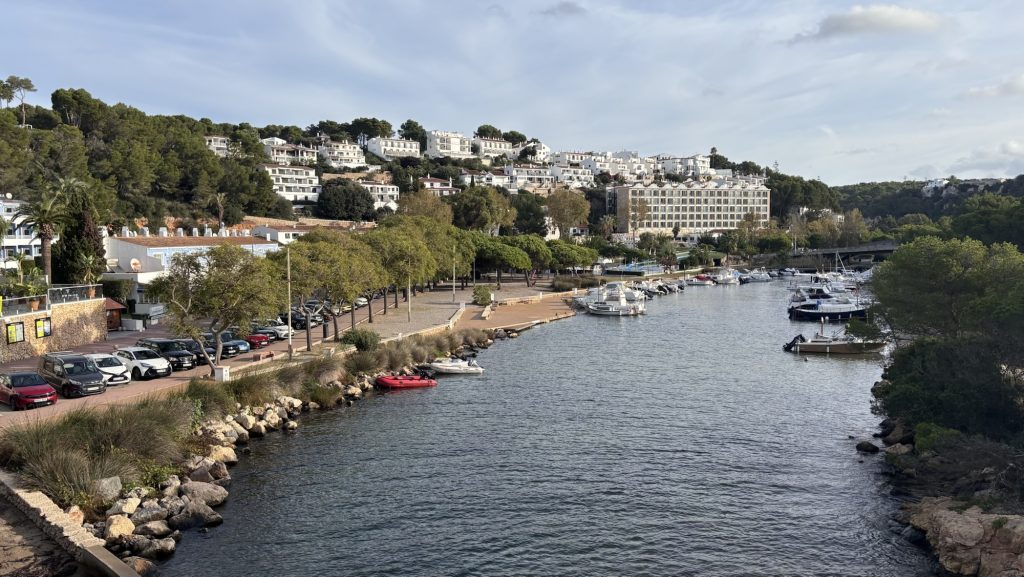
Tuesday, 4th November – Cala Galdana to Sant Tomàs (Section 14, 10.4 km).

Getting to the start of this section took some creativity, which consisted of a bus to Ferreries, then a lift to Cala Galdana, from a young guy from Barcelona who was smoking a ‘joint’, and who laughed his head off when I told him my plan to walk Camí de Cavalls. The bad weather eventually cleared and the sea shimmered – cliffs, pine forests, and total silence.

Sant Tomàs to Son Bou (Section 15, 6.43 km).

Perfect weather, a quiet path, and clear turquoise water — this was the Menorca hikers dream of. Once I reached Son Bou, the two friendly ladies, who I’d met earlier in the day, offered me a lift to Alaior. From there I caught the bus back to Ferreries.

Wednesday, 5th November – Son Bou to Cala en Porter (Section 16, 7.92 km).

By midweek, buses were almost non-existent for some of the sections of the walk. I managed to get one from Ferreries to Alaior, then a €5 taxi to Son Bou – I’m sure it should have cost more! The cliffs glowed in late morning light, the beaches empty and golden.

Cala en Porter to Binissafúller (Section 17, 11.6 km).

This section crossed two completely different environments as it passed from a winding path, carved out of the earth shaped by the gorges, to the flat terrain of the east of the island. At the end of the walk a retired couple kindly gave me a lift to Sant Climent. From there, I took a bus to Maó, it was then another bus back to Ferreries. It was a long day of walking, travelling and local kindness.

Thursday, 6th November – Maó to Cala de Sant Esteve (Section 20, 6 km).

Starting in Maó, I followed a very urbanised section of the trail out toward Cala de Sant Esteve.

Cala de Sant Esteve to Punta Prima (Section 19, 7.2 km).

Halfway along, a car stopped – it was the Barcelona guy from earlier in the week, still smiling and still smoking! He just wanted to stop and say hello. Later, at the end of the walk, a surfer dude kindly stopped and dropped me off near Sant Lluís. From there, a bus ride back to Maó wrapped up the day.

Friday, 7th November – Binissafúller to Punta Prima (Section 18, 8.06 km).

The final section: I caught the bus to Sant Climent. I then walked the last section of the the trail into Punta Prima. With the sun on my back, I was feeling quietly triumphant. In perfect symmetry – I was given a lift back to Sant Lluis from the same BBQ boys who’d helped me on day one.

Reflections – Menorca’s Quiet Season.

Walking the Camí de Cavalls in November means trading convenience for peace. With fewer buses, shuttered resorts, and empty beaches, you move at the island’s true pace. Every ride offered, every chat on a roadside, becomes part of the story.

From Ciutadella’s old alleys to Maó’s bright harbour, Menorca in autumn felt raw, honest, and full of fabulous encounters.

For hikers seeking solitude, friendly locals, and authenticity, this is probably the best time to walk Menorca’s wild edge.

Useful Tips for Walking the Camí de Cavalls in November.

   •   Transport: Bus routes are limited after October. Check schedules in advance on TIB Menorca. Hitchhiking is common and generally safe.

   •   Weather: Expect mild temperatures (15–22°C) and occasional rain.

   •   Gear: Light layers, good waterproofs, and sturdy footwear.

   •   Accommodation: Many hotels close for the season — book small rural stays or use Hotels/Airbnbs in Ciutadella, Ferreries and Maó.

   •   Trail Info: Visit www.camidecavalls.com for maps and detailed section descriptions.

Posted in Menorca | Leave a comment

The Thames Path Challenge – October 2025

Thames Path Challenge. 185 Miles. One River. One Goal.

Event date: OCT 13, 2025 – OCT 24, 2025

Thames Path Challenge. 185 Miles. One River. One Goal.

Click here to donate.

In April of this year, I turned 60, and to mark this milestone I created a list: ’60 at 60′. One of the big items on that list is to walk the entire length of the Thames Path – a distance of 185 miles. I’m aiming to complete the walk in 12-days, that’s roughly 15.5 miles per day. At the same time, I would like to raise money for two amazing charities: the national charity – Action Medical Research and my local charity – Hope House Children’s Hospices. 

Why am I using www.givewheel.com?
www.givewheel.com is the only UK based platform which currently facilitates online fund raising for multiple charities on one page.

What is this fundraising activity all about?
Starting in the peaceful Cotswold countryside and ending in the heart of London, this journey is more than just a personal challenge, it’s a chance to make a real difference. Every step I take along the river is in support of Action Medical Research, who have been funding medical breakthroughs for over 70 years, and Hope House Children’s Hospices who give local children with a life-threatening condition, and their families, access to professional care and improve their quality of life.

Why This Matters?
The role that charities play in our society is massive. Charities are organisations whose primary aim is to promote the welfare of others or benefit society. There are currently over 160,000 charities in the UK. A large part of the funding for these charities comes from individual donations. In essence, they cannot survive without our help and support.

Why the Thames Path Challenge?
Because big challenges deserve bold responses. This is a test of endurance, spirit, and blisters – but it’s nothing compared to the challenges faced daily by those people who rely on the fabulous work of my two chosen charities.

How You Can Help?
Please support my walk by donating what you can. Whether it’s the price of a coffee or perhaps a little bit more, every pound brings us closer to funding further medical research or helping a child who has a life-threatening condition. Money raised from the challenge will be split equally between the two charities.

Follow the Journey:
I’ll be sharing updates, photos, and river views along the way; the highs, the lows, the muddy boots and possibly the blisters.

Click here to donate.

More about the charities:

Action Medical Research has been funding medical breakthroughs for over 70 years. They have helped to beat polio, fight meningitis, prevent stillbirths and develop ultrasound scanning in pregnancy, helping to save thousands of children’s lives and change many more. Today, their children’s charity continues to tackle the challenges disease and disability present by funding high quality research across the UK to save and change children’s lives.
www.action.org.uk

Hope House Children’s Hospices is there to give every local child across Shropshire, Cheshire, North and Mid Wales with a life-threatening condition and their families access to professional care and improve their quality of life from the point of diagnosis. They currently support 265 children and more than 750 families; to continue to provide this care and support they need to raise £10 Million every year with just 2 months coming from Government funding. 
www.hopehouse.org.uk

Posted in Uncategorized | Leave a comment

Climbing Sigiriya Rock in Sri Lanka: A Complete Guide to the Lion Rock Experience.

Sigiriya Rock — also known as Lion Rock — is one of Sri Lanka’s most iconic UNESCO World Heritage sites. Rising dramatically from the jungle plains, this ancient fortress and palace complex rewards climbers with unbelievable views, remarkable frescoes, and captivating history. In this guide, I share my full experience of climbing Sigiriya, useful tips, and the rich story behind the site’s rise and fall. 

Quick Facts (at a glance)

Where: Sigiriya, Central Province, Sri Lanka

Elevation: ~200 m above surrounding plains

Best time to climb: Early morning (sunrise recommended)

Ideal duration: 2-4 hours

Fitness level: Moderate – some steep metal staircases

I set off, on foot, from my accommodation (Sigiri Lion Lodge) at exactly 06:00, just as it was starting to get light. Already there were lots of vehicles heading in the same direction as me – it was going to be busy at the site.

Unbeknown to me even before I had awoken people were queuing up at the entrance ready to buy their ticket and make the climb in preparation for sunrise. I got to meet all of these people, making their way down, as I was making my way up!

History of Sigiriya Rock – The Kasyapa story.

Sigiriya wasn’t always a tourist climb — it was once the seat of a king’s capital. In the late 5th century, Prince Kasyapa seized the throne from his father, King Dhatusena. Determined to build a protected palace away from threats, he chose this sheer rock and its surrounding landscape as his stronghold.

The word Sigiriya comes from “Sinha-giri” meaning Lion Rock — named for the giant lion structure that once marked the entrance. After an 18-year reign, Kasyapa fell in battle against his brother Moggallana and the site was abandoned, eventually becoming a monastery. 

Bright eyed and bushy tailed – 06:30
The Lion’s Paws

The Climb — What to Expec

Lower Platforms and Lion’s Paws

Once inside, you’ll walk past the Lion’s Paws — the massive stone remnants of what was once a huge lion gateway. This is where the climb really begins: a steep, narrow staircase that hugs the rock face.

At one time a gigantic brick lion sat at this end of the rock, and the final ascent to the top commenced with a stairway that led between the lion’s paws and into its mouth. The lion symbolism serves as a reminder to devotees ascending the rock that Buddha.

Frescoes & Cliffside Views

Along the way, you’ll spot ancient frescoes — delicate paintings that have survived centuries — and spectacular views of the surrounding plains and gardens.

Metal Staircases to the Top

The final ascent is via narrow metal staircases attached to the rock’s sheer vertical surface. At times it feels precarious, but the effort is rewarded with unforgettable vistas.

Highlights Not to Miss

Panoramic views from the summit Water gardens and moats at the base Cobra Hood Cave — with ancient inscriptions Historical plaques and accounts along the route

Tips for Climbers

Start early: Sunrise offers cooler temperatures and softer light for photography.

Wear sturdy shoes: Metal staircases get slippery in rain.

Stay hydrated: Even early mornings can be hot and humid.

Personal Reflection

Climbing Sigiriya was both physically rewarding and intellectually fascinating. From the intense political drama of its founding to the stealthy climb up sheer rock walls, it’s a site that connects nature, architecture, art, and history in a way few other places do. 

Second stage of the climb
Pidurangala Rock
View from the southern section of Sigiriya rock
Still looking fresh and full of energy – 09:00
Man made water tank
Cobra Hood Cave; a visit by Queen Elizabeth II and Prince Philip in 1954

The rocky projection known as the Cobra Hood Cave earned its name because the overhang resembles a fully opened cobra’s hood. The plastered interior of the cave was once embellished with floral and animal paintings; a couple of faint traces remain. Below the drip ledge is an inscription from the 2nd century BC that indicates it belonged to Chief Naguli, who donated it to a monk.

Posted in Sri Lanka | Tagged , | Leave a comment

Sri Lanka – February 2025.

My tailored 3-week Sri Lanka itinerary.

Thanks to the artificial intelligence app ChatGPT, and my Lonely Planet guide to Sri Lanka, I put together a 3-week tailored itinerary.

I had three weeks at my disposal, this should give me the potential to really explore the island in depth.

The plan was one night in Negombo, and then start my exploration of the island with two nights in Colombo city, with its museums and colonial monuments. Next, I was going to take the train to historic Galle, supposedly Sri Lanka’s most charming coastal city, in order to soak up the history. I was then going to detour inland to Uda Walawe National Park, for elephant encounters. Next I would head for the hills, starting off in Ella, departure point for the scenic train ride. Next, check into a colonial-era hotel in Nuwara Eliya and explore the tea country. Then roll north to cultured Kandy. Then it would be time for the history tour. Starting with a visit to the cave temples of Dambulla, then climb to the rock-top palace/fortress of Sigiriya. Next, drop down to carving-filled Polonnaruwa. Then on to stunning, temple covered Anuradhapura. I would then take the train back down to Colombo – back to Bandaranaike International Airport, in order to fly home.

Colombo to Colombo – anti clockwise

Getting around: train travel is my first choice.

According to my guide book, the British-built railways that rattle along the coast and rumble into the hills offer a perfect vantage point for observing this idyllic island – particularly when standing the open doorway of a train – with the cool breeze fanning your face. Some journeys are supposed to be genuinely epic – the hill train from Ella to Kandy especially. Unfortunately the train does not go to all of my destinations. Second class is supposedly the class of choice. The carriages in third class can get very full. First class option does not allow people standing in the open doorway.

Train lines.
Train ticket.

Top Train Journeys on my list.

Travelling the coast line: The scenic train line from Colombo to Galle hugs the coast so closely that sea spray wafts into the carriages.

Ella to Kandy, with a stop over in Nuwara Eliya (Nanu Oya train station), through tea country, is supposed to be one of Sri Lanka’s most beautiful train journey’s as you trundle through emerald tea plantations.

Colombo Fort train station.

My 22 – day Sri Lanka Itinerary in depth.

Day 1-2: Colombo.

– Explore Gangaramaya Temple, Independence Square, National Museum, and Pettah Market.

Day 3-4: Colombo – Galle (Train, 3 hrs).

– Visit Galle Fort, with a sunset at the end.

Day 5-6: Galle – Udawalawe (Bus, 3.5 hrs).

– Visit Elephant Transit Home and take a jeep safari at Udawalawe National Park.

Day 7-8: Udawalawe – Ella (Bus, 3 hrs).

– Hike Little Adam’s Peak, visit Nine Arches Bridge & Dhowa Rock Temple.

Day 9-10: Ella – Nuwara Eliya (Train, 2.5 hrs).

– Explore Tea Plantations, Gregory Lake, Victoria Park, and Hakgala Botanical Gardens.

Day 11-12: Nuwara Eliya – Kandy (Train, 4 hrs).

– Visit Temple of the Tooth, Kandy Lake, Peradeniya Botanical Gardens.

Day 13-15: Kandy – Sigiriya (Bus, 4 hrs).

Visit Dambulla Cave Temple, climb Sigiriya Rock Fortress or Pidurangala Rock.

 16-18: Sigiriya – Polonnaruwa (Bus, 1.5 hrs).

– Explore Polonnaruwa ruins by bicycle.

Day 19-21: Polonnaruwa – Anuradhapura (Bus 5 hrs).

– Visit Ruwanwelisaya Stupa, Jetavanaramaya, and Sri Maha Bodhi Tree.

Day 22: Anuradhapura – Colombo (Train, 4.5 hrs)

– Return to Colombo, do last-minute shopping, or watch a cultural show.

That’s the plan……. let’s see how it all pans out.

Posted in Sri Lanka | Tagged , , , , , , , , , | Leave a comment

Yogyakarta’s Top Two Temples.

Prambanan

The absolutely stunning temple complex of Prambanan was constructed in the 8th century, and is the largest Hindu temple complex in Indonesia. It is also the second-largest in Southeast Asia, behind only Angkor Wat. The three main temples tower as high as 47m, making them taller than even the famous Borobudur. Consisting of an incredible 240 temples in total.

Much of the Prambanan complex still lies in ruins, the result of several large earthquakes over the past few hundred years. The main temples have been rebuilt, but restoration of the lesser temples is ongoing. Construction of the original temples was incredible, with no mortar or steel rods involved. Instead, every piece was carved to fit into its spot perfectly. Due to a lack of funding, only several teams of builders and archaeologists are able to work at any one time, making the process painstakingly slow. Its estimated work on the entire complex will take over 200 years to complete.

It’s fairly easy to get to Prambanan from Yogyakarta. I hired a Gojek, which dropped me off at the ticket entrance gate. I then returned to Yogyakarta by train.

Borobudur

This is the largest Buddhist temple in the world. If you visit Yogyakarta you’re eventually going to hear about Borobudur. Visiting Borobudur is a must if you are in Central Java, and particularly if you are in Yogyakarta.

Borobudur Temple was constructed in the 8th century, and is composed of a single building covering a massive 2500 sq metres. The temple has nine levels, tops out at 35m, and has an incredible 2672 reliefs and 504 Buddha statues. Borobudur was lost to humanity sometime around the 10th century. There are many theories as to why this happened, but it’s believed that much of the temple was buried in ash by an eruption of Gunung Merapi. Subsequent Merapi eruptions caused the relocation of the Mataram kingdom to East Java, leaving the area, and Borobudur, abandoned. It was finally rediscovered in 1814 when Thomas Stamford Raffles sent a party into the jungle to investigate rumours of a lost religious monument. Over the years several restoration projects were attempted, but it wasn’t until the 1970s that major restorations were undertaken. Borobudur was eventually World Heritage listed in 1991.

It’s obviously possible to visit Borobudor on an organised tour, I chose to get there independently. This was a little more challenging! From the centre of Yogyakarta you need to get to Terminal Jombor bus station. From here you take the bus to the junction for Borobudor. It’s then a 15-minute drive to the temple complex. Small vans do the run, it’s just a case of flagging one down and telling them where you want to go. Getting back to Yogyakarta is the reverse of this.

The entrance fee structure is a little complex. You really want to be able to climb the temple if you visit. Numbers are restricted so it’s best to buy your ticket online at GOERS before you visit, especially at busy times – morning and late afternoon. It’s not the easiest web site to navigate – so double check everything is correct before paying. The site accepts credit cards.

Prambanan.
Borobudor.

Posted in Indonesia | Leave a comment

Tumpak Sewu waterfall.

“A once-in-a-lifetime experience, Tumpak Sewu in East Java is not to be missed. Hundreds of waterfalls, pouring off the edge of a 120m-high semicircular cliff into a canyon lost in the mists far below, is a sight that must be seen to be believed. Tumpak Sewu is an adventure that you are guaranteed to remember for life.” Excerpt From Lonely Planet Indonesia.

Visiting Tumpak Sewu is easy if you have your own transportation. However, as is always the case, distance and time are not linked in Indonesia. Expect a 2 to 3 hour drive each way from Malang. I did not have my own transport so decided to hire a driver with a car. The cost of this was $50 USD. He waited for me whilst I visited the falls.

Once you have payed the entrance, fee at the ticket booth, you follow the path to the viewpoint – for a breathtaking view of Tumpak Sewu waterfall. However, the real highlight is the hike to the falls’ base. The hike begins along a muddy track and stairs, turning quickly into steel gantries, wooden walkways and ladders. About two-thirds of the way down, the ladders end and you’ll find yourself holding a rope as you make your way down a rocky slope with a rushing waterfall all around you. You’ll get very wet, but it is truly worth it.

Waterfalls and cave

In the canyon, you turn right and follow the trail towards Tumpak Sewu Waterfall. At some point you will pay an extra fee as you move into a new village area. Reaching the base of the falls is a memorable experience: the raw power, with gusts of spray soaking you, and the falls plummeting from above are unforgettable.

You then follow the canyon back in the other direction, there you will reach the Goa Tetes waterfalls. These are another set of beautiful falls flowing down an orange-coloured cliff face, forming pools. If you follow the track further, and are careful enough, you will find yourself climbing up above the falls and into the Goa Tetes caves located in the cliff face. There is an extra charge to visit the caves. There is no need to retrace your steps, you can exit the canyon by continuing along and up. Here you will reach some more steps back to a concrete road.

From the viewing platform.
Indonesia part 2 of 3 – Java.

Posted in Indonesia | Leave a comment

Climbing Mount Bromo.

“Visiting Gunung Bromo is one of the most unique activities in not only Java, but possibly all of Indonesia. There is a good reason that this epic spot features on most of the tourism brochures, banners and websites for the country. Bromo, essentially, is a volcano. Unlike most volcanoes, however, it is a lot easier to access, as reaching the summit only involves a short hike.” Excerpt From Lonely Planet Indonesia.


Taking a trip to Gunung Bromo is usually done by Jeep from Malang, or even from Surabaya. Most tours will start at around midnight with a pickup from your hotel, transferring to Jeep along the way, and then a drive into Bromo-Tengger-Semeru National Park under the cover of darkness. The first stop for many is the ever-popular sunrise point (although this is a bit of a mismisnomer, as there isn’t really just one sunrise point, but many, stretched out along the ridgeline above the road). On a typical morning, Jeeps will be lined up for kilometres in each direction, full of visitors that have all come for the same reason – the incredible panorama provided by a Bromo sunrise.


Once the the sun has risen, you will head back down the hill in your Jeep into the sandy, barren Bromo wasteland, and cross to the foot of the volcano itself. After the Jeep parks a couple of kilometres away, it is then up to you to trek across the remaining sand, and up a couple of hundred stairs to the rim of the Bromo crater. For most people, standing at the top of Gunung Bromo is one of those experiences that only comes around once in a lifetime. The noise that emits from the throat far below sounds not unlike a jet engine, and only hints at the incredible power that resides right under your very feet. After the trek back to the Jeep, your tour ends with the drive back to your hotel, possibly with a couple of stops at scenic viewpoints along the way.

Getting to Bromo is easy with the various tours readily found online. Private tours range in price, depending on the number of people in your party and what extras you opt for. Group tours are also available for the more budget conscious.

I based myself in the town of Probolinggo, a 1-hour drive from Mount Bromo. It’s the rainy season here at the moment so I decided to skip the sunrise – currently an unlikely event – and hired a motorbike with driver. He took me to the parking area beneath Mount Bromo – a short walk from the crater.

Approaching Mount Bromo.
Walking to the steps.
Looking back down the steps that lead to the top of the crater.
Looking into the volcano.
The sound emanating from the volcano is incredible.
Terrace farming en route from Mount Bromo.
Double cropping.
Potatoes and Spring Onions.
Indonesia part 2 of 3 – East Java.
Posted in Indonesia | Leave a comment