Last year it was putting together a ‘self-guided’ bird watching tour, amongst other things. This year it was helping to refurbish the orchid house. My orchid (and Spanish) professor was Luz.


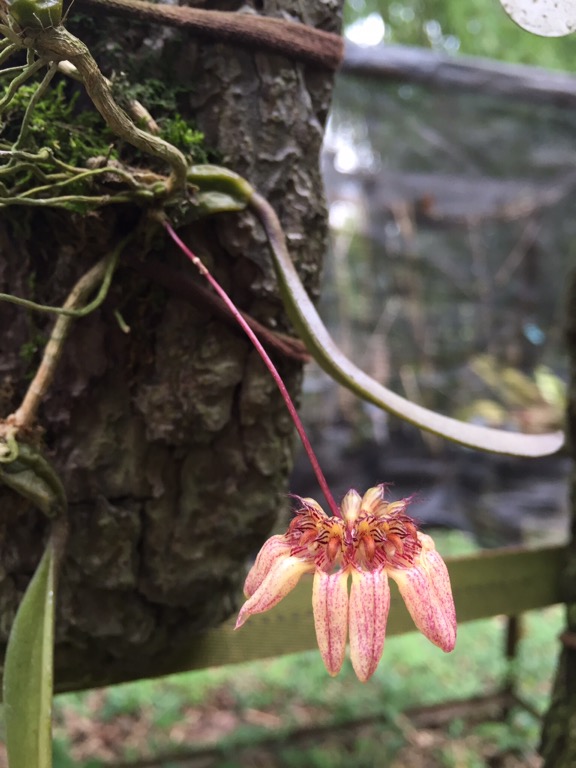


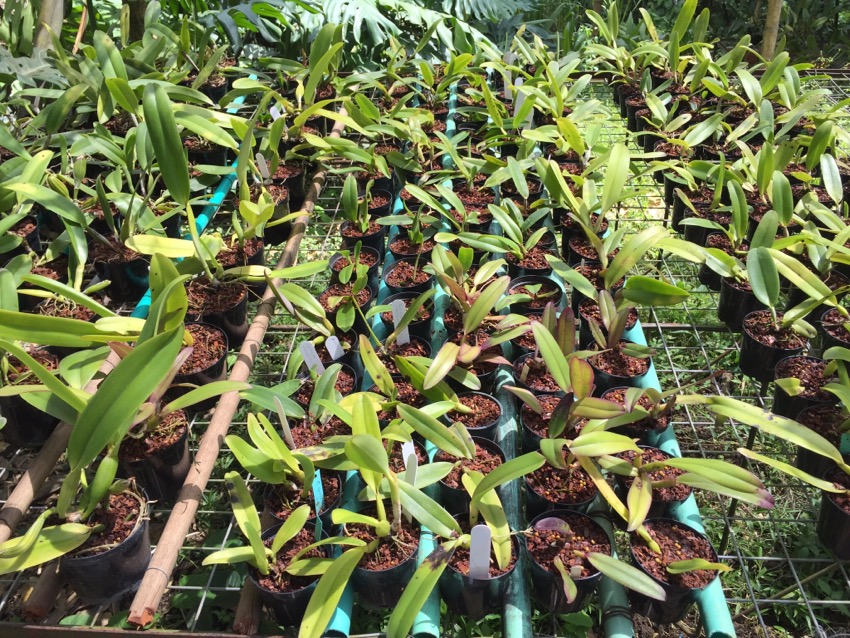

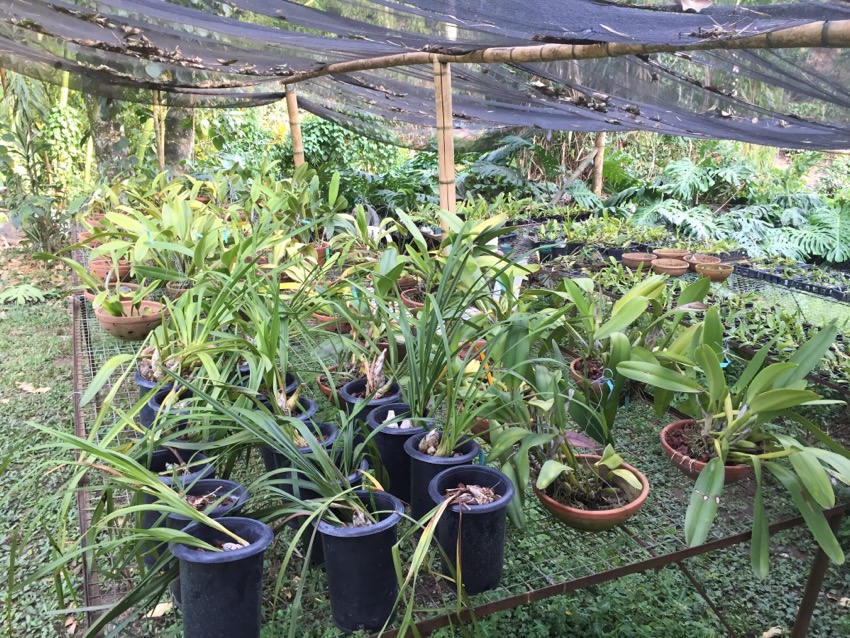
Last year it was putting together a ‘self-guided’ bird watching tour, amongst other things. This year it was helping to refurbish the orchid house. My orchid (and Spanish) professor was Luz.
From the delights of Panama City I flew to Medellin in Colombia. It was a pleasent feeling, returning to a familiar country.
From Medellin I travelled to Salento, a small town I visited 2-years ago on a day trip. I wanted to experience a little more of this delightful place.
Despite being a very popular destination, for Colombian and international visitors alike, Salento still retains much of its small town charm. The gentle rolling hills are carpeted in thick forest that embrace the undulations of the land like a mother with her newborn, while the town’s architecture is a chocolate box colonial fantasy. The peaceful streets are lined with many shops selling handicrafts and there are plenty of relaxing bars, cafes and billiard halls.
Its proximity to the fabulously beautiful Valle de Cocora makes Salento a required stop on any Colombian itinerary, however tight. During the week it’s serene, but on weekends hordes of day trippers descend on the town and the main square is full of families laughing, singing and dancing.
Next stage: Hacienda Venecia.


The Panama Canal.
The canal is truly one of the world’s greatest engineering marvels. Stretching for 80km (51 miles) from Panama City on the Pacific side to Colón on the Atlantic side, the canal cuts right through the continental divide. Around 13,000 vessels pass through the canal each year and ships worldwide are built with the dimensions of the Panama Canal’s locks (305m long and 33.5m wide) in mind.
In 2010, the canal brought in US$2 billion in revenue. Ships pay according to their weight, with the average fee around US$30,000. The highest amount paid was around US$376,000, paid in 2010 by the cruise ship Norwegian Pearl; the lowest amount was US$0.36, paid in 1928 by Richard Halliburton, who swam through.
The pre-expansion canal has three sets of double locks: Miraflores and Pedro Miguel Locks on the Pacific side and Gatún Locks on the Atlantic side. Between the locks, ships pass through a huge artificial lake, Lago Gatún, created by the Gatún Dam across the Río Chagres (when created they were the largest dam and largest artificial lake on Earth), and the Gaillard Cut, a 14km cut through the rock and shale of the isth- mian mountains.
With the passage of each ship, a staggering 52 million gallons of fresh water is released into the ocean. Panamanians voted to expand the canal in 2006. The US$5.25 billion plan will widen and deepen existing navigation channels as well as enable the construction of two new locks. Originally planned for inauguration at the canal’s 100-year anniversary, it now looks like the expansion will not open until 2015.
Facts & Figures:


Day One:
At the Pacific entrance to the Panama Canal, a 2km palm-tree-lined calzada (causeway) connects the four small islands of Naos, Culebra, Perico and Flamenco to the mainland. The Causeway is a popular place to be in the early morning and late afternoon, when residents come to walk, jog, skate, cycle or simply escape the noise and pollution of the city. The Causeway also offers sweeping views of the skyline and the old city, with flocks of brown pelicans diving into the sea.

Day Two:
Panama City’s historic quarter is known as the Casco Viejo (pronounced CAS-coh Bee-EH-hoh). It’s spread over a small point in the city’s southeast corner, where timeless streets and plazas are complemented by views of a modern skyline. The Casco Viejo’s narrow brick streets, wrought-iron balconies, and intricate cornices evoke visions of Panama’s glorious history as a major trade center.
A stroll here offers opportunities to admire a beautiful mix of Spanish colonial, neoclassical, and art nouveau architecture. And though many of its buildings are in quite a bad state of neglect, and some of the neighborhood is poor, it is nevertheless a lively and colorful place, where soccer balls bounce off the walls of 300-year-old churches and radios blare Latin music.
Movie fans may spot a few places used as settings for the James Bond movie Quantum of Solace.


Whilst it didn’t even come close to matching my favourite city in the world – London, Panama City (PC) was an extremely interesting and enjoyable place to visit; it has a lot to offer the inquisitive visitor. The ace card for me was the Metro system, which made travel around the hot, sticky, sprawling metropolis an absolute dream. The cost of using it is rediculously cheap. I also managed to bag a lovely little B&B, in the heart of the city (near to Via Argentina metro station), with lovely owners and a price well within my budget. The B&B had a lovely garden in which to escape the madness of the city.
PC had a lot to live up to. It was my ultimate city in Central America and it had been high up on my bucket list for many years. I was a little concerned that it might not live up to my expectations. Let me tell you now – PC did not fail to impress me.
The bus from Santiago took around 5-hours to get to PC. We arrived at the massive Central Transport Terminal where I purchased an obligatory Metro Pass and boarded a super clean Metro train bound for ‘estacion Argentina.
Once checked in it was time to replace my stolen iPhone at a nearby Apple approved retailer. I could not spend another day without a smart phone!
My next task was to plan my four days in PC – where to go, what to see, and how to get there.
Next stage: Quatro dias en la ciudad Panama (part one).

Terminal Central de Panama

Metro de Panama

Metro Map of Panama City

Panama City Map showing route of ‘hop on/hop off ‘ bus
To get from Boquete to Panama City currently takes around 9-hours. My backside was protesting against yet another long distance bus journey so I decided to break the ride up by visiting Santa Fé – approximatley half way between Boquete and Panama City.
The journey, using public transport, consisted of the following legs: Boquete to David (1hr) David to Santiago (3hrs) Santiago to Santa Fé (1.5hrs).
Located in the Veraguas mountain range, about 5 hours from Panama City, Santa Fé offers a unique experience of a laid back traditional Panamanian village where horses are still commonly used as a means of transportation. Santa Fé offers a convenient base to explore the vast wilderness of the national park and the native reservations, stretching for over 40 miles in three directions.
Santa Fé is a perfect location for those who love nature, adventure and authentic culture. It’s offerings include swimming, rafting, horseback riding, hiking (through virgin rain forest), bird watching, 4×4 adventure tours, visits to organic farms and orchid gardens – to name but a few. Best of all large tour groups are still conspicuous by their absence.
Santa Fé lies at an altitude of around 450 meters or 1350 feet, and due to its proximity to much higher mountains it enjoys a year round temperate tropical climate with warm days and cool nights. These mountains also temper the typical wet/dry tropical seasons, resulting in a beautiful green landscape.
The true charm about this town is that it isn’t overrun with development. It truly is a place to get away from it all and return to unspoiled nature.
I stayed at a delightful hotel with beautiful views across the valley.
Next stage: Panama City.


The mountain town of Boquete, the Napa Valley of coffee, is known throughout Panama for its cool, fresh climate and pristine natural setting. Flowers, coffee, vegetables and citrus fruits flourish in Boquete’s rich soil, and the friendliness of the locals seems to rub off on everyone who passes through.
Boquete was very much intent on remaining a small town, but was faced with a change beyond anyone’s control – baby boomers started getting old. When the American Association for Retired Persons’s Modern Maturity magazine named Boquete one of the four top places in the world to retire, foreign retirees started snatching up mountain plots. Today, gated communities dot the hillsides and the face of Boquete is slowly being transformed.
For travelers, Boquete is one of the country’s top destinations. Outdoor lovers can hike, climb, raft or go on a canopy tour. You can also visit coffee farms, soak in hot springs and study Spanish here.
A Jazz & Blues festival was taking place on the weekend that I arrived in town. With some free open concerts taking place – the vibe was awesome.
I really enjoyed my time in Boquete: great accomodation, great restaurants, a micro-brewery and some excellent hiking.
A great little place I visited was Mi jardín es su jardín. A magnificent garden surrounding a luxurious private estate.
Next stage Santa Fé.


I couldn’t stay in Costa Rica (CR) a minute longer. After five expensive days I decided to get the first flight out and head for Panama. The cost, and the shear volume of tourists, turned CR into my worst nightmare.
From San José international airport I flew to Bocas Del Toro (via David) in search of peace, tranquility and some relief for my traumatised budget. Sadly I only managed to find the latter.
Bocas Del Toro (Panama).
Where primary rainforest meets banana plantation and Caribbean islands dot a shock of blue waters, Bocas del Toro Province promises all that is tropical. Located 32km from the Costa Rican border, the Archipiélago de Bocas del Toro consists of six densely forested islands, scores of uninhabited islets and Panama’s oldest marine park, Parque Nacional Marino Isla Bastimentos. Naturally beautiful and half tame, Bocas is Panama’s principal tourist draw, the place for a hefty dose of sun and surf. Isla Colón, home to the regional capital town of Bocas del Toro, is the main destination for travelers.
Relaxed as it is, Isla Colón has ridden a major development boom. Since the mid 1990s, foreign investors have been buying up land like crazy, with new hotels, restaurants and condos constantly springing up. Fortunately, there’s still a heavy dose of local flavor, and the lack of beachside Pizza Huts is testament to the fact that development is still years behind similar destinations in nearby Costa Rica.
I enjoyed Isla Colón but paradise it is not.
Next stage: Jazz and Blues Festival in Boquete.


“Snug in the misty greenbelt of two cloud forest reserves, this slim corridor of human habitation consists of the Tico village of Santa Elena and the Quaker settlement of Monteverde. The area was first settled by loggers and farmers in the 1930s. The Quakers arrived in 1951, emigrating from the US to avoid being drafted to fight in the Korean War. In order to protect the vital watershed, the Quaker community established the private reserve that is now Reserva Biológica Bosque Nuboso Monteverde.”
Excerpt from the Lonely Planet guide to Central Amerca.
A 1983 National Geographic feature described this unique landscape, and subsequently billed the area as the place to view one of Central America’s most famous birds – the resplendent quetzal. Suddenly, hordes of tourists armed with tripods and telephoto lenses started braving Monteverde’s notoriously awful access roads, and tourism has not waned since.
The cloud forests near Monteverde and Santa Elena are one of Costa Rica’s premier destinations for everyone from budget backpackers to well heeled retirees. Donning rubbery rain gear and mud boots is a rite of passage for those visiting in search of resplendent quetzals, hummingbirds, howler monkeys, sloths, snakes and more.
I got to see a couple of quetzals but that was about it – the wind and the rain didn’t stop the whole time I was in Monteverde. Home from home one might say!


Next stage: A swift exit.
“The bellowing of howler monkeys echoes across the tree tops. Magnificent frigate birds circle high overhead, while less-than-sonorous squawking uncovers a pair of scarlet macaws. Morning breaks in the coastal rainforest.
Similar scenes unfold across Costa Rica, from the dry tropical forest along the Pacific coast to the misty cloud forest at higher altitudes. One-third of this country’s area is protected, making it a wildlife wonderland.
The flora and fauna are only part of the appeal. Annually Costa Rica attracts more than one million visitors eager to catch a wave, climb a volcano or otherwise partake of paradise.
It’s never easy to maintain the delicate balance between preserving natural resources and cashing in on economic opportunity, but Ticos are tireless in their efforts. These peace loving people are eager to share the staggering scenery, bountiful biodiversity and complete contentment of pura vida, the ‘pure life’ of Costa Rica.”
Excerpt from the Lonely Planet guide to Central America.
Costa Rica (CR) proved to be the most expensive and most tourist saturated country I have so far visited in ALL of Latin America – an instant turn off for someone on a backpacker budget. If you have oodles of dollars then I am sure CR could be a ‘nice’ place to visit. As it happened I only spent 7 days in CR – 7 days too long!
San José, the capital, is an ugly city, with unremarkable concrete structures, clogged pedestrian arcades and fast food monstrosities dominating its cityscape. And how delightful can a city really be when you’re constantly dodging homicidal drivers, evading pickpockets and trying to tune out the cacophony of honking horns and ear splitting reggaetón?
I spent 3-nights in San José with most of that time spent within the confines of my hostel.
Next stage: The cloud forest at Monteverde.